
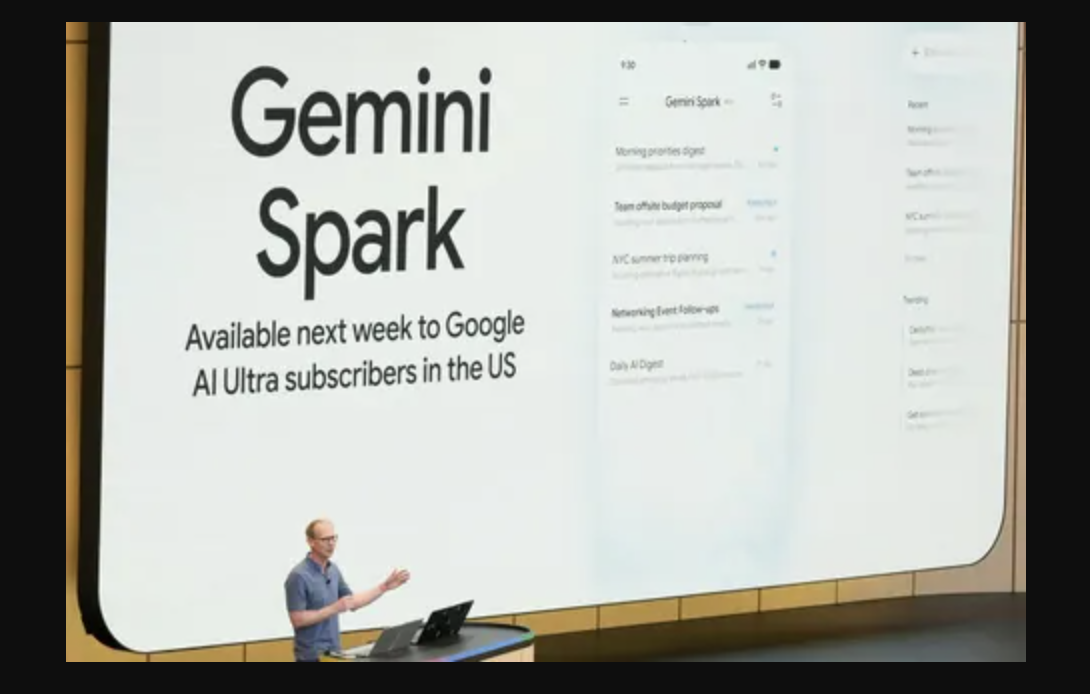

Google’s biggest AI announcement at I/O 2026 wasn’t just a new chatbot or model—it was Gemini Sparkan autonomous AI agent designed to work in the background, handle tasks, monitor information, and take actions on behalf of users. Google presented Spark as a major step toward a future where AI assistants actively manage digital lives instead of simply answering questions. However, a report by Forbes suggests that some important caveats received far less attention during the launch.
The concerns center around how much autonomy Gemini Spark may have and the potential risks that come with giving AI systems greater control over real-world actions.
What Is Gemini Spark?
Gemini Spark is a cloud-based AI agent that can continue working even when users are not actively using their devices. During Google I/O 2026 demonstrations, Spark was shown organizing events, tracking RSVPs, managing spreadsheets, sending reminders, and coordinating tasks across Gmail, Google Docs, Sheets, and other services.
Unlike traditional AI assistants that respond to commands one at a time, Spark is designed to operate continuously in the background and execute multi-step tasks autonomously. Google describes it as a personal AI agent capable of managing aspects of a user’s digital life.
The Warning That Raised Eyebrows
According to the Forbes report, code and onboarding text discovered within Google’s software indicate that Gemini Spark may perform actions such as sharing information or making purchases without asking for approval each time. The onboarding warning reportedly states that the AI “may do things like share your info or make purchases without asking.”
While such actions would presumably occur within permissions granted by users, critics argue that this level of autonomy introduces new risks. Mistakes, unintended purchases, incorrect actions, or security issues could become more significant when AI systems are allowed to act independently.
The concern reflects a broader industry debate around “agentic AI”—AI systems that not only provide recommendations but also execute actions on behalf of users.
Usage Limits Could Frustrate Users
Another issue highlighted in the report involves potential usage restrictions.
Despite Google’s vision of an always-available AI assistant, reports suggest Gemini Spark may operate under usage caps, including for subscribers of Google’s premium AI plans. Users who exhaust their allotted usage could find their AI agent temporarily unavailable until limits reset.
This raises questions about whether AI agents can truly function as persistent digital assistants if they remain subject to consumption limits.
Why This Matters
Gemini Spark represents one of the clearest examples yet of the AI industry’s shift from chatbots toward autonomous digital agents. Rather than simply answering questions, these systems are being designed to manage schedules, make decisions, interact with services, and complete tasks independently.
The technology promises major productivity gains, but it also increases the importance of transparency, user control, privacy protections, and safeguards against unintended actions. Experts believe trust will become one of the biggest factors determining whether consumers embrace AI agents in everyday life.
Summary
Google’s new Gemini Spark AI agent aims to move beyond chatbots by handling tasks autonomously in the background. However, a Forbes report has highlighted concerns that received little attention during the launch, including warnings that the AI may share information or make purchases without seeking approval for every action and the possibility of usage caps even for premium subscribers. The development underscores the growing opportunities—and risks—associated with the next generation of autonomous AI assistants.
Image Source
Comments are closed.