
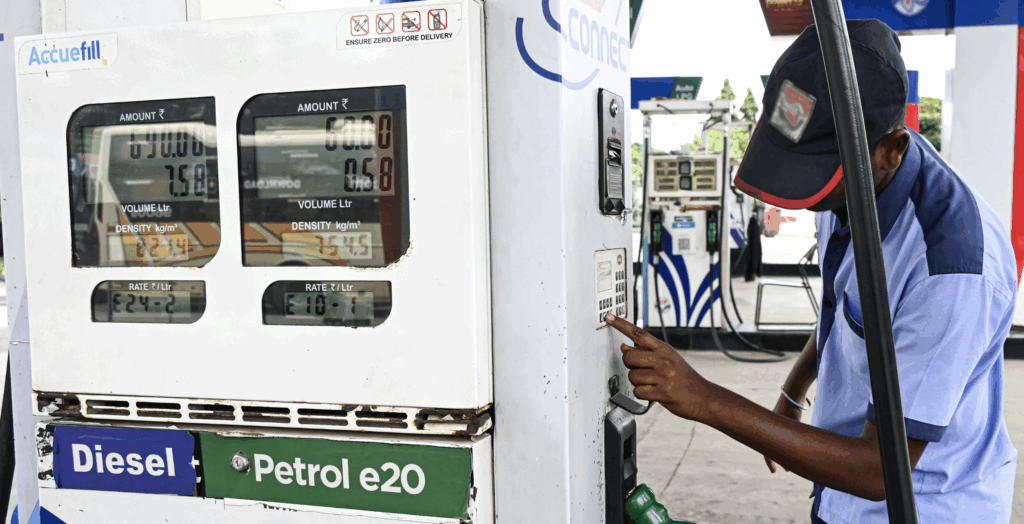

India is preparing for a major transition in its fuel ecosystem. The Centre has proposed amendments to the Central Motor Vehicles Rules, 1989aiming to introduce higher ethanol-blended fuels like E85 (85% ethanol) and E100 (near 100% ethanol).
The move is part of a broader effort to promote cleaner, alternative fuels and reduce dependence on fossil fuels. Along with ethanol, the proposal also updates rules around biodiesel and other emerging fuel categories.
What Are E85 and E100 Fuels?
E85 is a blend of 85% ethanol and 15% petrol, while E100 refers to almost pure ethanol used as fuel.
India has already achieved its E20 target (20% ethanol blending) in 2025, and this new proposal marks the next phase in the country’s biofuel journey.
These fuels are considered cleaner alternatives, capable of reducing emissions and lowering the country’s reliance on imported crude oil.
Why India Is Pushing Ethanol
The shift toward ethanol is driven by multiple strategic goals. First, India imports a large portion of its crude oil, making it vulnerable to global price shocks. Ethanol, on the other hand, can be produced domestically from agricultural sources like sugarcane.
Second, higher ethanol blending helps reduce carbon emissions and supports sustainability targets. The government is also looking to absorb surplus agricultural output, benefiting farmers and boosting rural income.
Flex-Fuel Vehicles Will Be Key
A critical part of this transition is the adoption of flex-fuel vehicles (FFVs), which can run on multiple fuel blends, including E85 and E100.
Automakers are already being encouraged to manufacture vehicles compatible with higher ethanol blends. However, widespread adoption will depend on infrastructure readiness, vehicle compatibility, and consumer acceptance.
Challenges Ahead: Compatibility & Infrastructure
Despite the promise, challenges remain. Most existing vehicles in India are designed for lower ethanol blends and may not be fully compatible with E85 or E100 fuels.
There are also concerns around fuel efficiency, engine durability, and the need for large-scale upgrades in fuel distribution infrastructure. Policymakers and automakers will need to address these issues before a full rollout.
A Big Step Toward Energy Independence
The proposed rule changes signal a long-term shift in India’s energy strategy. By moving beyond E20 and embracing higher ethanol blends, India is positioning itself toward cleaner mobility and reduced oil dependency.
If implemented effectively, this transition could redefine how Indians power their vehicles in the coming years.
Image Source

Comments are closed.