
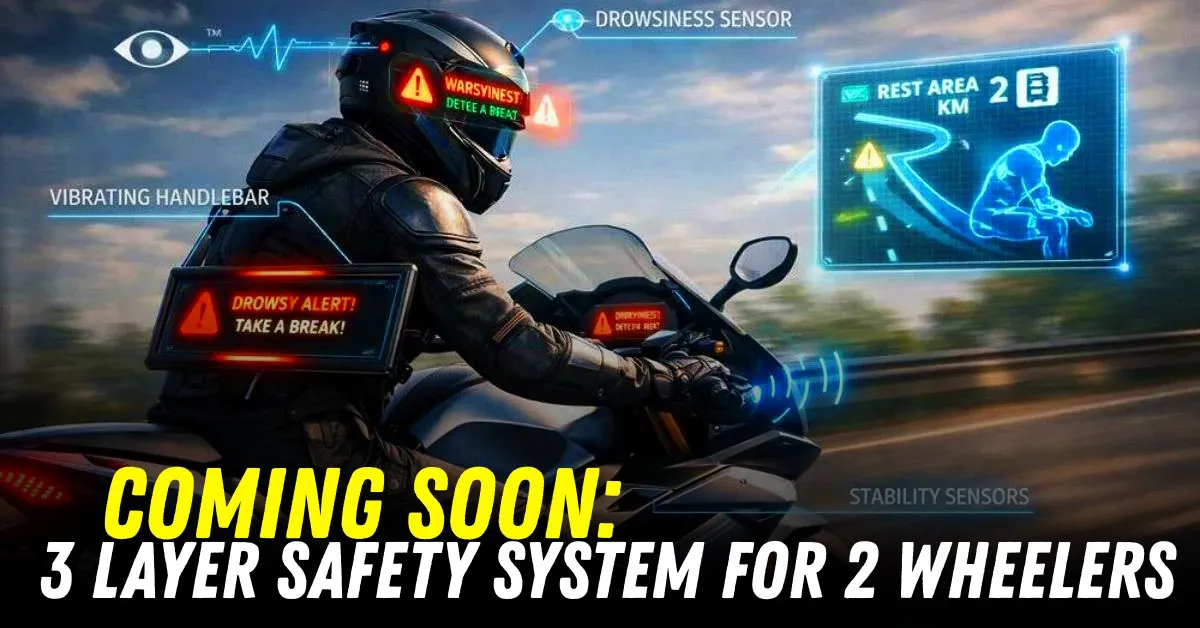

The number of road accidents involving two-wheelers is at an all-time high. So, to curb this number, the Government of India is planning to introduce a new tech-based safety system for two-wheelers, which will help in reducing rash riding, dangerous stunts, and road accidents across the country. As per reports, the central government is currently working on a new three-layer safety framework. This will help in making motorcycles and scooters capable of detecting whether riders are keeping both hands on the handlebars while riding.
It has been reported that this proposal is currently in the draft and discussion stage. However, it has already gained a lot of attention. If it gets implemented, the new safety setup could prevent the vehicle from starting, issue audio and visual warnings, and even automatically slow down the motorcycle or scooter if the rider continues riding without holding the handlebars properly.
The main reason behind the need for this new safety system is that authorities are concerned about dangerous riding behaviour on Indian roads. Over the last few years, because of social media, the stunt culture has increased significantly. Many youngsters are now performing risky stunts on highways and crowded public roads. Many videos showing these riders performing wheelies, riding without hands on handlebars, and using mobile phones while riding have become very common.
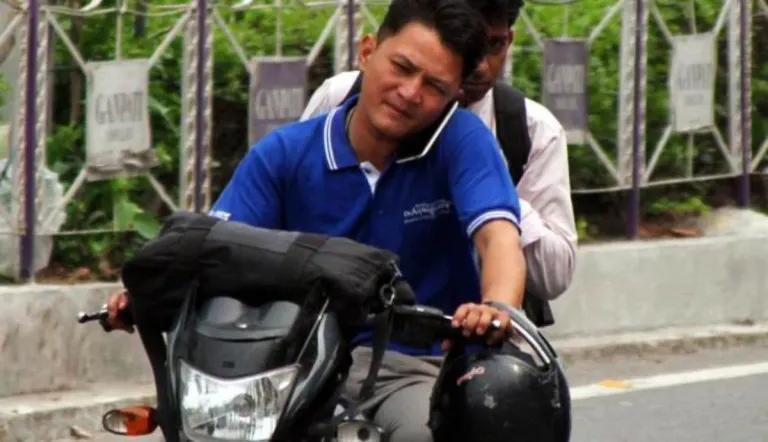
Authorities have highlighted that such behaviour not only endangers the riders themselves, but it also creates serious risks for pedestrians and surrounding traffic. In India, we are seeing a record-high number of road accidents every year. And two-wheelers account for a major share of the fatalities and severe injuries that are caused by accidents on Indian roads.
According to the National Crime Records Bureau’s Accidental Deaths and Suicides in India 2024 Report, nearly 4.68 lakh road accident cases were reported across the country in 2024. The report also revealed that most of these accidents involved two-wheelers. As per the report, over 1.75 lakh people have lost their lives, and around 4.48 lakh people have suffered severe injuries.
As per the draft proposal, the first layer of the safety system will focus on ignition control. In this setup, the motorcycle or scooter may not start at all unless the system detects that both hands are placed properly on the handlebars. To achieve this, two-wheelers will come equipped with grip sensors or pressure-detection systems, which will be integrated into the handlebars.
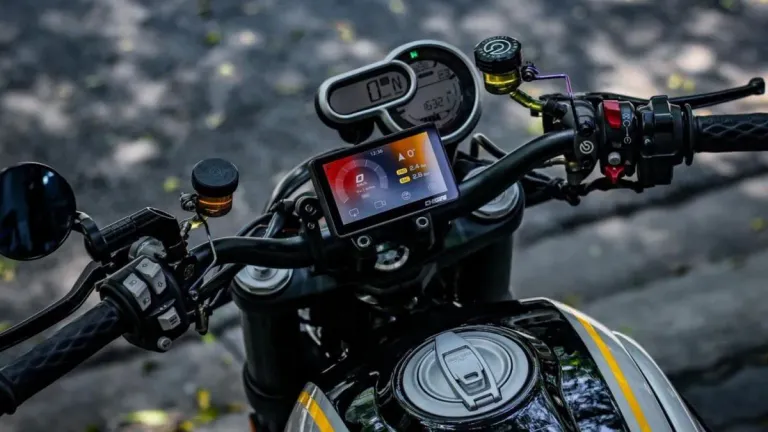
These sensors will verify whether the rider is maintaining proper control before allowing the ignition to activate. Officials have highlighted that such a feature will discourage unsafe riding behaviour from the beginning of the journey itself.
As for the second layer of the proposed safety mechanism, it will involve warning systems that activate if the rider removes hands from the handlebars while the vehicle is moving. According to reports, the system may issue warnings if hands-free riding continues for more than three seconds. These warnings could include audio alerts, dashboard warning signals, and flashing visual indicators.
These alerts will immediately warn the rider before their risky behaviour turns into a serious accident. With this, the authorities aim to target situations where riders perform stunts, attempt no-hands riding, use mobile phones while riding, or fail to maintain proper balance and control.
The third and most advanced layer of the proposed system will involve an automatic slowdown mechanism. Under this setup, if the rider continues riding without holding the handlebars for a longer period, the motorcycle or scooter will gradually reduce speed automatically.
Reports have suggested that this slowdown feature could activate if hands-free riding continues for more than eight seconds. Instead of sudden braking, the system will reportedly introduce a controlled slowdown mode to safely reduce speed. Officials do not want the vehicle to brake abruptly.
This is because it could create additional safety risks for the rider and nearby traffic. The main objective of this gradual slowdown mechanism is to make sure the rider regains control safely and reduces the possibility of high-speed crashes.
Many experts have mentioned that implementing this new safety technology could slightly increase the prices of motorcycles and scooters in India. Some reports claim the cost impact could range between Rs 800 and Rs 1,000 per vehicle. Meanwhile, other estimates suggest prices could rise by nearly Rs 2,000 depending on the technology used.
Automakers will need to add sensor-based grip detection systems, electronic control modules, audio and visual warning systems, and speed management software. The installation cost for manufacturers is estimated to come at around Rs 1,500-1,700 per vehicle.

Currently, the proposal is under discussion, and no official implementation timeline has been announced yet. The government is expected to hold consultations with automobile manufacturers, road safety experts, transport authorities, and industry associations before finalising the rules.
Source
Comments are closed.