
Hairfall not stopping? 5 hidden reasons why your hair is getting thinner and routine to fix it | Health News

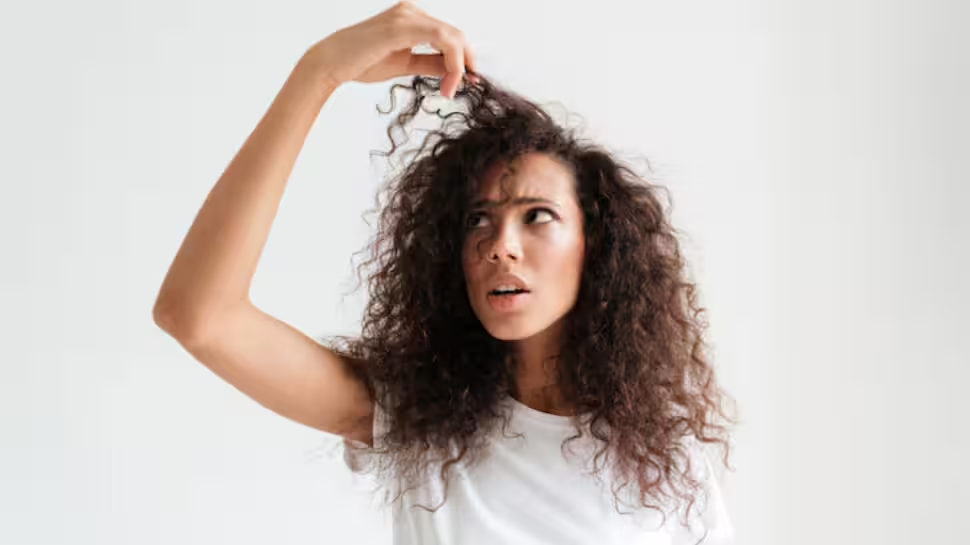
Hairfall is rarely caused by a single factor. It’s usually the result of nutritional gaps, incorrect oiling habits, overwashing, stress, and neglected scalp health working together. When you fix the foundation, diet, circulation, and gentle care, hair naturally regains strength, shine, and density over time.
1. Your Diet Is Missing Hair-Building Nutrients
Hair is made of keratin protein, which means weak nutrition directly shows up as hairfall, thinning, and dull strands. Many people eat enough calories but lack micronutrients essential for hair growth.
Add Zee News as a Preferred Source
Common deficiencies linked to hair loss:
Protein (most common cause)
Iron (especially in women)
Vitamin B12
Zinc
Omega-3 fats
Vitamin D
When the body lacks these, it prioritizes vital organs—not hair.
What To Eat For Strong Hair:
Paneer, curd, lentils → protein repair
Soaked almonds, walnuts → scalp nourishment
Spinach, beetroot → iron support
Seeds (flax, pumpkin, sunflower) → minerals
Seasonal fruits → antioxidants
Hair health improves when meals are balanced, not when supplements are randomly added.
2. You’re Oiling Incorrectly (Yes, There’s A Wrong Way)
Heavy overnight oiling or aggressive champi can actually worsen hairfall by clogging follicles and increasing scalp inflammation.
Common mistakes:
Leaving oil for 10–12 hours
Using too much oil
Applying oil on dirty scalp
Rough massage causing root stress
Correct Way To Oil:
Apply light oiling (1–2 teaspoons only)
Massage gently for 5 minutes—no pulling.
Leave for 30–45 minutes (max 2 hours)
Wash before oil oxidizes on scalp
Best Oils For Hair Strength:
Coconut oil → reduces protein loss
Almond oil → adds shine
Sesame oil → improves circulation
Think of oil as a conditioner, not a soaking treatment.
3. Overwashing Is Disrupting Your Scalp Barrier
Washing hair too frequently strips natural sebum, making the scalp dry, irritated, and prone to shedding.
At the same time, not washing enough leads to buildup that blocks follicles.
Ideal Washing Frequency:
2–3 times per week for most people
After sweating heavily
Always dilute shampoo before applying.
Golden Rule: Shampoo is for the scalp, not the lengths.
Massage gently, let foam cleanse the ends naturally—this prevents breakage.
4. Stress Is Silently Pushing Hair Into the “Shedding Phase”
Emotional stress, poor sleep, crash dieting, or illness can trigger telogen effluvium, where hair shifts prematurely into the fall phase.
This is why people notice sudden shedding 2–3 months after:
Weight loss diets
Illness
Hormonal shifts
High anxiety periods
To Reverse Stress Hairfall:
Sleep before 11 PM (hair repair peaks at night)
Avoid extreme calorie restriction
Add magnesium-rich foods like bananas and seeds
Practice breathing or light exercise
Hair regrowth starts when the nervous system stabilizes.
5. You’re Ignoring Scalp Health (Hair Grows From Skin, Not Products)
A tight, flaky, or inflamed scalp cannot grow thick hair. Many focus on serums but ignore scalp circulation and hygiene.
Signs Your Scalp Needs Attention:
Itchiness or dandruff
Pain when tying hair
Greasy roots but dry ends
Hair that looks flat and lifeless
Simple Weekly Reset:
Gentle exfoliation using curd + pinch of fenugreek powder
Light oil massage for circulation
Proper cleansing to avoid buildup
Healthy scalp = stronger follicles = thicker strands.
The Ideal Weekly Routine For Thick, Shiny Hair
Twice a Week
Oil for 45 minutes
Mild shampoo wash
Air dry (avoid heat styling)
Daily Nutrition Add-On
One protein-rich meal
One handful of nuts/seeds
Lots of water
Monthly Habit
Trim split ends to prevent upward breakage.
Consistency, not expensive products, is what changes hair quality.
(This article is based on information available in the public domain and on input provided by experts consulted.)

Comments are closed.