
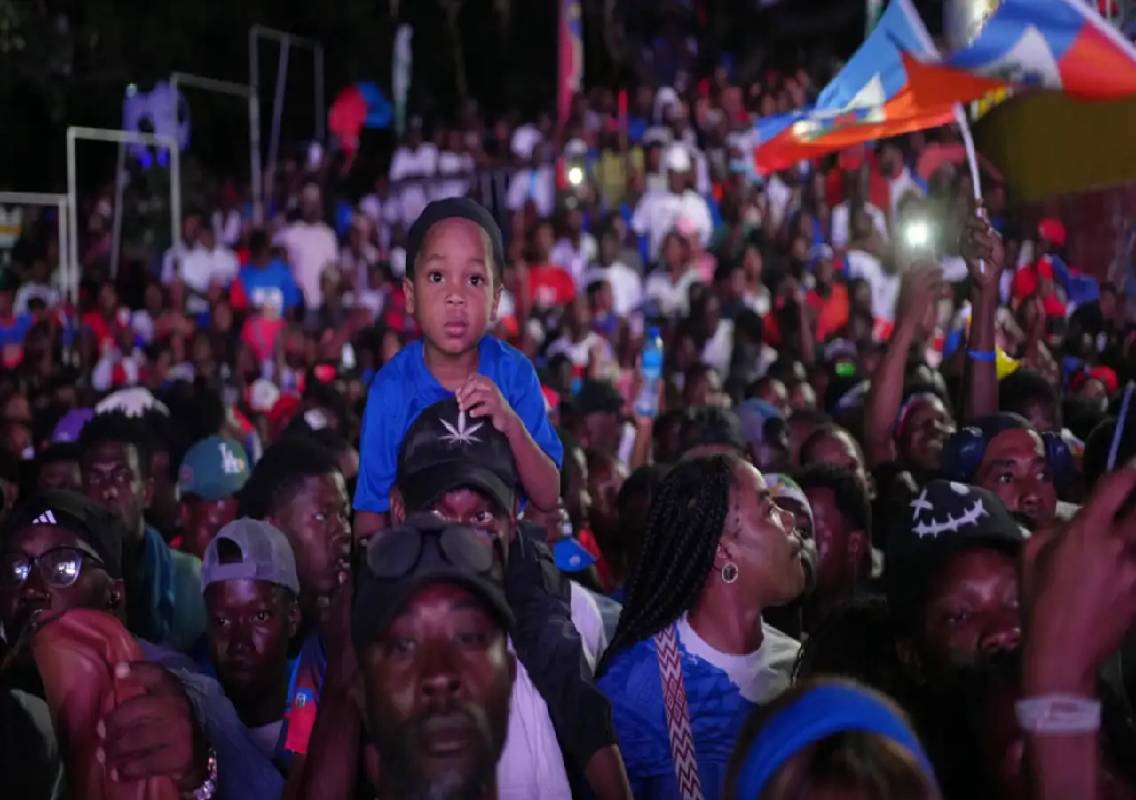

Philadelphia: Haiti’s qualification for the FIFA World Cup 2026 has emerged as one of the most inspiring stories of the tournament, with the Caribbean nation overcoming years of political instability, gang violence, economic hardship and footballing exile to secure a place on the global stage after a 52-year absence.
As Haiti prepares to face five-time world champions Brazil at Lincoln Financial Field in Philadelphia, the nation carries with it a story that extends far beyond football. Their return to the World Cup represents resilience, determination and hope for millions of Haitians enduring one of the most challenging periods in the country’s history.
The 2026 edition has welcomed several debutant nations, but Haiti’s journey back to football’s biggest competition has captured global attention due to the extraordinary circumstances surrounding their qualification.
Ending a 52-year World Cup wait
Haiti’s only previous appearance at the FIFA World Cup came in 1974 when West Germany hosted the tournament. Drawn alongside Poland, Argentina and Italy, the Caribbean side lost all three group-stage matches and exited without earning a point.
More than five decades later, Haiti has finally returned to the tournament, ending a 52-year wait that few believed possible given the country’s ongoing challenges.
Although they suffered a defeat against Scotland in their opening match of the 2026 World Cup, qualification itself has been celebrated as a historic achievement.
The team remains determined to secure its first-ever World Cup point and create further history on football’s grandest stage.
A nation in football exile
One of the most remarkable aspects of Haiti’s qualification campaign is that the team has not played a competitive home match in the country for five years.
Since 2020, escalating violence and instability have made it impossible for the national team to host international fixtures at the Stade Sylvio Cator in Port-au-Prince.
According to reports, armed gangs control large portions of the capital city, creating significant security concerns and preventing the organisation of major sporting events.
As a result, Haiti has been forced to play all of its home fixtures at neutral venues since 2021. Most of those matches have been staged in Curaçao, approximately 516 miles away from Haiti, turning every home fixture into an away journey.
Despite these logistical and emotional challenges, the team successfully navigated the qualification process and secured a place at the World Cup.
Political and economic challenges
Haiti’s football success comes against the backdrop of a severe humanitarian and economic crisis.
According to UNICEF data, nearly 59 per cent of the population lives below the poverty line. The country has struggled with political instability, economic difficulties and recurring security concerns for years.
The devastating earthquake of 2010 further worsened the situation. The disaster reportedly claimed more than 100,000 lives and caused infrastructure damage estimated at approximately $8 billion.
The football community was also deeply affected. Around 30 members of the Haitian Football Association, including players, coaches, medical personnel and administrators, lost their lives in the tragedy.
The effects of the earthquake continue to influence the country’s development and sporting infrastructure more than a decade later.
A global squad united by heritage
Haiti’s World Cup squad reflects the strength of the country’s global diaspora.
Of the 26 players selected for the tournament, only 10 were born in Haiti. The remaining 16 players were born in countries including France, the United States, Canada, Belgium and Slovakia to Haitian families who had migrated abroad.
France contributes the largest number of foreign-born players in the squad, highlighting the strong Haitian community established there over several decades.
Despite being raised in different countries and football systems, the players have embraced the opportunity to represent their ancestral homeland on the international stage.
Their commitment has played a crucial role in strengthening Haiti’s squad and enhancing its competitiveness.
Coach leading from afar
A unique feature of Haiti’s revival is the role played by head coach Sébastien Migné.
The French manager, appointed in 2024, has reportedly never visited Haiti due to security concerns. Instead, he has managed many aspects of the national team remotely, relying on communication with local officials and staff members.
Despite the unusual circumstances, Migné has transformed Haiti into a competitive international side.
His appointment marked the beginning of a revival that ultimately culminated in World Cup qualification.
The coach also succeeded in persuading several dual-nationality players, including Jean-Ricner Bellegarde, Josué Casimir and Hannes Delcroix, to commit their international futures to Haiti.
The road to qualification
Haiti began its qualification campaign in the second round of the CONCACAF qualifiers.
The team finished second in Group C behind Curaçao while comfortably progressing ahead of Saint Lucia, Aruba and Barbados.
In the decisive third round, Haiti delivered an impressive series of performances to top its group and secure qualification for the 2026 FIFA World Cup.
They finished ahead of regional rivals Honduras, Costa Rica and Nicaragua, underlining the scale of their achievement.
The qualification campaign showcased a disciplined, organised and resilient team capable of overcoming adversity both on and off the pitch.
Conclusion
Haiti’s return to the FIFA World Cup after 52 years is far more than a sporting accomplishment. It is a story of perseverance amid adversity, unity across continents and hope during difficult times. Forced to play away from home, led by a coach managing from abroad and representing a nation facing profound challenges, Haiti has achieved what many thought impossible.
Regardless of their results at the tournament, Haiti’s journey has already secured its place among the most inspiring stories of the 2026 FIFA World Cup.
Comments are closed.