
Hamnet Review: Jessie Buckley Conjures a Career-Best Performance in Chloé Zhao’s Haunting Shakespearean Tragedy

Chloé Zhao’s Hamnet is not merely a literary adaptation. It is an act of reclamation. Based on Hamnet by Maggie O’Farrellthe film reimagines the private grief behind one of literature’s most enduring tragedies. The result is a profoundly moving cinematic experience that lingers long after the credits roll.
While William Shakespeare hovers at the edges of the story, this is not his tale. Instead, Zhao shifts the lens toward Agnes Hathaway — known historically as Anne Hathaway — and the emotional devastation following the death of her 11-year-old son, Hamnet.
The Premise: A Mother’s Grief at the Center
Set in 16th-century England, the film traces Agnes’ life before and after tragedy fractures her family. Shakespeare, portrayed with quiet restraint by Paul Mescal, is away in London when their son dies. But Zhao’s focus remains firmly on the woman left behind.
Jessie Buckley’s Agnes is a figure of quiet strength and mysticism. Introduced beneath the shade of a towering tree, she is both grounded in nature and isolated from her community, who whisper about her as a witch. Her connection to the land, to childbirth, and to motherhood becomes the emotional spine of the narrative.
When she gives birth to twins — Hamnet and Judith — the joy feels elemental. When loss strikes, it lands with devastating force.
What Works: Intimate Storytelling and Visual Poetry
Zhao approaches the material with extraordinary sensitivity. The film dares to sit with grief, refusing melodrama in favor of lived-in anguish. Cinematographer Łukasz Żal captures Agnes wandering through forests and dimly lit interiors in frames that feel almost mythic.
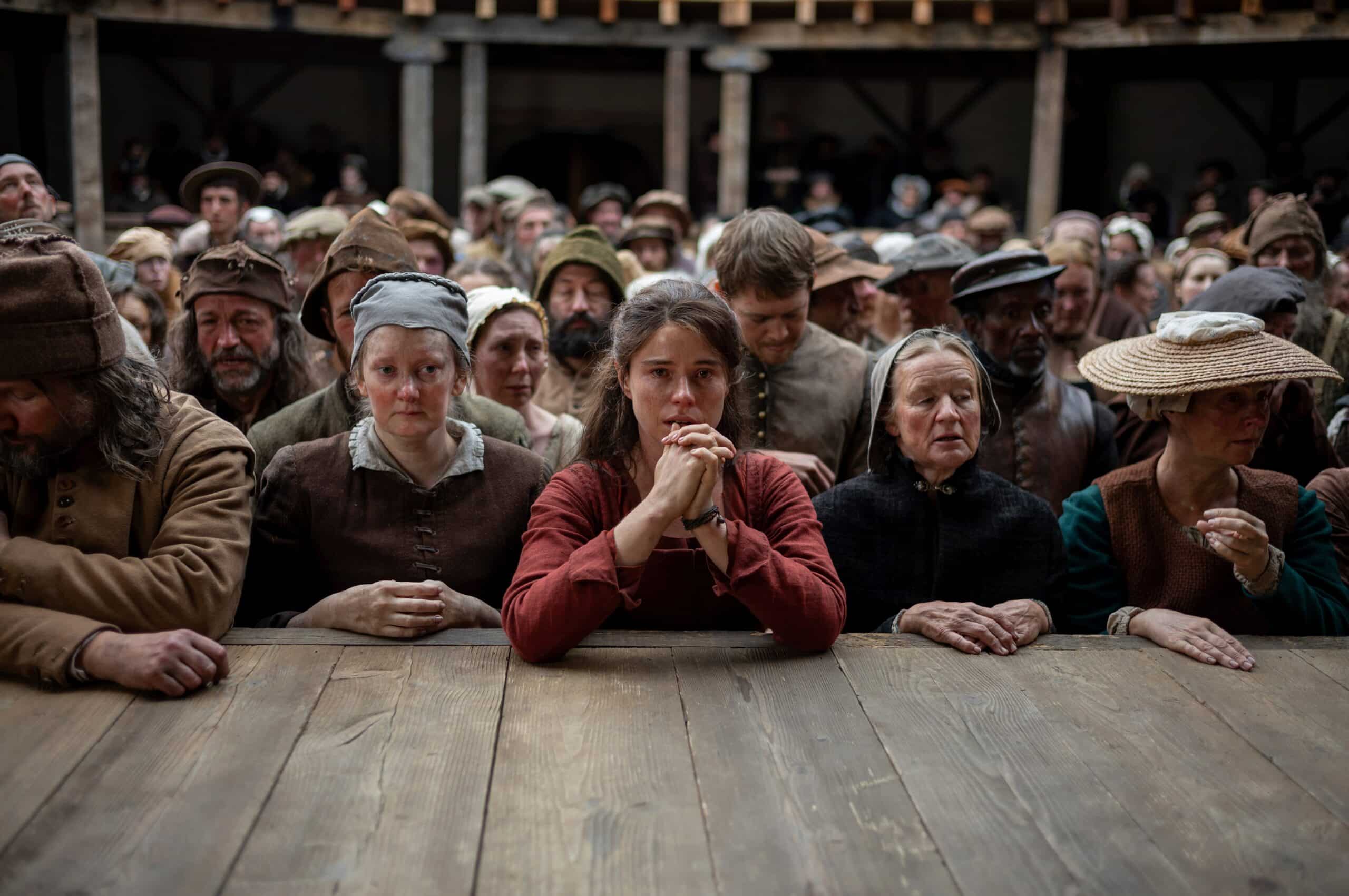
The recreation of Shakespeare’s Globe Theatre in the latter half of the film becomes a powerful site of convergence — where personal sorrow transforms into public art. The staging of scenes from Hamlet blurs time and memory, suggesting that art may be born from unbearable loss.
Max Richter’s score underlines the emotional weight without overwhelming it, allowing silence and stillness to carry equal power.
Jessie Buckley: A Performance for the Ages
At the heart of Hamnet lies Jessie Buckley’s astonishing performance. Her portrayal of Agnes is layered with raw vulnerability and quiet defiance. Buckley conveys the incomprehensible magnitude of maternal grief through glances, breath, and posture. Her scream when tragedy strikes is not theatrical — it is elemental.
Paul Mescal offers a thoughtful interpretation of Shakespeare, though the film rightly keeps him peripheral. Jacobi Jupe delivers remarkable depth in limited screen time, while Noah Jupe’s presence in the staged theatre sequences adds an uncanny emotional resonance.
But this is Buckley’s film. She commands it with emotional precision and aching humanity.
A Reimagination, Not a Revision
Hamnet does not claim historical certainty. Instead, it proposes that art can be an act of survival — a way to hold grief without being consumed by it. Zhao and O’Farrell suggest that Shakespeare’s tragedy may have drawn from private sorrow, transforming loss into language that continues to resonate centuries later.
The film invites audiences to revisit familiar lines — “To be, or not to be” — with renewed empathy. What if those words were shaped by a father mourning his son? What if the tragedy began at home?
Zhao does not provide answers. She offers catharsis.
Final Verdict
Hamnet is a deeply affecting and visually luminous film that reclaims space for a woman history nearly forgot. It breaks your heart, then gently stitches it back together.
★★★★★

Comments are closed.