
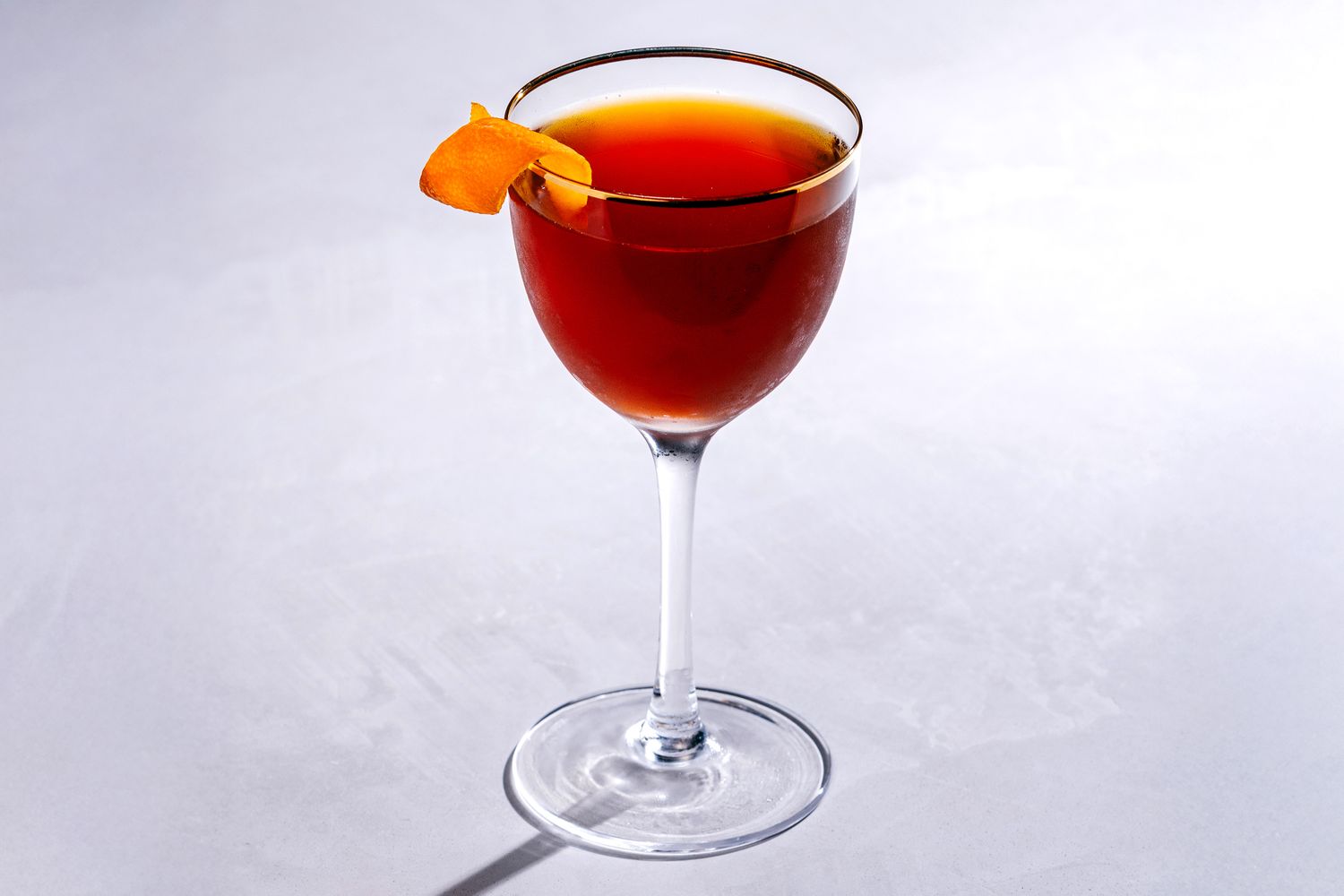

The evocatively named Hanky Panky is a classic mixture of gin, sweet vermouth, and Fernet-Branca. This recipe modernizes the cocktail by mixing the ingredients in equal parts. The drink was born at the American Bar inside London’s Savoy Hotel in the early 1920s, when Ada “Coley” Coleman, one of the first female bartenders to achieve international renown, worked behind the bar. Coleman rose through the London hotel bar scene before she took the Savoy post in 1903, to become the first woman to head the American Bar. Among her regulars were Mark Twain and the popular actor Sir Charles Hawtrey.
As the story goes, Hawtrey stopped in after a long day and asked for something “with a bit of a punch.” Coleman responded with a 50/50 mix of gin and Italian vermouth, a fashionable Martini variation at the time, enhanced with two decisive dashes of Fernet-Branca. Allegedly, Hawtrey drained the glass and declared, “By Jove! That’s the real hanky panky!” The name stuck.
The original Hanky Panky reads like a sweet Martini or Martinez, but Fernet is a defining ingredient. Its bitter, menthol-laced intensity transforms the drink, foreshadowing an appetite for bitter cocktails such as the Negroni, the equal-parts drink that inspired this variation.
Why the Hanky Panky works
Think of this version of the Hanky Panky as a Negroni with the Campari swapped for Fernet-Branca. Where Campari brings bright, candied orange bitterness, Fernet delivers something darker and more medicinal with notes of menthol and alpine herbs. The gin remains the spine, its juniper cutting through both vermouth and amaro, while sweet vermouth acts as the bridge, rounding Fernet’s sharper edges and lending the caramelized richness that keeps the drink from turning austere.
Stirring provides the dilution necessary to knit together Fernet’s intensity with the gin’s botanicals, yielding a cocktail that lands herbal, bitter, and faintly cooling on the finish. An expressed orange twist performs the same service it does in a Negroni. Its volatile citrus oils brighten the nose, bringing some zest to a drink that might otherwise feel heavy and brooding.

Comments are closed.