
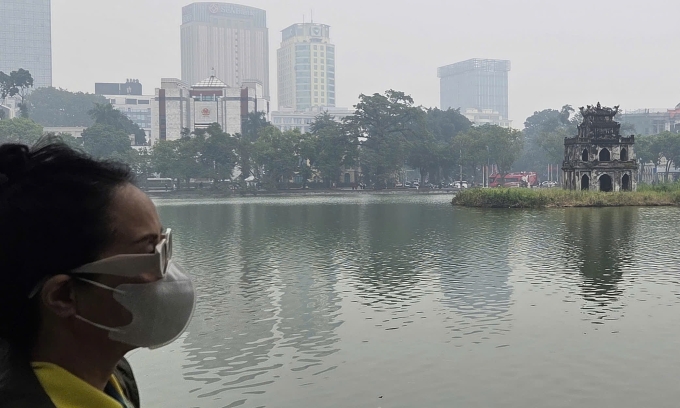

The target, written into the city’s 2026 socio-economic development plan for the first time, would be achieved four years ahead of Hanoi’s existing air-quality roadmap, which had set a similar goal for 2030.
City officials say traffic remains one of the largest pollution sources, compounded by Hanoi’s basin-like geography, dense construction activity and seasonal weather patterns that trap dirty air during the final months of the year. Studies conducted with the World Bank also show that pollution drifting in from neighboring provinces contributes significantly to the capital’s smog.
Because weather conditions cannot be controlled, Hanoi is focusing on emission sources it can regulate. Authorities are conducting detailed pollution inventories to determine how much comes from traffic, construction, industry and open burning, with transport likely to be prioritized if it accounts for the majority of emissions.
As air quality has remained poor for weeks, the city has ordered a series of emergency measures. Construction sites must strengthen dust controls, while factories with high emissions may be required to temporarily reduce output or reschedule heavy-polluting operations. Street cleaning and water spraying have been intensified on major roads, and new permits for road excavation are being suspended during periods of severe pollution, except in emergencies.
Alongside these short-term actions, Hanoi is pushing long-term structural changes. More than a quarter of the city’s bus fleet has already switched to electric or clean-energy vehicles, exceeding its 2026 target. All buses are expected to complete the transition by 2030, while half of Hanoi’s taxis have already gone green, with full conversion required by the end of the decade.
Private vehicles remain the biggest challenge. City leaders say new policies and incentives are being developed to help residents move from gasoline-powered motorbikes and cars to electric alternatives, alongside the expansion of metro lines and public transport networks.
A central pillar of the plan is the creation of low emission zones, where polluting vehicles will be restricted and clean transport prioritized. From mid-2026, Hanoi will pilot these zones in parts of the city center, gradually expanding them to larger ring-road areas through 2030. Gasoline motorbikes will face partial or full bans depending on location and time, while cars that fail to meet emissions standards will be progressively restricted.
City officials stress that the transition will be phased and supported, with residents placed at the center of the policy.
“Air pollution is not only Hanoi’s problem but a regional and national one,” said Le Thanh Thuy, deputy head of the Environmental Management Division at the Hanoi Department of Agriculture and Environment, adding that cooperation with surrounding provinces will be essential to achieving lasting improvements.

Comments are closed.