
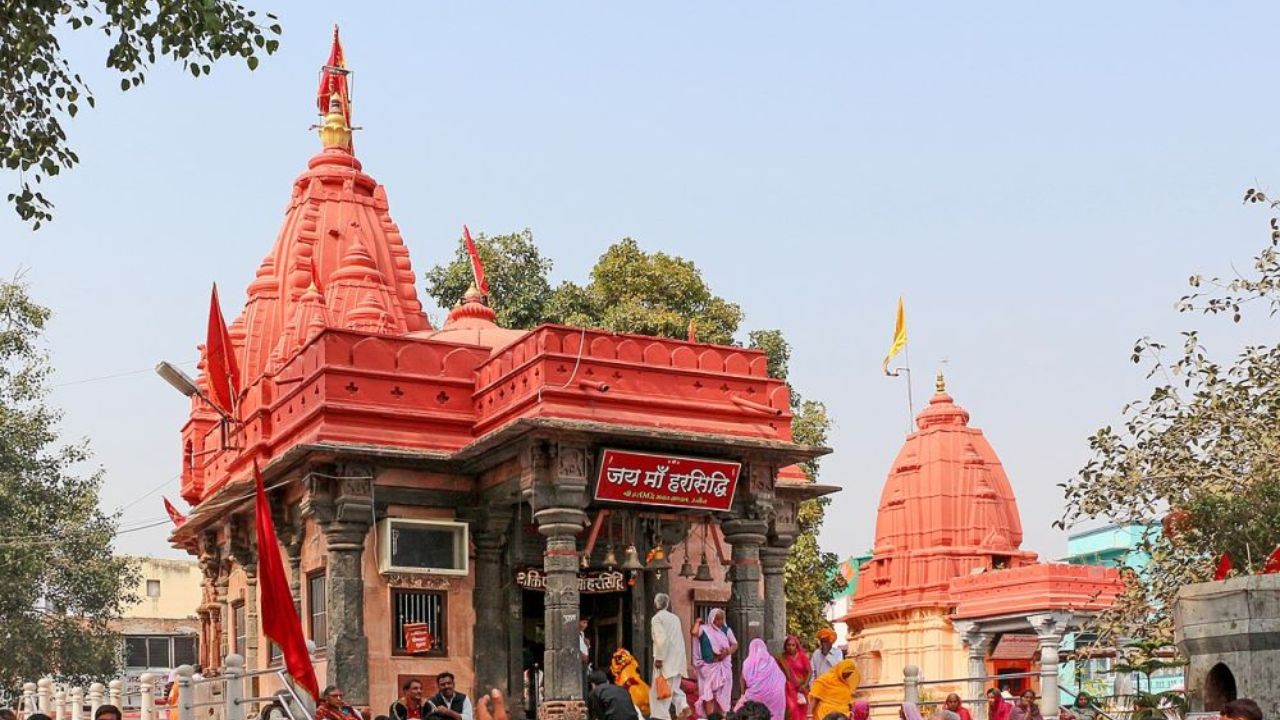
Harsiddhi Temple: Where the elbow of Goddess Sati had fallen, it is believed to be connected to Chand-Mund.

Harsiddhi Mata Temple located in Ujjain, Madhya Pradesh is one of the 51 Shaktipeeths of the country. This ancient place is famous far and wide for its mysterious beliefs, amazing traditions and historical heritage. Devotees offer special worship to the Goddess in this temple which is considered to be about two thousand years old. The tall lamp pillars located in the temple complex, the grand entrance gates in all four directions and the ancient stepwells further enhance the grandeur of this place. According to local beliefs, the place where this temple is built is where the elbow of Mata Sati had fallen, which is why this place is famous as Shaktipeeth.
Be it the origin of the name ‘Harsiddhi’ related to the story of Chand-Mund slaughter described in religious history or the folklore related to the sadhana of King Vikramaditya, this temple contains within itself many mysteries and mythological incidents. There is no sacrificial ritual in the temple and the most unique tradition here is the lighting of lamps on huge lamp pillars, which devotees consider to be a way to fulfill their wishes.
Also read: Belur Math: How the temple was built with Hindu, Muslim and Christian architecture?
There are entrances in four directions
There are a total of four main gates in the Harsiddhi temple, whose structure is very beautiful. An old stepwell is also present in the south-east part of the temple. There is a stone pillar inside this stepwell, on which Sriyantra is carved. There are two tall lamp pillars (headed pillars) in front of the temple. Especially during Navratri, garlands of lamps decorated with lights shine on them for five days.

Where the elbow of Goddess Sati had fallen
It is believed that the lips of Mother Sati had fallen on Bhairav mountain on the banks of Kshipra river in Ujjain. His elbow is said to have fallen at the place where the Harsiddhi temple is. For this reason, this place is considered as Shaktipeeth and the supreme Shakti form of Mother is worshiped here.
How did the name ‘Harsiddhi’ come about?
According to the story, once two demons named Chand and Mund came to attack Kailash. At that time Mahadev ji and Goddess Parvati were busy in gambling. Both the demons tried to enter inside but Nandigana stopped them. The demons injured Nandigana. Knowing this, Lord Shiva called Goddess Chandi. The goddess destroyed both the demons. Pleased with this, Lord Shiva said that because of the destruction of the wicked you will be worshiped with the name ‘Harsiddhi’. Since then this form is considered prestigious in the land of Ujjain.
Also read:On which day will Vrischik Sankranti be celebrated, 16th November or 17th? Learn the worship method here
There is also a connection with King Vikramaditya
It is also believed in local traditions that this place has been the meditation ground of King Vikramaditya. In a corner at the back of the temple, symbols of several heads are kept, on which vermilion is applied. Folk belief says that Vikramaditya offered his head every 12 years to please the goddess. Eleven times his head returned, but it did not happen the 12th time. This was considered a sign of the end of his reign.
Special traditions and beliefs
There is no animal sacrifice in the temple because the goddess here is considered Vaishnav and she is said to be the family deity of the Parmar dynasty. Worship is done in the temple with Sri Sukta and Veda mantras. Lighting the lamp on the lamp pillar here is considered very auspicious. It is believed that the wishes spoken while offering lamps to these lamp pillars are fulfilled.

Comments are closed.