
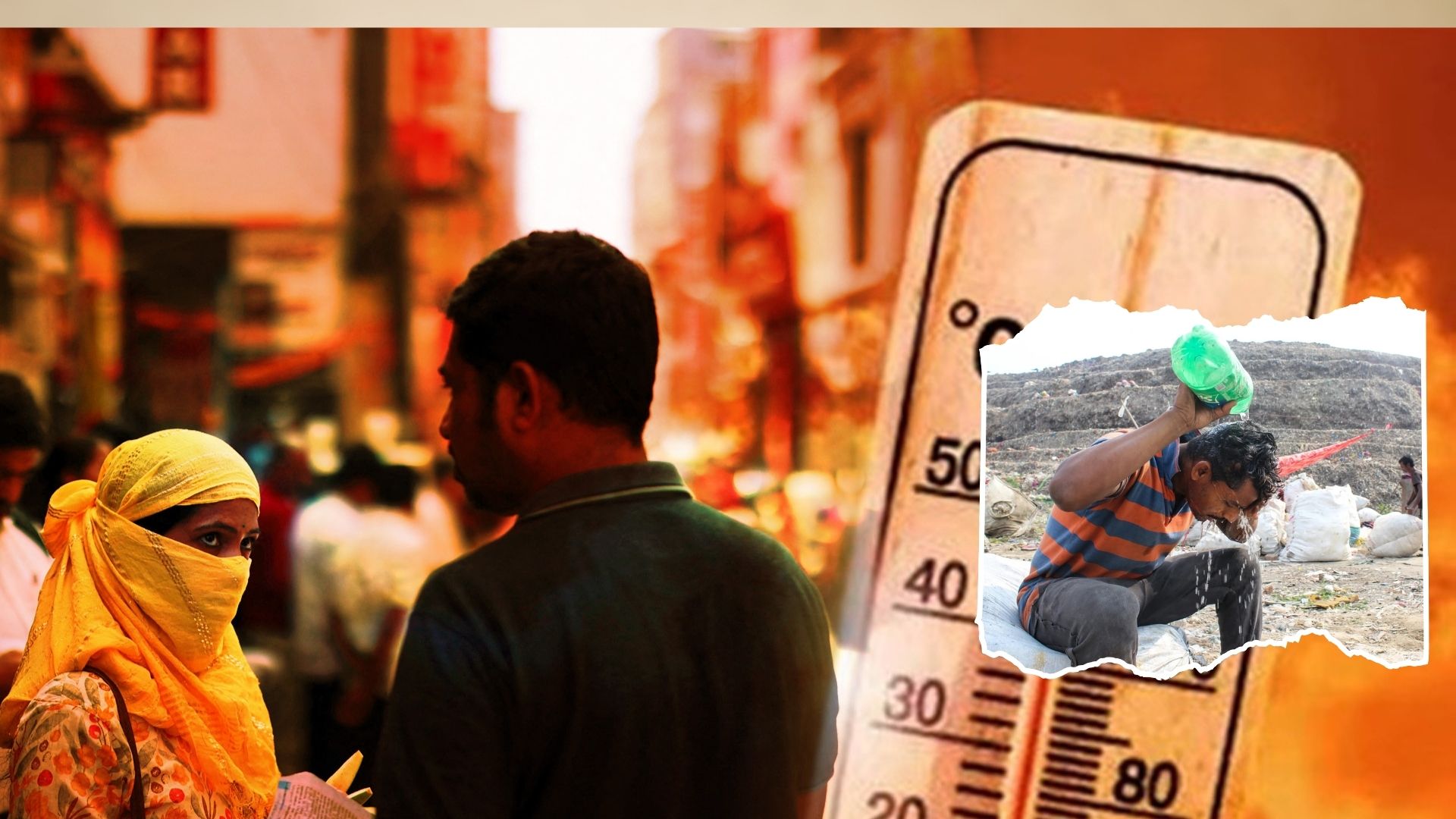

South India is facing an unprecedented heatwave, with Telangana, Andhra Pradesh, Karnataka, and Kerala experiencing dangerously high temperatures far earlier than usual.
As global warming accelerates seasonal shifts, spring is rapidly disappearing, replaced by prolonged and extreme summer conditions that are stretching public health systems, water resources, and livelihoods.
Across India, traditional seasonal patterns are becoming increasingly unpredictable. What was once a gradual transition from winter to spring and then summer is now being replaced by an abrupt leap into scorching temperatures.
The “pleasant in-between weather” is fading, and climate experts warn that rising global temperatures are making extreme heat events more frequent and intense.
Telangana burns
While summer officially began only in mid-April, temperatures in Telangana have already crossed 45°C in several districts. The India Meteorological Department (IMD) has issued red alerts as the state’s northern districts face severe heatwave conditions.
Adilabad recorded 45.3°C, Nizamabad hit 44.3°C, and Medak touched 42.4°C. More than 20 districts, including Karimnagar, Khammam, and areas near Hyderabad, are enduring dangerous temperatures.
Also read: World’s heat capital: Why India is becoming the hottest place on Earth
To manage the crisis, the state government has activated a heatwave action plan. Schools have introduced “water bells,” outdoor classes have been banned, Anganwadi centres are closing early, and malls and temples are being repurposed as cooling centres.
Andhra scorches
Andhra Pradesh is also witnessing severe heatwave conditions, with temperatures climbing above 44°C in multiple districts.
According to the State Disaster Management Authority, districts are running nearly 5°C above normal. Anantapur recorded 44.8°C, Kambham touched 44.7°C, and nearly 198 mandals across 16 districts have crossed 41°C.
Clear skies, El Nino conditions, lack of pre-monsoon showers, and hot northwesterly winds are intensifying the heat. Authorities fear reduced monsoon rainfall this year, which could worsen water scarcity and agricultural stress.
Karnataka crisis
Karnataka is battling similarly harsh weather. Farhatabad Hobli in Kalaburagi recorded 45.3°C on April 16, the highest in the state this season.
Bidar reached 44.6°C, Raichur touched 44.2°C, and multiple districts remain above 40°C. Even Bengaluru, once known for its mild climate, is seeing temperatures around 38°C—4 to 5 degrees above normal.
Also read: From traffic signals shutdown to SOPs for workers: How states are tackling heatwave
Experts attribute Bengaluru’s worsening heat to unscientific urbanisation and large-scale tree loss. The crisis has already caused deaths, dehydration among wildlife, and rapidly falling water levels in reservoirs and borewells.
Kerala alert
Kerala’s heat crisis is compounded by dangerous ultraviolet radiation levels. Four districts, including Pathanamthitta and Alappuzha, are under orange alert, while seven others remain under yellow alert.
UV readings have reached hazardous levels, while Palakkad is expected to exceed 40°C. Chief Minister Pinarayi Vijayan has warned of serious health risks, urging residents to stay indoors between 11 am and 3 pm.
Restrictions have been placed on outdoor work, public events, and sports during peak heat hours. Hospitals and emergency services remain on high alert.
New normal?
Across southern India, governments are scrambling to respond with emergency health infrastructure, water management plans, and public safety campaigns.
Also read: IMD warns of above-normal heatwave days in northern, western India this year
But the larger reality is clear: climate change is fundamentally altering India’s seasonal rhythms. Heat is no longer just a summer story—it’s becoming the new normal.
As moderate months disappear and extreme weather intensifies, the challenge ahead lies not just in surviving these heatwaves, but in adapting to a future where they may define everyday life.
(The content above has been transcribed from video using a fine-tuned AI model. To ensure accuracy, quality, and editorial integrity, we employ a Human-In-The-Loop (HITL) process. While AI assists in creating the initial draft, our experienced editorial team carefully reviews, edits, and refines the content before publication. At The Federal, we combine the efficiency of AI with the expertise of human editors to deliver reliable and insightful journalism.)

Comments are closed.