
Hijab Row or Vote Bank Politics? Jharkhand Govt’s Special Offer Sparks Big Questions- DNA Decodes | India News

The Jharkhand government’s recent job offer to doctor Nusrat Parveen has triggered a sharp political and administrative debate, with allegations that the move is rooted in appeasement and vote-bank politics rather than established rules.
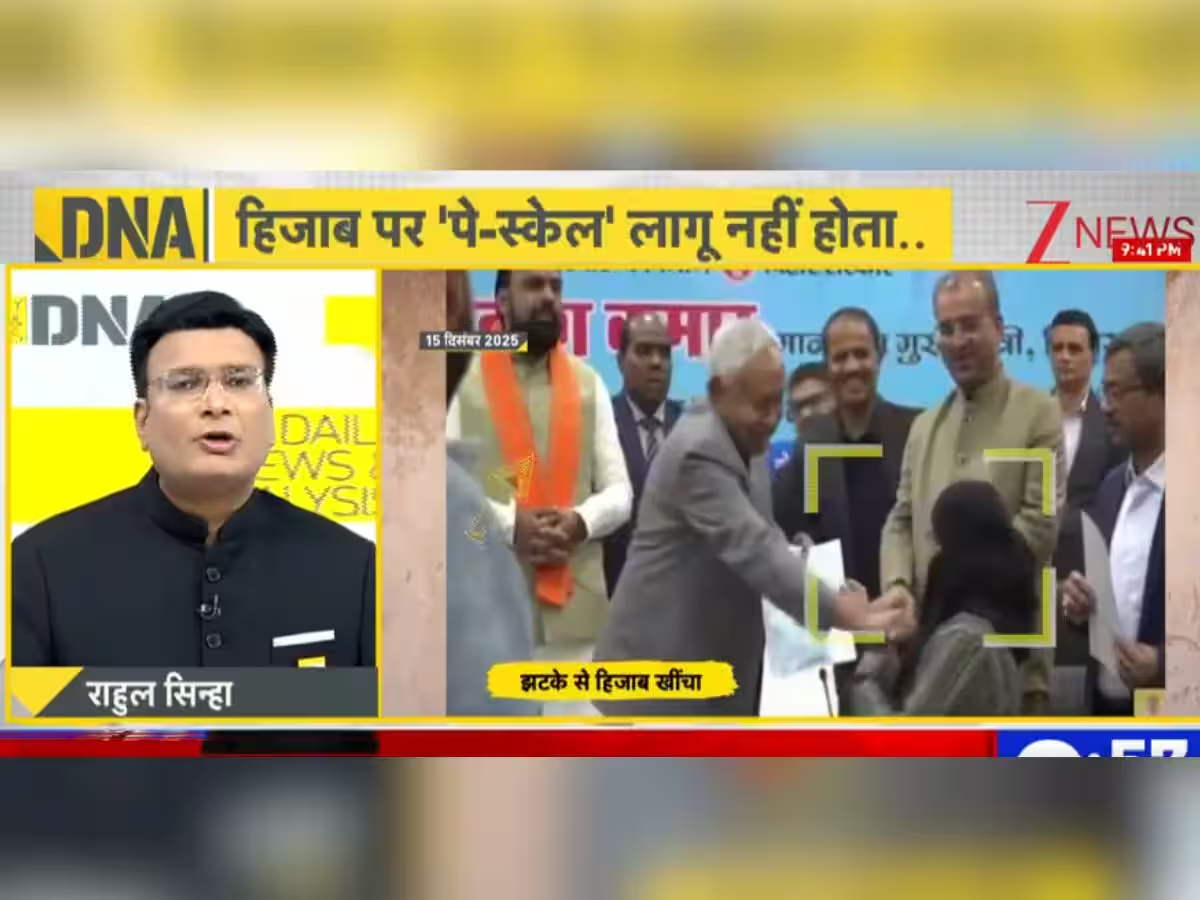
The controversy follows allegations against Bihar Chief Minister Nitish Kumar, where a woman doctor claimed her hijab was forcibly removed. In the aftermath, Jharkhand Health Minister Dr Irfan Ansari announced an extraordinary offer for Nusrat Parveen, saying he was deeply hurt by the hijab row.
According to the offer, the Jharkhand government is willing to appoint Nusrat Parveen on a monthly salary of Rs 3 lakh. In addition, she has been promised a posting of her choice anywhere in the state, along with a government flat to address housing concerns.
Add Zee News as a Preferred Source
Nusrat Parveen is a Unani doctor who was working in Bihar on a contract with a monthly salary of around Rs 32,000. Typically, Unani doctors in Jharkhand receive similar pay. However, due to the hijab controversy, she is now being offered nearly ten times the usual salary, along with special privileges.
Watch Today’s Full Episode
Hadi will become ‘Father of the Nation’ and…Munir ‘God Father’!
DNA test of ’20 minute people’ in Bangladesh
Analysis of the first attack on ‘Islamic terrorism’See #DNA LIVE with Rahul Sinha#DNAFriends #ZeeLive #ZeeNews #DNAWithRahulSinha @RahulSinhaTV https://t.co/R8diwZboZn— Zee News (@ZeeNews) December 20, 2025
The debate becomes sharper when seen against the state’s healthcare reality. As per the CAG’s 2022 report, Jharkhand has 3,634 sanctioned posts for health officers, but 61 per cent remain vacant. Over 52 per cent of staff nurse posts and nearly 80 per cent of paramedical posts are also unfilled.
Despite this collapsing healthcare system, no serious effort has been made to fill vacancies. Yet, the minister is ready to bypass procedures and offer extraordinary benefits. Meanwhile, protests over the hijab issue continue across states, even as silence prevails over cases like the Shamli incident, where a man allegedly killed his wife and daughters for not wearing a burqa—raising troubling questions about selective outrage in a democratic society.

Comments are closed.