
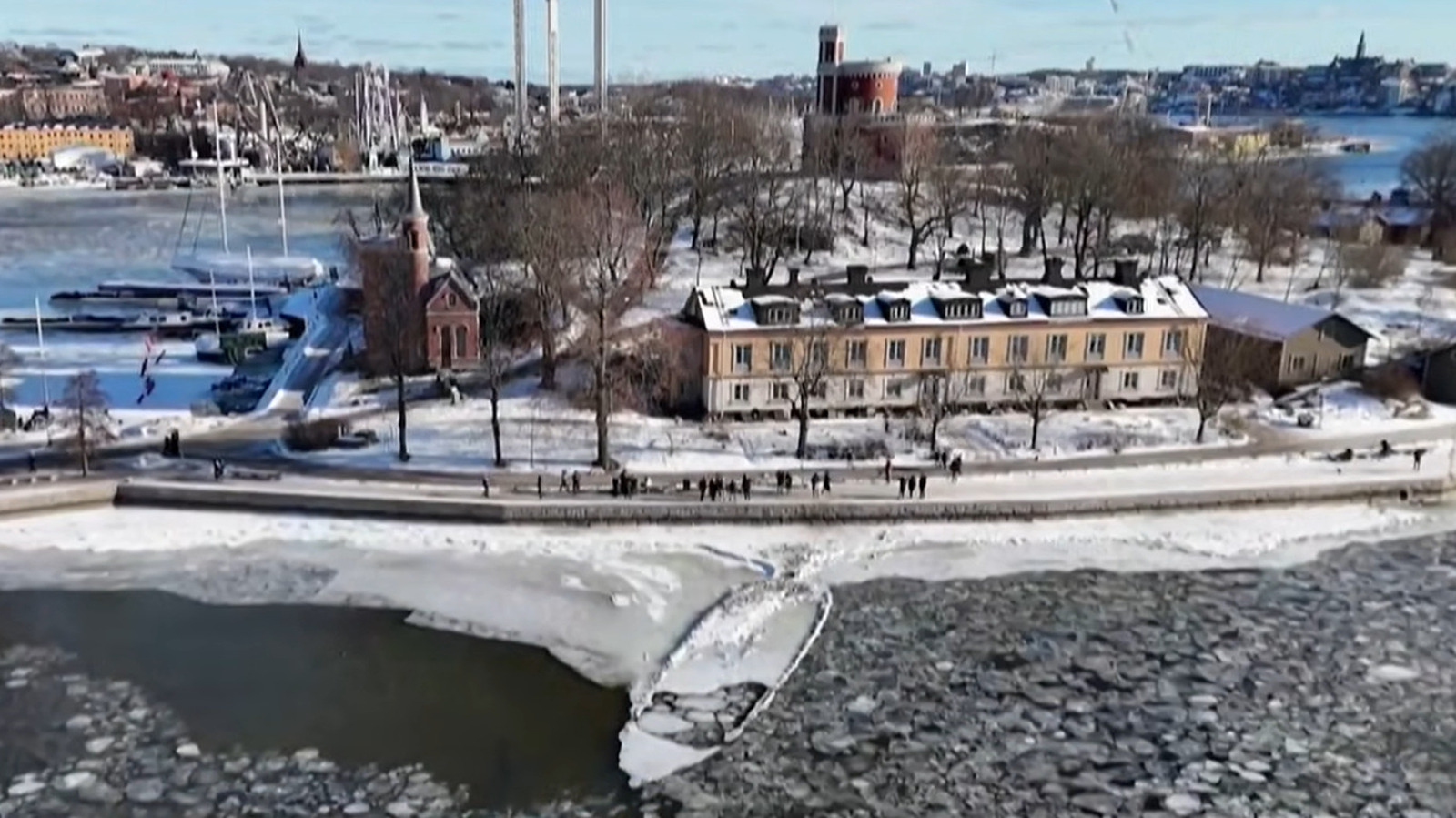

After 400 years underwater, a Swedish Navy vessel in the Baltic Sea off Stockholm has become visible. Sunk on purpose back in the 17th century, the ship has resurfaced after the waters reached their lowest level in the past 100 years. Marine Archeologist, Jim Hansson, from Stockholm’s Vrak Museum of Wrecks, explained the conditions which led to its reemergence to AFP, as reported by CBS. “There has been a really long period of high pressure here around our area in the Nordics. So the water from the Baltic has been pushed out to the North Sea and the Atlantic.” .
The unidentified ship was sunk around 1640 so it could be used to form the foundation of a bridge connecting to the Kastellholmen island. There are currently five sunken ships in the area. The Swedish Navy is looking into reusing their oak hulls rather than using new wood. Researchers are currently attempting to identify these sunken ships as part of a research program called “The Lost Navy.”
How did the shipwreck survive underwater for 400 years?
It might seem baffling that a wooden ship could survive in the ocean for 400 years, but the Baltic Sea had the right conditions to keep the Swedish Navy vessel largely intact. According to Hansson, that part of the ocean doesn’t have shipworms, meaning the sunken ship wasn’t eaten. Shipworms, which can grow up to two meters long, are sea creatures that use bacteria in their gut to break down wood and consume it. They’re so proficient at it that they can sink a boat.
Rather than rotting the wood away as you’d possibly expect, the water actually keeps the boat intact — especially at deep levels — creating a time capsule of sorts. In fact, most boats can remain undisturbed deep under the water indefinitely — but bringing the shipwreck to the surface can cause the wood to break down since it was only being held together by water between its cells.
This has been a big issue with recovering the Vasa, another vessel in Sweden that sank back in 1628. Its wood is being ruined by iron and metal pieces that have started to acidify, now it’s out of the water. Scientists discovered that earth alkaline hydroxides can neutralize the acid, stopping the chemical reaction that destroys the wood, but it’s still a challenge to preserve uncovered shipwrecks. This means the low water levels in the Baltic Sea could pose a problem for the newly uncovered warship.

Comments are closed.