
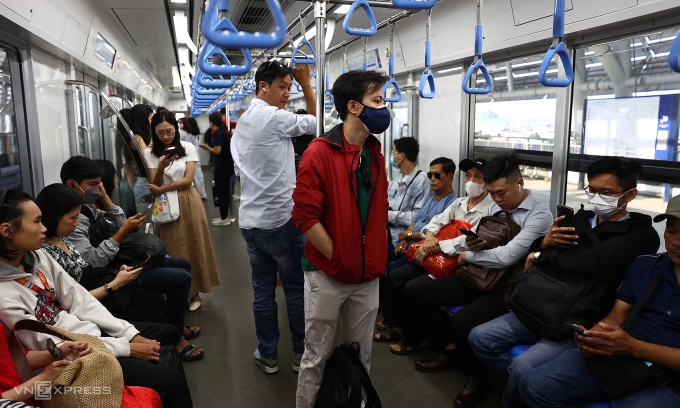

Ridership on the Ben Thanh-Suoi Tien line hit nearly 70,000 trips per day in the week of March 17-23, up from about 52,000 a day late last year, according to operator the Ho Chi Minh City Urban Railway No. 1 Co. Ltd. (HURC1).
The surge tracks closely with a series of emergency fuel price adjustments that have rattled Vietnamese motorists since early March.
RON95 gasoline hit VND30,690 (US$1.17) per liter on March 19 and continued to VND33,840 after global oil prices surged past $100 per barrel, with Brent crude briefly topping $112.
Vietnam has made numerous price adjustments within days of each other, a departure from its usual seven-day review cycle, as the government drew heavily on its fuel price stabilization fund to cushion the blow.
For a city where motorbikes remain the dominant mode of transport, the pain at the pump translates directly into public transport demand.
The combined metro and bus ridership now averages 340,000 trips per day, up 35% from the end of February and 12% higher than a year ago, according to the Ho Chi Minh City Public Transport Management Center.
Transport authorities also attributed the surge to the return of students after the Tet holidays. Students make up a large share of metro riders, and the line’s route through the Thu Duc university district means carriages fill quickly in the morning and afternoon.
The city has been working to capitalize on the momentum.
Buses now offer free rides on Fridays for passengers using cashless payment, and fare waivers are extended during public holidays and major events.
New electric buses have been deployed and cashless payment options have been expanded to include bank cards, e-wallets and mobile payment platforms.
The Ben Thanh-Suoi Tien service, so far the only metro line, stretches 19.7 km from the city center to its eastern gateway.
It began commercial service in December 2024, and now runs more than 240 trips per day, operating from 5 a.m. to 10 p.m. on weekdays and until 11 p.m. on weekends and holidays.
The bus network comprises about 179 routes served by more than 2,300 vehicles.
Electric buses now make up the majority of the fleet as Ho Chi Minh City pushes toward a fully clean bus network by 2030.

Comments are closed.