


Honda Cars India President and CEO Takashi Nakajima has said publicly that the company is open to and actively looking for partnerships in India. That is a significant statement from a brand that has historically operated largely on its own in the market.
It also reflects the gap between Honda’s ambition and its current scale. Honda wants India to become one of its key global growth markets, alongside the US and Japan. But its present sales base is too small for that target.
Honda sold 4,069 cars in India in April 2026, up 21 percent year-on-year. That looks positive at first glance, but the base remains modest. The Amaze compact sedan contributed 2,856 units, which means it accounted for more than 70 percent of Honda’s domestic sales for the month. The Elevate SUV added 1,036 units. The City, once one of Honda’s most important models in India, managed only 177 units.
That is the real context behind the partnership signal. Honda does not only need more models. It needs scale.
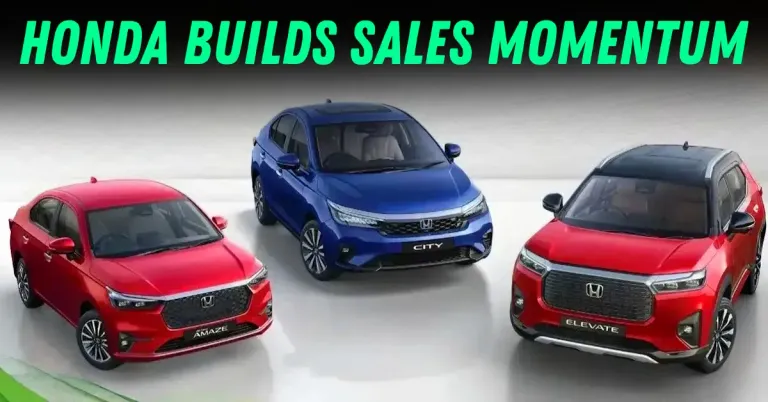
Honda’s India portfolio currently depends heavily on three models: Amaze, City and Elevate. That is a thin line-up in a market where rivals cover multiple price points, body styles and powertrain options.
The Amaze is doing most of the work. Its April 2026 volume shows that Honda still has strength in compact sedans, especially among buyers looking for reliability, comfort and an affordable automatic option.
The Elevate has given Honda a presence in the midsize SUV space, but its 1,036 units in April show that it is not yet a segment-leading product. The City’s 177-unit figure is the sharper concern. The sedan still has brand value, but the segment has shrunk and SUV demand has taken away much of the volume.
This is why Honda’s problem is structural. It is not about one bad month. It is about not having enough products in enough fast-moving segments.
Nakajima has not named a specific partner or disclosed the kind of partnership Honda is looking for. That leaves several possibilities open.
The most obvious route is platform sharing. Developing a new car for India is expensive, especially in segments where margins are tight. A shared platform can reduce development cost and help both companies achieve better economies of scale.
Component sharing is another option. Honda could work with another manufacturer on batteries, electric motors, electronics, transmissions or hybrid components. This would be useful because the next phase of the market will require more electrified products.
A manufacturing partnership is also possible. Honda’s Tapukara plant in Rajasthan currently produces the Amaze and Elevate. If another brand or partner can share capacity, tooling or supplier investments, the plant’s economics could improve.
Nissan has separately indicated interest in working with Honda in India. A Honda-Nissan collaboration would make sense on paper because both Japanese brands need scale, and both have limited market share here compared with the top players.

The partnership discussion is part of a larger India reset. Honda plans to launch more than 10 models in India by 2030. These will include SUVs, electric vehicles and models developed specifically with India in mind.
The company has already launched the 2026 City facelift and unveiled the ZR-V hybrid SUV. The City facelift starts at Rs 11.99 lakh ex-showroom and continues with petrol and strong-hybrid options. The ZR-V is being brought in as a premium hybrid SUV, with deliveries expected later in the year.
Honda’s first full-electric model for India is expected in the second half of the current fiscal year. From 2028, the company plans to bring India-focused strategic models, including a sub-four-metre SUV and another midsize model.
That is the right direction. Honda has been missing from the sub-four-metre SUV segment, which is one of the most important parts of the Indian market. It is also under-represented in the broader SUV space beyond the Elevate.
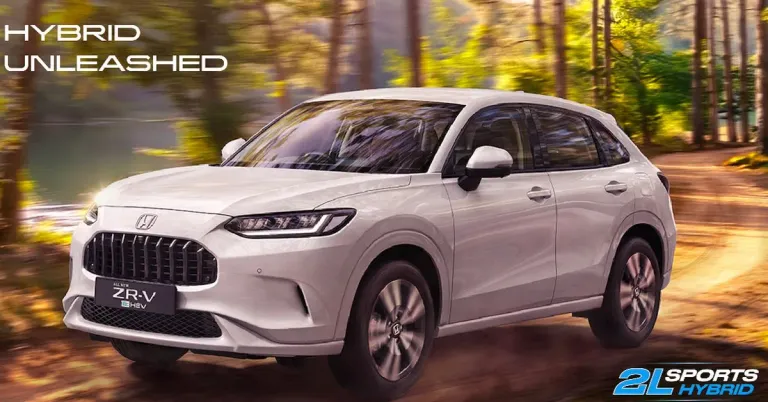
Honda’s clearest technology advantage is hybrid power. Its e:HEV system has already been used in the City hybrid and now forms part of its premium SUV push.
This matters because hybrids are becoming more relevant in India. They offer better fuel efficiency than petrol cars without requiring charging infrastructure. Maruti Suzuki and Toyota have already shown that strong hybrids can find buyers when priced and packaged correctly.
Honda’s challenge is cost. Hybrid systems are expensive, and Honda does not currently have the scale to price them as aggressively as larger rivals. A partner could help here by sharing volumes, localisation work or component costs.
The ZR-V will give Honda another hybrid product, but it will not be a mass-market model because of its premium positioning. The real test will come when Honda brings hybrid technology into more locally relevant models.
Honda looking for a partner should not be read as a sign that the company is giving up. It is a sign that it recognises the cost of rebuilding alone.
Selling just over 4,000 cars a month while planning more than 10 launches by 2030 is a demanding task. It requires capital, suppliers, localisation, engineering support, dealer confidence and marketing spend.
A good partnership can shorten that journey. It can help Honda enter missing segments faster, reduce product-development costs and make hybrid or EV technology more affordable.
Honda still has strong brand recall in India. Many buyers associate it with reliability, petrol engines and long-term ownership. But brand recall is not enough in a market where rivals have wider portfolios and stronger SUV line-ups.
The next few years will decide whether Honda can turn its India plans into real volume. Finding the right partner could make that job much easier.
Comments are closed.