


Impact of Hormonal Imbalance: Hormonal disturbance is not limited to the body only, it also affects emotions and relationships. Gradually it affects the closeness of marital life.
We usually associate marriage with love, trust, understanding and a sense of companionship. But at the foundation of this relationship there is an aspect which is often not paid attention to, and that is hormones. The hormonal changes going on within the body not only affect our health, but also have a deep impact on the understanding, emotional connection and closeness between husband and wife. The sad thing is that despite being the real reason for many problems in relationships, hormones are rarely discussed openly. Dr. Shobha Gupta, Medical Director and IVF expert at Mother’s Lap IVF Center, New Delhi, explains how changes in hormones can change the direction of married life.
What role do hormones play
Hormones are our body’s messengers, which maintain coordination between mind and body. These regulate our mood, sleep, energy, appetite, stress and sexual desire. When these are in perfect balance, life seems easy and relationships seem normal. But as soon as this balance gets disturbed, the person
Changes in behaviour, thinking and emotional reactions become clearly visible. The problem arises when we consider these changes as nature or weakness of the relationship, whereas
The real reason is hidden within the body.
Hormonal changes and relationships in women
Hormonal changes in women’s lives are not limited to any one phase. From the beginning of periods to pregnancy, the time after childbirth and then menopause – every stage brings with it physical and mental changes. Fluctuations in estrogen and progesterone
Due to this, mood swings, tiredness, irritability, restlessness and sometimes loss of sexual desire can be felt. These days women become more emotionally sensitive. If they get understanding and support from their spouse at this time, then balance can be maintained in the relationship.
When women themselves cannot understand hormonal changes
Often women themselves do not understand why there is a sudden change in their behaviour. They feel that they are being overly emotional or reactive, whereas hormonal imbalance is the reason behind this. When this matter does not reach the spouse, then even small things become the cause of misunderstanding, argument and distance.
Hormonal effect occurs in men also
It is not right to associate hormonal changes only with women. In men too, testosterone levels gradually decrease with age. Its effect can be seen in the form of fatigue, irritability, stress, loss of confidence and decline in sexual desire. Many men avoid accepting these changes or talking about it openly. This silence can create emotional distance in the relationship over time. The situation becomes more complicated when the husband and wife are going through their own hormonal changes and communication reduces. In such a situation, each other’s behavior is misunderstood, whereas the real reason is the biological process going on inside the body.
Relationship between sex life and hormones
The role of hormones in married life is most visible in sexual relations. Estrogen, progesterone, and testosterone all affect sexual desire, arousal, and satisfaction. Hormonal imbalance can cause problems like dryness, pain, fatigue or loss of desire, which people often feel hesitant in talking about. Many times the distance in sex life is mistaken for coolness in the relationship, whereas in reality it is completely the result of hormonal changes. Right information and expert advice in time can bring closeness in the relationship again.
How to handle relationships during hormonal changes

Hormonal changes are not a disease, but a natural process of life. There is a need to understand and accept this, and not to blame each other.
open you: Instead of hiding your confusion, fatigue or irritability, share it with your spouse.
Give each other time and space: Don’t expect to be perfect all the time. Sometimes even a little distance brings comfort to a relationship.
Don’t hesitate to take expert help: Hormonal testing or counseling can be a wise step in managing the relationship.
Improve lifestyle: A balanced diet, good sleep, light exercise and stress-reducing habits help in balancing hormones.
Relationship becomes stronger through understanding: Married life is not limited to emotions only, but is also linked to the biological processes going on within the body. When husband and wife begin to understand that every
Changes may not only be the result of behaviour, but may also be the effect of hormones, so patience and intimacy increases in the relationship.
Married life depends not only on emotional bond but also on hormonal changes in the body. Hormones control our mood, energy, sleep, stress and sexual desire, so if there is an imbalance in them, it is natural to affect the relationship between husband and wife. Hormonal fluctuations during periods, pregnancy, delivery, and menopause in women can cause emotional sensitivity, irritability, and decreased desire, while men may experience a decrease in desire as they age.
Along with decreasing testosterone, fatigue, stress and loss of self-confidence are seen.
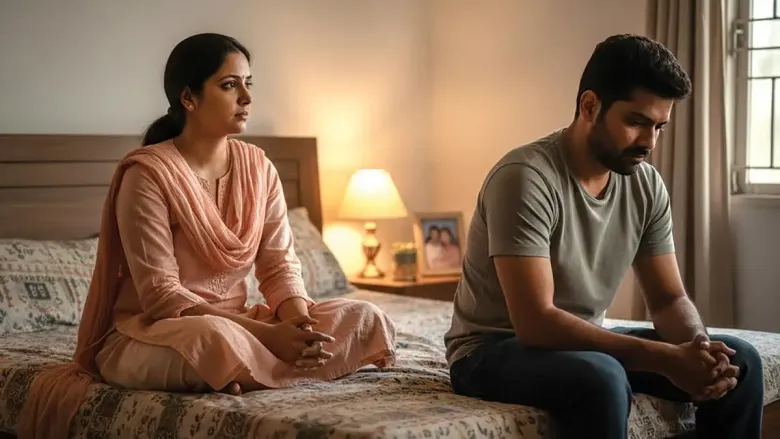
“It is not right to associate hormonal changes only with women. In men too, testosterone levels gradually decrease with age.”

Comments are closed.