
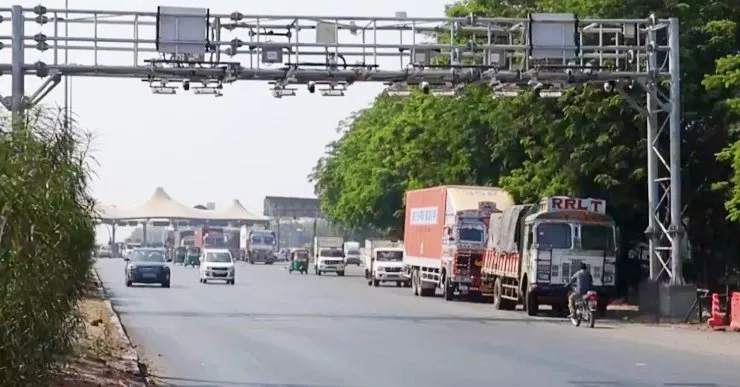

Just a couple of weeks ago, it was announced that the government of India has commenced the testing of the barrier-free toll collection system. India’s first multi-lane free-flow barrier-less toll system has been installed at the Choryasi Fee Plaza at Kamrej, on the Surat-Bharuch stretch of NH48. Now, finally, a video showing how this toll plaza, which is meant to cut down travel time and increase the convenience of road users, works in real life has been shared online.
India’s first barrier-less toll system
This video showing the working of this barrier-less toll plaza has been shared on X by News Arena India on their page. It starts off with a clip of the Choryasi Fee Plaza at Kamrej. It can be seen that this particular toll plaza has been installed just before the actual toll booth, where currently people have to stop their vehicles to pay toll via FASTag. We can note in the clip that a number of vehicles were passing through this new toll system.
Soon after this, the video then shows short interviews of a few different car drivers who were stopped and asked about the new barrier-less toll system. To this, the men who stopped highlighted that the biggest benefit of this system is that there is no need to stop the vehicle for FASTag toll collection, which saves a lot of time. One of the drivers also added that this shows that in the future our country will progress even further.
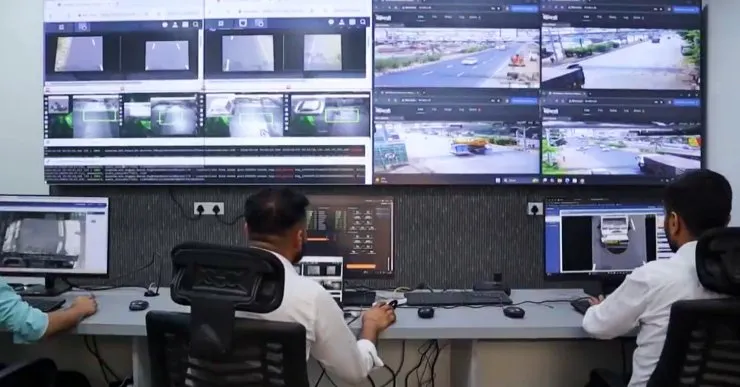
Next up, the video then shows glimpses of the normal toll booth, where vehicles have to slow down and stop for the FASTag toll collection. Soon after, the video shows the back end of how this system works. It can be seen that there are a few toll booth employees who sit in front of the computer system and analyse the payments of vehicles that pass through the barrier.
Barrier-less toll plazas and how they operate
The barrier-less toll system in India has been implemented by Indian Highways Management Company Ltd, and the cost of setting up the first plaza was Rs 15 crore. Currently, the project operates under the oversight of the National Highways Authority of India (NHAI), and ICICI Bank is currently acting as the acquiring banking partner.
Now coming to the details of a barrier-less toll plaza, it is a large metal structure which is built over the highway lanes. These structures are equipped with high-speed FASTag RFID readers, Automatic Number Plate Recognition (ANPR) cameras, advanced sensors, and lane status indicators.
What happens is that a vehicle will continue driving on the highway normally, and the high-speed RFID readers will scan the FASTag of the vehicle. These readers can read FASTags even if the vehicle is driving at a speed of 150 kmph. Following which, the vehicle details are fetched instantly, and the toll amount is deducted automatically.
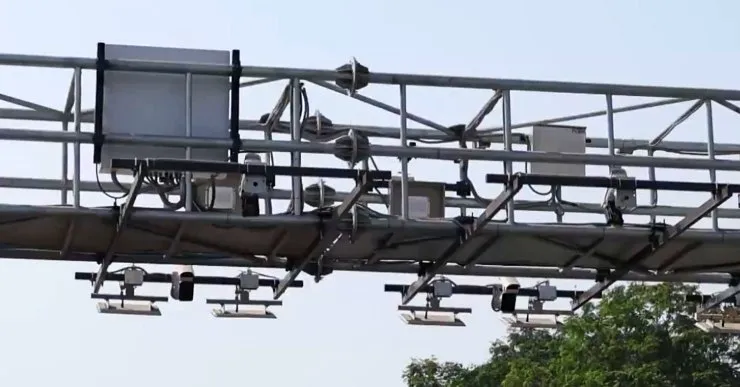
If, in case, the high-speed RFID readers do not work and fail to read the FASTag RFID of a vehicle, then the overhead ANPR cameras will capture a clear image of the vehicle’s number plate. After which, the number is sent to the VAHAN database for verification, and finally the system links the registration number to the associated FASTag.
If, in case, a vehicle’s FASTag is missing, is not linked correctly, the vehicle number mismatches, or there is insufficient balance, then an automatic violation alert is generated, and toll recoveries and penalties are applied as per NHAI rules. The data is also linked directly to the national vehicle registry.

Comments are closed.