
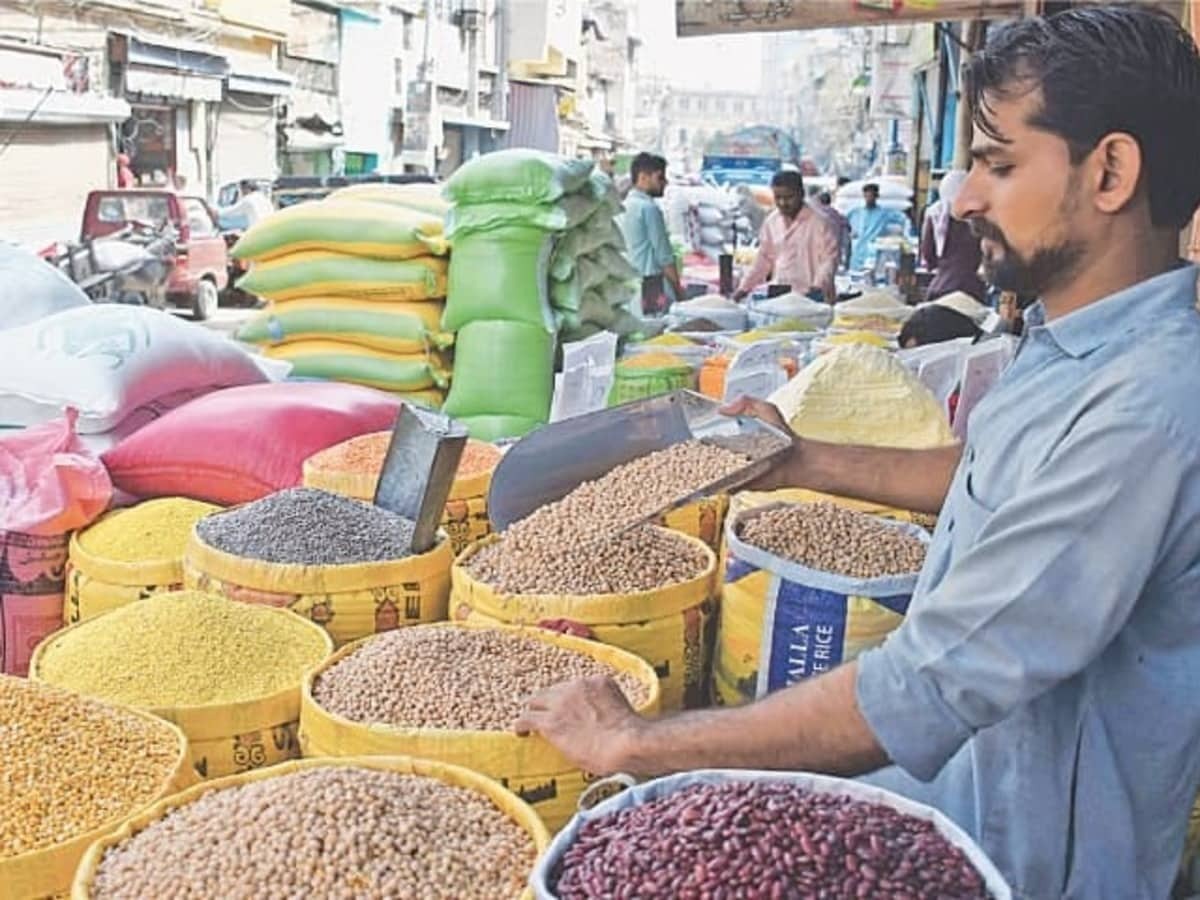

It’s often said that “Daal” is the lifeline of a common man’s meal in South Asia. But in Pakistan, that lifeline is becoming increasingly expensive and difficult to maintain. Recent reports have shed light on a startling reality: Pakistan, a country that was once a major exporter of pulses, is now spending a staggering $980 million annually just to import them.
The Numbers Behind the Crisis The statistics are quite sobering. Pakistan’s yearly demand for pulses sits at around 16.2 lakh tons. Out of this, a massive 10.7 lakh tons has to be brought in from other countries. That means nearly 80% of the pulses consumed in Pakistani households are imported. This is a heavy burden for an economy already struggling with debt and financial instability.
How Did It Get This Bad? You might wonder how an agricultural nation ended up in this position. Experts point back to 1998. Before then, Pakistan actually sent pulses abroad. However, during the era of Pervez Musharraf, a ban was placed on exports. This move backfired. When farmers realized they couldn’t get global prices for their crops and that domestic profits were slim, they simply lost interest. For many, growing pulses just didn’t pay the bills anymore.
Nature Isn’t Helping Either Climate change is another major player in this crisis. In regions like Thal, which rely heavily on rainwater, timing is everything. If the rains come on time, production can jump by 35%. But when the rains fail—which is happening more frequently now—the losses are devastating. Faced with such high risks, farmers are choosing to play it safe and avoid planting pulses altogether.
The Nutritional Cost At a recent seminar at the Ayub Agricultural Research Institute (AARI), scientists voiced their concerns. Khalid Hussain, a chief scientist at AARI, emphasized that pulses aren’t just food; they are vital for human nutrition and soil health. Yet, despite having a plan to boost production ready for approval, it’s currently sitting in a pile of government paperwork, waiting for a green light.
A Warning for the Future The message from agricultural experts is clear: if Pakistan doesn’t find a way to encourage its farmers back to the fields and modernize its pulse production, the dependence on expensive imports will only grow. For a nation where a bowl of lentils is a staple, this isn’t just an economic issue—it’s a matter of food security and survival.
Read More: How Climate Change and Policy Blunders Created a Massive Daal Shortage in Pakistan

Comments are closed.