
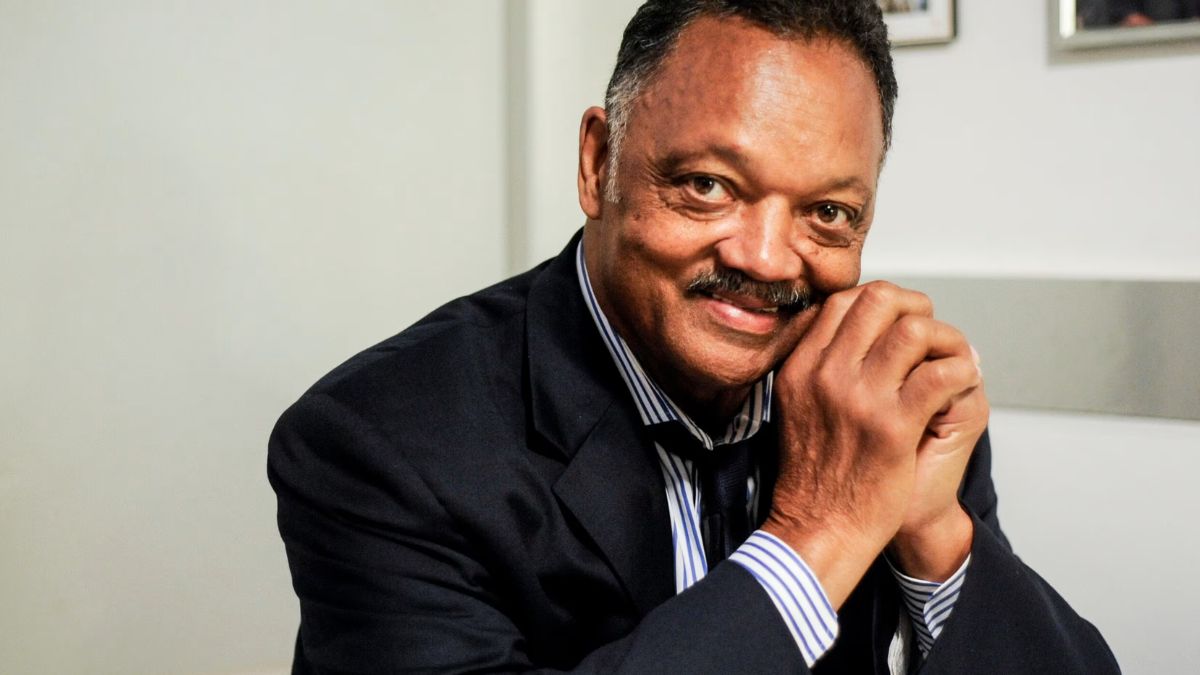

Civil rights icon Jesse Jackson — the Baptist minister, civil rights activist and two-time Democratic presidential candidate — has died at the age of 84his family announced on February 17, 2026.
Death Announcement and Family Statement
Rev. Jesse Jackson’s family confirmed his death in a heartfelt statement, saying he “died peacefully” on Tuesday morning surrounded by family. They described him as a “servant leader” whose life was dedicated to uplifting the oppressed and the voiceless.
While the family did not disclose a formal medical cause of deaththey emphasized that he passed away peacefully at 84.
Health Struggles Before His Passing
In recent years, Jackson battled a series of serious health issues:
In 2017he revealed a diagnosis of Parkinson’s diseasea progressive neurological disorder that affects movement and coordination.
In 2025his organization, the Chicago-based Rainbow PUSH Coalition, disclosed that he was diagnosed with Progressive Supranuclear Palsy (PSP)a rare and aggressive neurodegenerative condition related to but distinct from Parkinson’s. PSP can affect balance, eye movement, walking and speech.
In November 2025Jackson was hospitalized in Chicago for observation and treatment related to complications from PSP. During this period, he was under medical care for related issues and received 24-hour supporteventually losing the ability to speak and communicating with loved ones by touch.
Though his family has not explicitly named PSP or any specific condition as the formal cause of deathhis long battle with neurological disorders and deteriorating health is widely seen as a key factor in his final months.
Legacy and Impact
Born in Greenville, South Carolina, in 1941Jesse Jackson rose from the segregated South to work alongside Dr. Martin Luther King Jr. during the civil rights movement. After King’s assassination, he carried forward the fight for racial and social justice, later founding Operation PUSH and the Rainbow/PUSH Coalitionmajor organizations advocating equality, voting rights, and economic opportunity.
Jackson also made history with two presidential campaigns in the 1980s and served as a prominent national and international advocate for human rights. Tributes have poured in from political leaders and civil rights figures, highlighting his influence and calling on others to continue his work.

Comments are closed.