
What is going on behind the closed doors of Dhaka, where is the timeline pointing after the overthrow of Sheikh Hasina?

The dark shadow has once again started deepening in the geopolitics of South Asia. bangladesh The developments that are unfolding after the change of power in Dhaka are not just limited to the internal politics of Dhaka, rather it seems to have a direct impact on India’s security, eastern borders and the ‘Neighbourhood First’ policy. Reports of intelligence agencies show that after about 15 years, Pakistan’s notorious intelligence agency ISI (Inter-Services Intelligence) has again made an organized entry in Bangladesh.
Read now on WhatsApp also, click to subscribe
According to the report of News 18, the so-called “diplomatic thaw” that started after the fall of Sheikh Hasina government in August 2024 has now transformed into a complete strategic partnership. Strategists sitting in Delhi are considering this not as a mere coincidence but a planned ‘Eastern Front’ re-launch.
‘Dhaka Cell’: ISI’s most dangerous comeback
The most worrying aspect from the point of view of regional security is the special cell of ISI in Dhaka. This sale was first revealed at the end of October 2025. According to intelligence sources, this cell is working within Pakistan High Commission, Dhaka and senior officers of ISI and Pakistan Army are deployed in it. According to sources, the initial structure of this cell includes 1 Brigadier, 2 Colonels, 4 Majors and many officers of Pakistan Navy and Air Force. This is not a normal diplomatic setup, but an operational intelligence hub, which has been specifically activated against India.
Pak General’s visit to Dhaka and ‘closed door meetings’
This entire structure got its formal shape in October 2025, when Pakistan’s Chairman Joint Chiefs of Staff Committee, General Sahir Shamshad Mirza reached Dhaka on a four-day visit. During this period, several closed-door meetings were organized with Bangladesh’s National Security Intelligence (NSI) and Directorate General of Forces Intelligence (DGFI). Officially, the agenda of these meetings was said to be surveillance in the Bay of Bengal, but Indian intelligence agencies believe that its real objective is to keep an eye on India’s eastern border and North-East and to make deep penetration of ISI in the name of intelligence sharing.
Dhaka-Islamabad’s growing closeness: tie-up at record speed
The speed that has come in the relations between Pakistan and Bangladesh after August 2024 is considered unprecedented.
Some important steps which raised India’s concern:
- Visa-free entry (23 July 2025): Visa-free entry for diplomats and official passport holders – including military officers. This opens the way for free movement for ISI operatives.
- ‘Thaw’ of defense cooperation: Bangladesh’s QMG’s visit to Rawalpindi and Pakistani Lieutenant General Tabassum Habib’s arrival in Dhaka, these visits clearly indicated that defense cooperation is no longer superficial.
- Financial and Logistical Cover: The Karachi-Chittagong direct shipping route and direct flights to be started soon are providing cover for economic support to the intelligence movement.
ISI’s real agenda: fundamentalism and ‘hybrid regime’
According to intelligence analysts, the main mission of ISI is not just to oppose India but to change the social structure of Bangladesh from within. Its main agenda is radicalization of youth, strengthening organizations like Jamaat-e-Islami and Inquilab Manch and creating a hybrid regime which, like Pakistan, stands on the triangle of army-radicalism-politics.
Death of student leader and ‘managed anarchy’
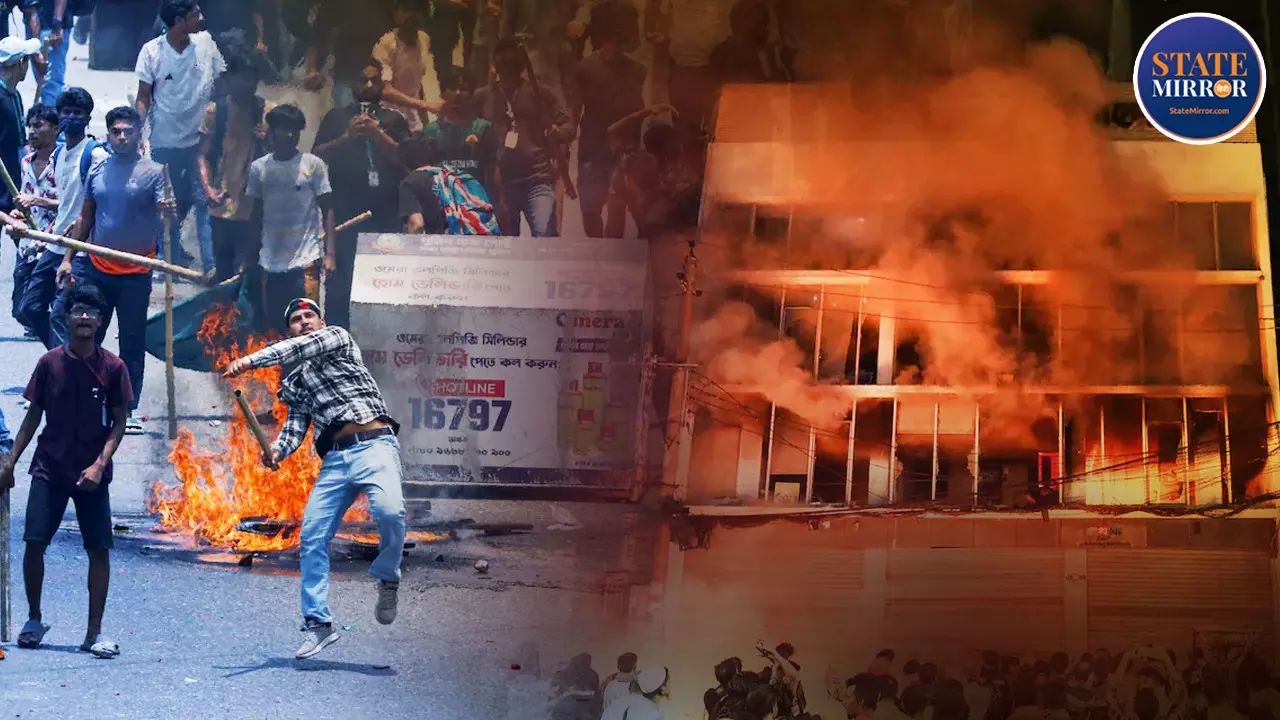
Many security experts are considering the violence that broke out after the death of student leader Sharif Usman Hadi on 18 December as a ‘Managed Crisis’. During this period, the Indian High Commission was attacked in Dhaka, the Assistant High Commission in Chittagong was targeted and the offices of media organizations like The Daily Star were burnt.
Who gets the biggest benefit from this anarchy?
- The proposed elections of February 12 may be postponed
- Radical forces strengthen their grip on the streets
- Weakness of interim government exposed
Pakistan-Bangladesh timeline after August 2024
- 07 August 2024: Pakistan’s ‘solidarity’ on the fall of Hasina government
- 25 September 2024: Shehbaz Sharif-Yunus meeting during UNGA
- 14 January 2025: Bangladeshi General’s visit to Rawalpindi
- 19 June 2024: China-Pak-Bangladesh Trilateral Meeting (Kunming)
- 23 July 2025: Visa rules relaxed
- 22 August 2025: Ishaq Dar visits Dhaka, High Commission staff doubled
- 25–28 October 2025: Four-day visit of Pak General Sahir Shamshad Mirza
India’s diplomatic warning
India is not sitting silent. On 19 November 2025, during the Colombo Security Conclave Summit in New Delhi, NSA Ajit Doval directly raised the issue of ‘ISI Cell in Dhaka’. India’s message is clear: standing with the people of Bangladesh, but the return of ISI is a red line.
Is Bangladesh becoming a new front?
The picture that is emerging is scary. From the corridors of power to the streets of Dhaka, the presence of Pakistan’s ISI seems to be a threat not only to anti-India but to the stability of entire South Asia. If this trend continues, Bangladesh – once an important pillar of India’s ‘Neighbourhood First’ policy – could become a new strategic crisis centre. And this is the ‘long shadow’, the sound of which is now clearly heard.

Comments are closed.