
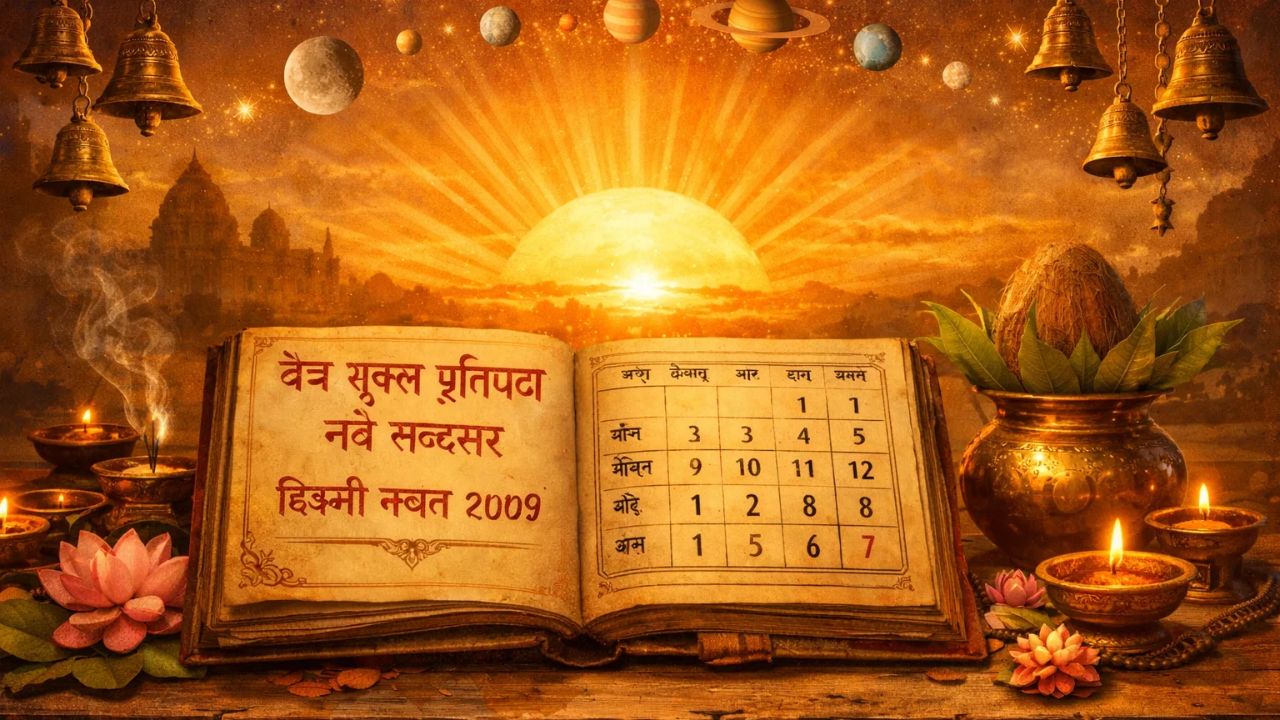
How many days is the difference between Vikram Samvat and English calendar? Know today itself

People’s desire to know about Vedic time calculation and modern calendar system is always increasing. The discussion is intensifying regarding the difference between Samvatsara and the New Year starting from January 1, the tradition of their beginning and the basis of calculation. While according to the calendar, the new year starting from Chaitra Shukla Pratipada is associated with nature, seasons and astronomical events, the new year of the Gregorian calendar is part of the administrative and global system.
In this background, the question is arising that how much is Samvatsar behind or ahead of the New Year, when and how did it start and what is the actual difference of years and months in both the systems. This is the reason why the need to understand this subject from religious, cultural and historical point of view is being felt once again.
Also read:How will the year 2026 be for you? Google Gemini told the horoscope of 12 zodiac signs
What is Samvatsar?
Samvatsara is the unit of time calculation of the Vedic calendar. It is based on the lunisolar system, that is, both the movement of the Moon and the position of the Sun are taken into account. In Indian tradition, Samvatsara is not just ‘a year’ but a cycle of 60 Samvatsaras, such as Prabhav, Vibhav, Shukla, Pramod etc. Every year has its own name and religious significance.
When does Samvatsara start?
According to the Hindu calendar, the new Samvatsara usually starts from Shukla Pratipada of Chaitra month. It is known by different names in different regions,
- North India: Chaitra Navratri / Vikram Samvat New Year
- Maharashtra: Gudi Padwa
- Andhra Pradesh and Karnataka: Ugadi
- This date usually falls between March–April
When did the new year (Gregorian calendar) start?
- The New Year celebrated around the world today is based on the Gregorian calendar.
- beginning: starts from 1 January
- It was developed from Rome’s Julian calendar
- Pope Gregory XIII promulgated it in 1582
- This calendar is completely based on solar system
Also read:What is the difference between mantra, verse and stotra? please understand
What is the difference between Samvatsar and New Year?
This difference can be understood in two ways:
Date difference
- Gregorian New Year: January 1
- Hindu Samvatsar New Year: March–April
- That means a difference of about 3 to 4 months
Difference of Year Count
- Current Gregorian year (example): 2025-2026
- Vikram Samvat ongoing at the same time: approximately 2082–2083
- That is, Vikram Samvat lasts about 56–57 years ahead of the Gregorian calendar.
Why is there this difference?
- Samvatsara is calculated from astronomical events (position of sun-moon)
- The Gregorian calendar is based on fixed dates
- Balance is maintained by adding more months (Malamas) in the calendar, so that astronomical calculations remain accurate.
Religious and cultural significance
- The new year of Samvatsara is associated with religious, spiritual and natural cycles.
- At this time, Navratri, Navassyeshti (new harvest) and the new cycle of creation are recognized.
- The new year of January 1 has been adopted for administrative and global convenience.

Comments are closed.