
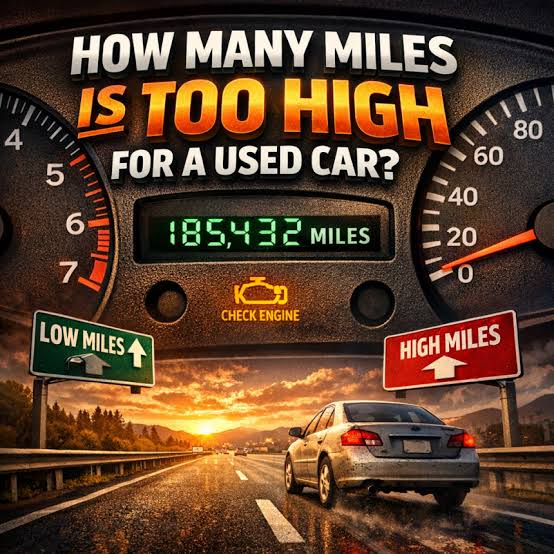

For second-hand vehicles, the first thing most people do when purchasing is to look at the vehicle’s odometer. The mileage of the car gives information on its history and even future performance. However, what mileage is high? There is no one mileage that automatically makes the vehicle a poor buy. Today’s cars are more durable compared to those made some decades back. Most used cars could easily surpass 200,000 miles, provided they get the right maintenance.
It is better to know the meaning of each mileage category rather than considering just one.
Mileage Ranges Explained
Cars Under 60,000 Miles
Low mileage refers to vehicles that have driven fewer than 60,000 miles. This represents below the average number of miles driven within five years.
Consumers usually like used vehicles in this age category, as they do not have too much wear on their components. The engine, transmission, suspension system, and brakes may have many more years of service in them.
Cars 60,000 to 100,000 Miles
This range is regarded as being normal for most second-hand cars. The majority of motorists drive 12,000 miles in a year; hence, this car will be regarded as an average one.
Most cars in this range still provide several years of good service. With proper maintenance history, they could be great bargains in the used car market.
100,000 to 150,000 Miles
Buyers become more skeptical when the mileage of the used cars passes the 100,000-mile milestone. This has been conventionally seen as the high mileage point of the cars.
However, the advancements in the field of engineering and manufacturing have altered the situation. There are many automobiles that are still functioning after they reach the 100,000-mile milestone.
150,000 to 200,000 Miles
Vehicles in this category are regarded as extremely high-mileage used vehicles. At this stage, signs of wear start becoming prominent. Parts like suspension components, water pumps, alternators, and transmissions could need to be repaired or replaced.
A well-cared-for vehicle remains a good buy, but the owner needs to budget for higher maintenance costs.
Over 200,000 Miles
The range up to 200,000 miles is typically considered to be the maximum for most used cars. Even though some may surpass this range, wear tends to be considerable.
From this point on, maintenance expenses start increasing. Potential buyers need to buy such used cars only if they have a service history and pass an inspection.
The 12,000 Miles Per Year Rule
One of the easiest ways to determine the quality of a pre-owned car is through the 12,000-mile-per-year test.
Just multiply the car’s years by 12,000. The answer will give you an approximate number of miles.
Like:
- An automobile with 5 years of use will have 60,000 miles.
- A car with 10 years of use will have 120,000 miles.
When the actual mileage is much higher, it indicates that the car has been driven more than usual. A much lower mileage means the car was not much used.
Why Maintenance Matters More Than Mileage
There’s more to consider than just mileage. Maintenance is usually more important for second-hand cars.
A car with 150,000 miles on its odometer that has been well-maintained will usually be a better buy than one that is neglected but only has 70,000 miles on the clock.
Signs of proper maintenance include:
- Oil change schedule
- Maintenance schedule
- Brakes done
- Fluid changes
- Tire rotation
- Timing belt change
Proper maintenance prolongs the life of vital parts and keeps repairs to a minimum.
Highway Miles vs. City Miles
Not all miles affect a vehicle the same way.
Driving on highways puts less pressure on the engine, braking system, and transmission. Cars drive for longer periods of time with constant speed and have fewer start-and-stop periods.
City driving causes more damage due to the start-and-stop nature of driving. During the inspection of used cars, the information about the driving type can be really helpful.
Never Skip a Pre-Purchase Inspection
Before purchasing any vehicle with higher mileage, arrange for a proper inspection with a certified mechanic.
An inspection by an experienced mechanic will be able to find problems that mileage figures might not uncover. Leaks, wear on the suspension, engine troubles, transmission issues, and even signs of damage in the past can be uncovered with an inspection.
The buyer is thus protected from any future repairs.
It is not accurate to say that there is any particular mileage that makes any used car a bad buy. Whereas 100,000 miles was regarded as a red flag before, modern cars can still function well past that figure.
The issue is not mileage figures but rather how well the car has been maintained. In most cases, a well-maintained car with more miles than others can perform much better than one with half the mileage but poor maintenance.
When assessing used cars, consider the above-mentioned facts.

Comments are closed.