
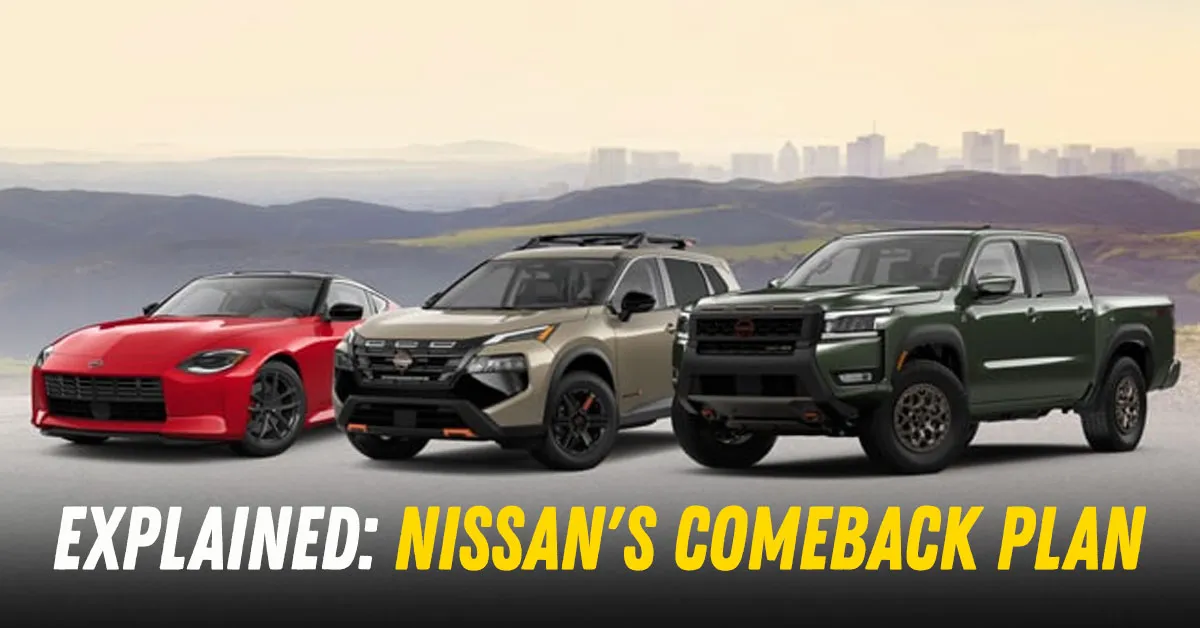

Nissan has lately been riding rough waves. It has been suffering from falling sales, steep losses and mounting debts. Even in key markets like Japan, China and the US, its current range of vehicles has failed to sustain momentum. The carmaker has also been unable to play catch up in the shift to electric vehicles and hybrids. A year after stepping in as CEO, Ivan Espinosa has now outlined a clear turnaround plan for the company. It places the focus on profitability, efficiency, and smarter product planning. It is a full-scale reset designed to bring Nissan back to financial stability. Let’s take a closer look.
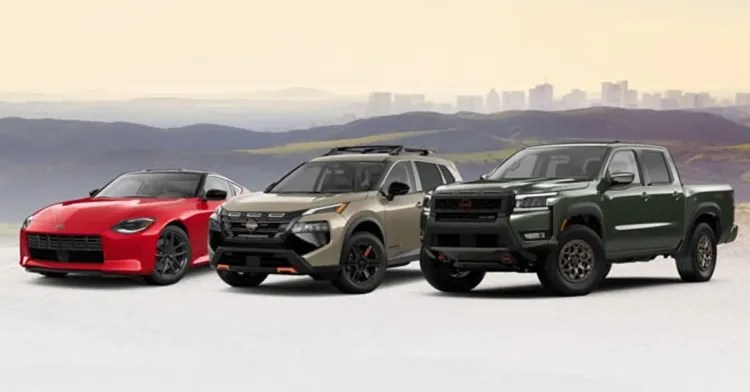
Under the new plan, Nissan proposes to streamline its global lineup. Globally, the company now has 56 models. This will be brought down to 45. Furthermore, it wants to turn things in a way that 80 percent of its global sales will come from three core ‘families’ of vehicles built on shared platforms.
This approach will significantly reduce development costs. It will also allow Nissan to build vehicles faster and more efficiently. Fewer platforms mean better economies of scale, which directly improves profit margins. For a company struggling with high costs, this move is critical.
The United States and China are two important markets for Nissan. The carmaker plans to double down on these. By 2030, it wants to sell more than one million vehicles annually in each of these regions. At present, these numbers may seem ambitious. But there have been times in the past when Nissan was able to achieve this.
Under the new strategy, it just wants to regain the lost momentum. Sales likely slowed down in these regions due to weak product cycles and rapidly-evolving market trends in these countries. It plans to regain momentum by introducing stronger, more relevant products.
A major reason behind Nissan’s recent struggles in the U.S. has been its absence in the hybrid segment. Hybrids are rapidly gaining ground in the US, and Toyota and Honda are already capitalising on the demand. Nissan, however, exited the space in 2019.
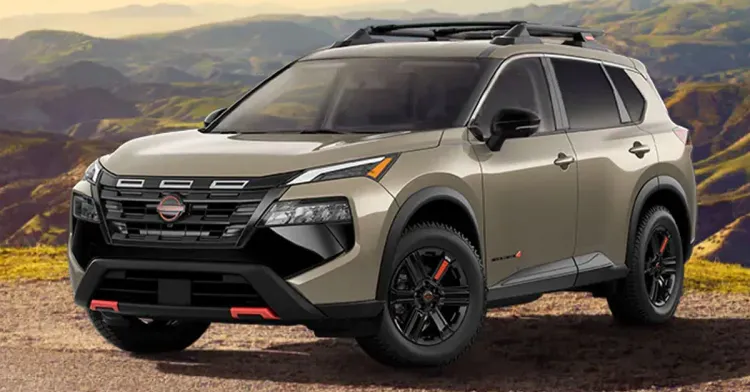
This is now changing. Hybrid versions of key models like the Nissan Rogue are in development. This will use a V6-hybrid setup. The brand is also planning to revive the Xterra in the US.
Nissan will use its e-Power series hybrid system, where the petrol engine charges the battery pack while the wheels are driven by electric motor(s). This setup offers an EV-like driving feel without having to rely on charging infrastructure. Nissan is in fact, a pioneer in series hybrid technology. It was first used on the Nissan Note that launched in Japan in late 2016. Over the years, the company has perfected this technology.
In China, Nissan is focusing on cost efficiency and scale. The country will play a key role in ensuring fast vehicle development, and will remain an important market for the company. It will also be turned into an export hub.
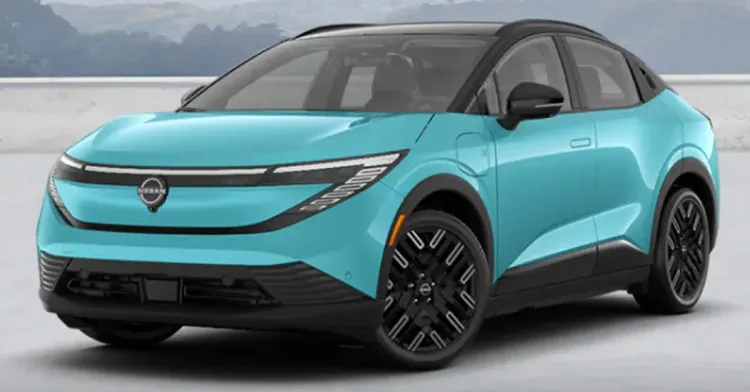
Vehicles like the Nissan N7 and Nissan Frontier Pro will be built in China and exported to regions such as Southeast Asia and Latin America. Chinese presence will also be key in boosting development of Nissan’s new-age EVs and upcoming hybrids.
India is another important market for Nissan. The brand has been having limited representation here for a long time. In fact, the Magnite used to be its only model on sale here till recently when the Gravite MPV was introduced.
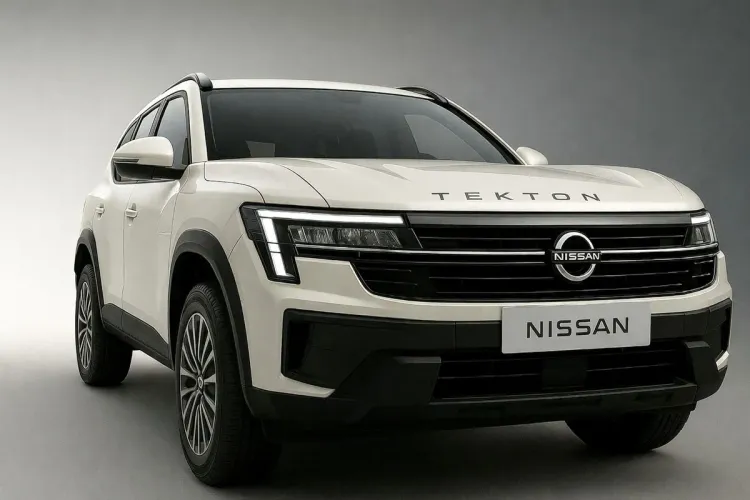
The MPV is currently in good acceptance, and the carmaker has a larger, stronger comeback strategy planned for India. In the upcoming time, it will launch the Tekton (badge-engineered Duster), a seven-seater C-SUV and its version of the Renault Bridger.
India is also an important export hub for Nissan. Many high-volume models are manufactured at the Oragadam plant and exported to various global markets. This plant has an installed annual capacity of 240,000 units, allocated for Nissan. Even in the coming years, the company could capitalise on these and strengthen its exports from India.
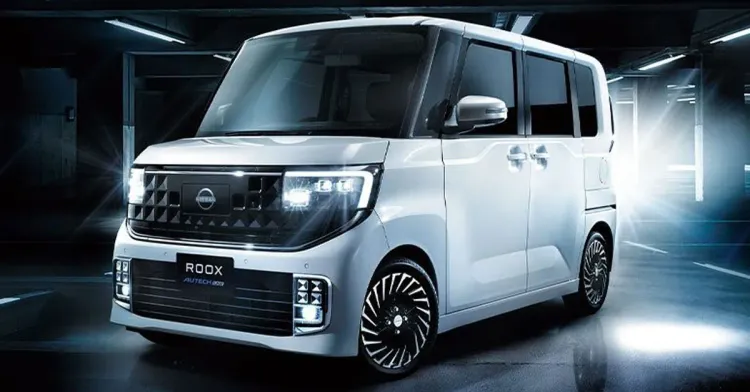
In Japan, Nissan is targeting volume growth through smaller vehicles. A new compact car is under development, which the carmaker plans to sell roughly 550,000 units a year, by 2031.
Additionally, Nissan will invest heavily in technology like driver assistance systems. The company is upgrading the ‘ProPilot’, starting with the new Nissan Elgrand. By early 2028, it aims to introduce more advanced, end-to-end autonomous driving features that would improve safety and enhance user experience.
Interestingly, the reset plan comes after the Japanese manufacturer scaled back its long-standing alliance with Renault and walked away from a potential merger with Honda. Time remains before we see how it pans out.
Comments are closed.