
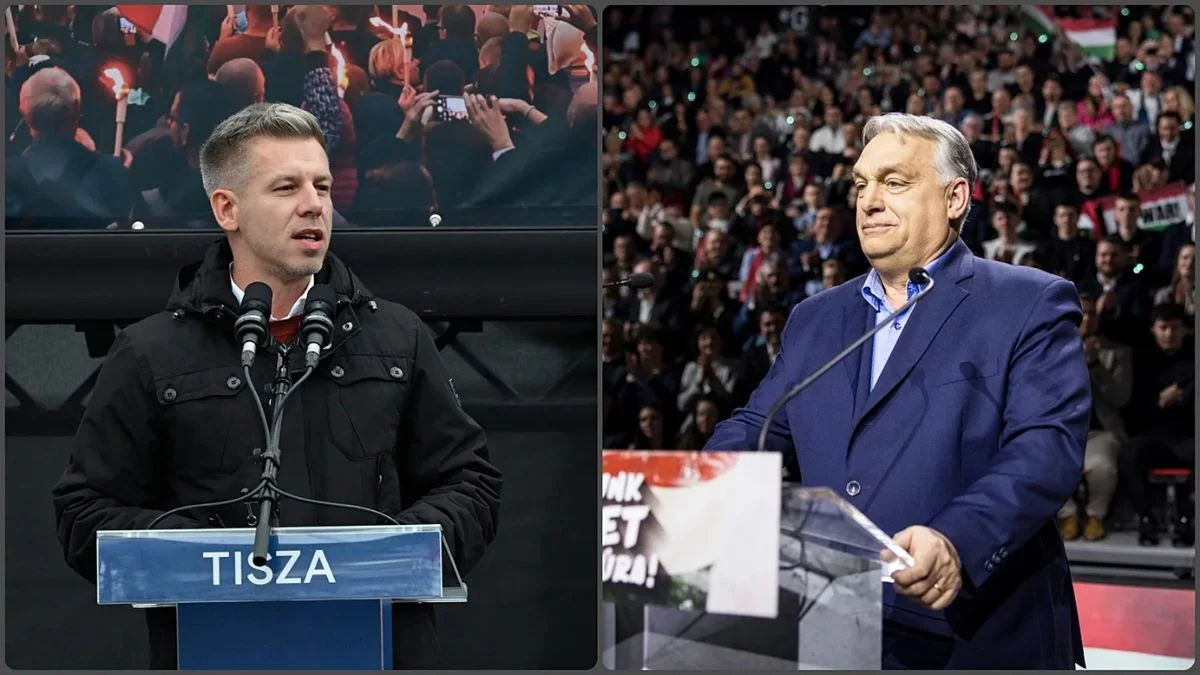

Hungary’s political stage has turned into a high-stakes battleground as rival parties rally tens of thousands of supporters ahead of the April 12 parliamentary election—an outcome that could reshape the country’s legal framework, governance policies, and relationship with the European Union. With large public demonstrations on both sides, the campaign has increasingly focused on policy questions involving rule of law, economic governance, and Hungary’s strategic position within European institutions.
Prime Minister Viktor Orbán addressed thousands of supporters during a national day rally marking Hungary’s March 15 revolution anniversary, urging voters to secure what he described as a “historic victory” for his ruling party, Fidesz. The rally occurred simultaneously with a major opposition demonstration led by the emerging political force Tisza Partyheaded by opposition figure Péter Hungariansignaling a deeply competitive election environment.
The upcoming vote carries significant implications for Hungary’s legislative agenda and regulatory framework. Over the past decade and a half, the Orbán government has enacted numerous constitutional amendments, judicial reforms, and regulatory changes that critics argue have concentrated executive authority while supporters say they strengthened national sovereignty and governance efficiency. These legal and policy reforms have frequently drawn scrutiny from institutions within the European Union over concerns related to rule of law standards, judicial independence, and media regulation.
Hungary’s relationship with the EU remains a central policy issue in the campaign. Orbán has consistently advocated a model of governance that prioritizes national sovereignty over supranational authority. His administration has challenged EU positions on migration policy, judicial oversight mechanisms, and sanctions policy related to the conflict triggered by Russia’s invasion of Ukraine (2022). Budapest has also maintained a cautious stance toward deeper European integration in areas such as defense cooperation and fiscal governance.
During the rally, Orbán framed the election as a strategic decision regarding Hungary’s security and foreign policy posture. He argued that his administration’s approach emphasizes stability and peace, while accusing opposition groups of supporting policies that could increase Hungary’s involvement in regional geopolitical conflicts. Opposition leaders have rejected these claims, arguing that Hungary must strengthen cooperation with European institutions and adopt governance reforms that improve transparency and anti-corruption safeguards.
The opposition’s campaign platform has emphasized institutional reform, economic governance improvements, and restoring policy alignment with broader EU regulatory frameworks. Péter Magyar and his allies have criticized the government’s handling of economic policy, citing rising living costs and prolonged economic stagnation as reasons for structural reform. They also argue that closer policy coordination with EU institutions could unlock additional funding streams tied to rule-of-law compliance and regulatory reforms.
Policy debates during the campaign have also focused on Hungary’s stance toward Ukraine and the EU enlargement process. The current government has opposed accelerated EU accession for Kyiv, arguing that such decisions must follow established legal procedures and national consultation mechanisms. The opposition has adopted a cautious position as well, stating that any future policy decision on Ukraine’s EU membership could be subject to a national referendum if it becomes part of government.
Political analysts say the election will serve as a referendum on Hungary’s current governance model and legislative trajectory. According to political risk assessments by organizations such as I holdthe vote could redefine Hungary’s approach to constitutional law, economic regulation, and its role within European policymaking structures.
With opinion polls showing a competitive race between Fidesz and the Tisza Party, the election outcome could significantly influence Hungary’s legal and policy direction in the coming years. The result will determine whether the country continues along its current sovereignty-focused governance path or moves toward a model emphasizing closer integration with European regulatory and political frameworks.

Comments are closed.