
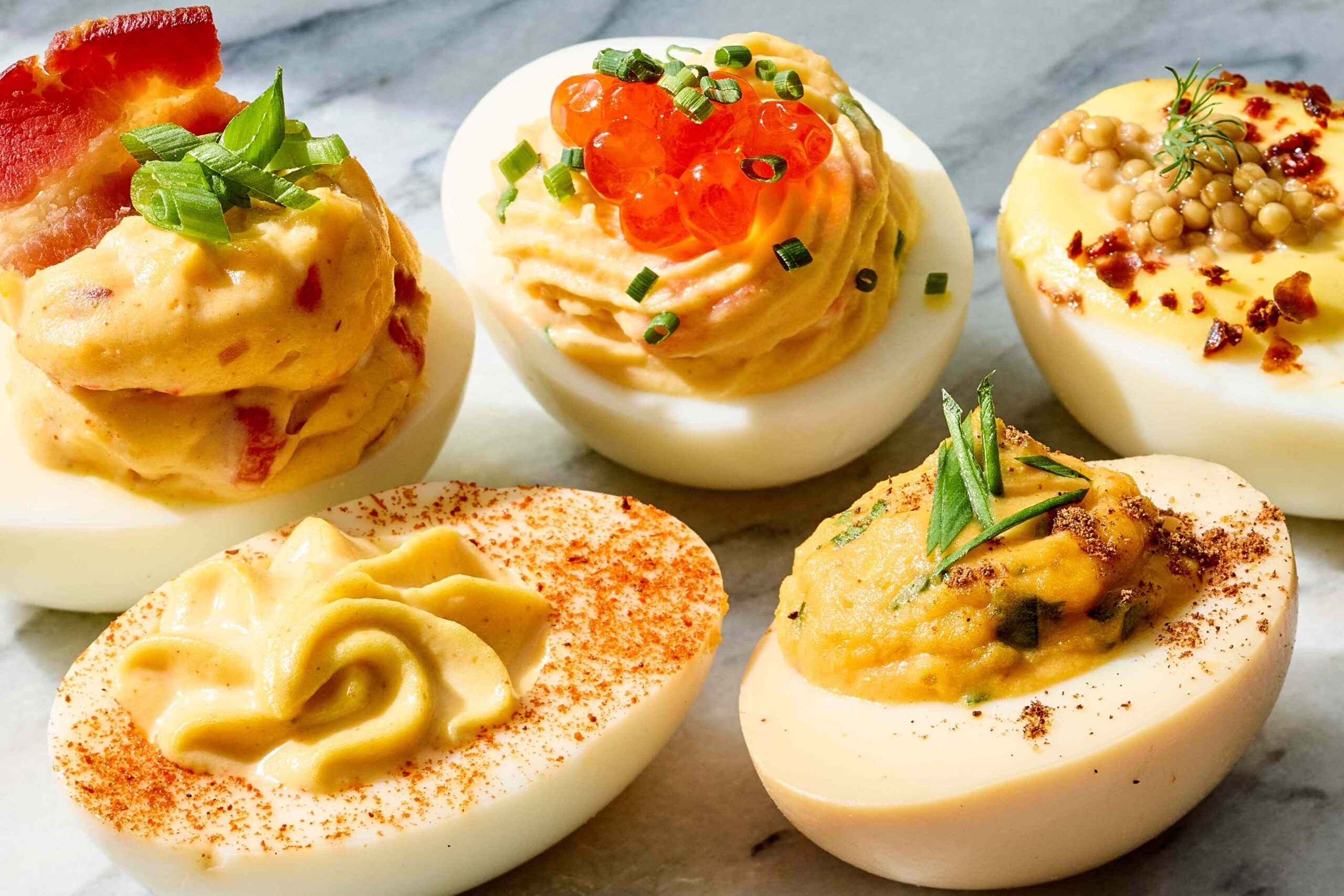

With varied egg-cooking techniques and a wide range of flavorings, we found plenty of new deviled egg recipes to love, but one stood out as a new go-to.
Key Points
- Ina Garten’s smoked salmon deviled eggs are rich and easy.
- Steaming eggs yields the creamiest yolks and easiest peeling.
- Creative flavors make classic deviled eggs feel fresh and party-ready.
Eggs are the stagehands of cuisine: they give structure to cakes, cookies, meringues, curds and pâte à choux (aka éclair dough), but one doesn’t always know that they’re there. The eggs remain behind the scenes, allowing rich chocolate chips, sour lemon juice and fragrant vanilla to show off and receive their accolades.
Tangy, creamy, sometimes smoky deviled eggs are an exception to the rule. Common at picnics, potlucks, church suppers, barbecues and pretty much any other kind of casual American gathering, eggs stuffed with their own mashed and flavored yolks are as ubiquitous as they are delicious.
Stuffed Egg Evolution
Stuffed eggs date back to at least the 13th century. An anonymous cookbook from the time, documenting dishes from the Andalusian region of Spain, includes a complex recipe in which yolks are mixed with cilantro, pepper and onion juice, among other ingredients. The idea of highly spiced “deviled” or “devilled” foods, often including pepper and mustard, came about a couple hundred years later. After commercial mayo hit grocery store shelves in 1907, it joined softened butter and olive oil as a common ingredient in stuffed egg recipes.
Modern deviled egg recipes range from remixes of the standard mustard-mayo-paprika variety to creative takes influenced by cuisines from around the globe. Some deviled eggs lean creamy with a focus on an easy-eating filling. Others are jazzed up with hot sauce. Some are filled simply, while others feature filling piped like cake frosting. On top, cooks might add a sprinkle of parsley or a dusting of smoked paprika, or they might go all out and use smoky bacon and popcorn shrimp. Pretty much everybody has an opinion about the best way to make ’em, and these days, the term “deviled” is used for pretty much any stuffed eggs, not just mustard-y, pepper-y ones.
The Recipes
I don’t use a recipe when I make classic deviled eggs, but heading into lawn-party season, I wanted to find some new standards. I tried five dramatically different deviled egg recipes from chefs I admire, wanting to find a new favorite to share with my friends. I was also secretly hoping that some of the wilder variations would prove worth the extra effort and expense.
The recipes in my trial included:
- Joanne Chang’s Five-Spice Deviled Eggs with Soy Sauce
- Ina Garten’s Smoked Salmon Deviled Eggs
- Alex Guarnaschelli’s Deviled Eggs
- Jennifer Hill Booker’s Pimento Cheese Stuffed Deviled Eggs
- J. Kenji López-Alt’s Mustardy Deviled Eggs from Wursthall
My New Party Go-To: Ina Garten’s Smoked Salmon Deviled Eggs
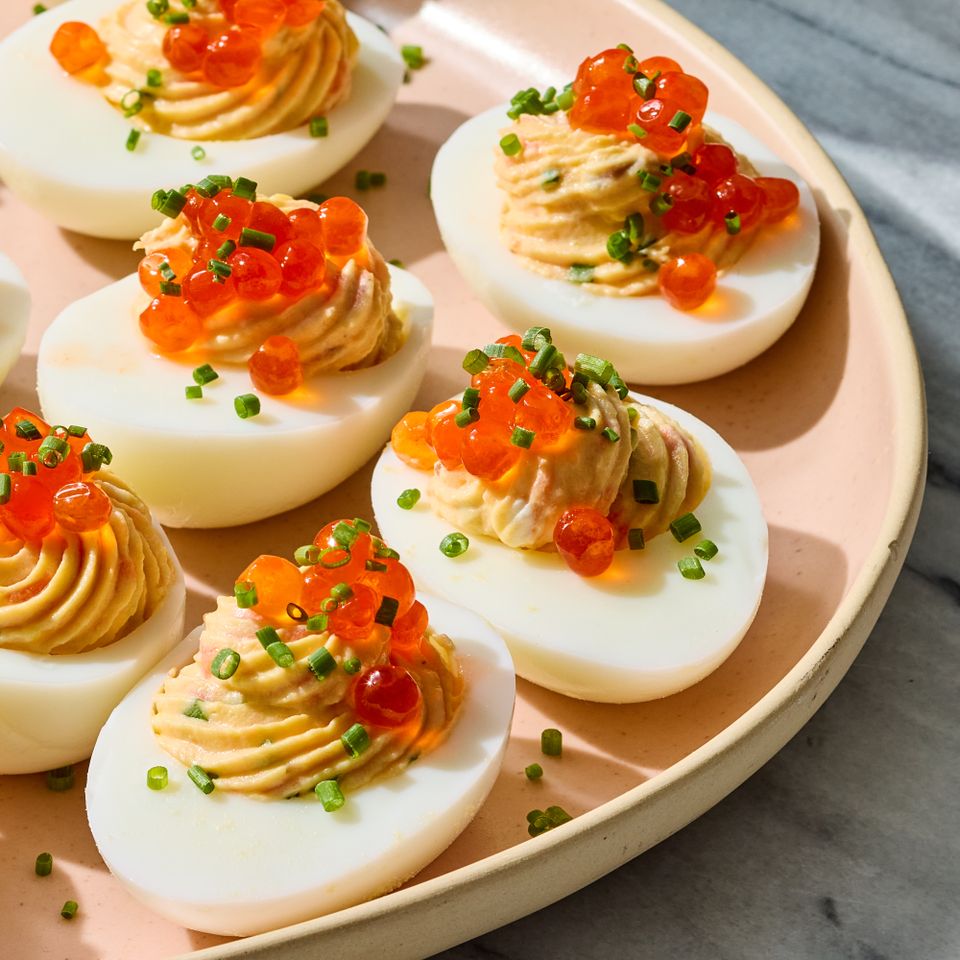
Although it’s rich and luxurious, including ingredients like cream cheese, sour cream and smoked salmon, this 10-ingredient recipe is truly easy to make. The eggs are boiled briefly and then left to finish cooking off the heat; filling ingredients are mixed together using an electric beater (I actually made mine by hand); and the filling is scooped into the egg cavities with a spoon—no fancy piping required.
The cream cheese gives the filling a lush quality, as does the silky salmon. The chive garnish adds color, and the salmon roe (eggs on eggs!) on top adds a nice textural pop, although these would still be great without the roe if it’s hard to source. There’s no mustard here, so it lacks the zing of some of the other recipes, but the lemon juice and black pepper ensure that there’s plenty of flavor. After I ran out of whites to fill, I spread the remaining filling on toast, and it made a fantastic breakfast.
The minced salmon in the yolk mixture means that this filling doesn’t pipe as nicely as others. Those who wish for a refined look can learn to make quenelles, using a pair of spoons to create a “football” shape with the filling, and drop those onto the eggs.
When I make this again—which I plan to do often—I won’t let the eggs sit in the hot water for quite as long (one of the other recipes I tested let the eggs stand for 10 minutes rather than 15, and that worked perfectly). Otherwise, I wouldn’t change a thing.
Most Memorable: Joanne Chang’s Soy Sauce Deviled Eggs with Five Spice
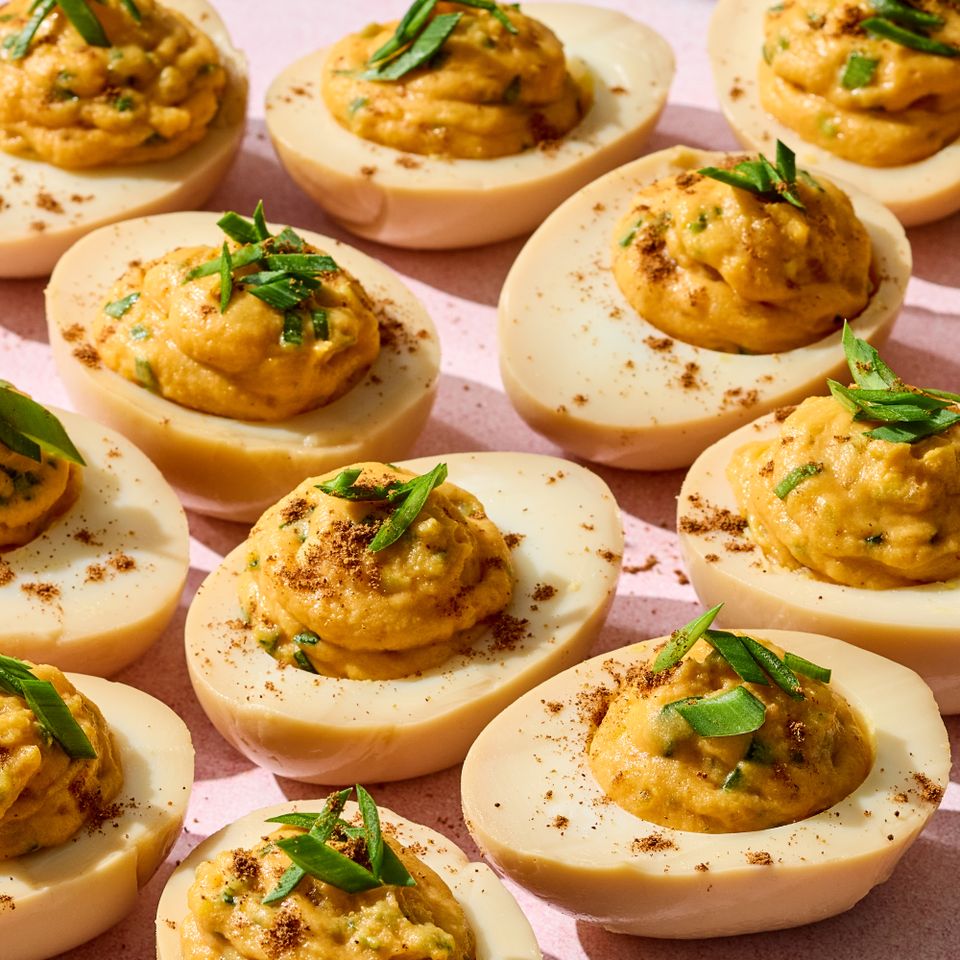
More than a decade ago, I had a wonderful meal at Boston’s Myers + Chang, co-owned by chef Joanne Chang and her hospitality-focused husband, Christopher Myers. When I discovered Chang’s take on deviled eggs, I knew that I needed to put it on my list.
A riff on the marinated eggs that are sometimes added to ramen, this was the most complex recipe of the bunch. After the boiled eggs are peeled, they’re submerged in a soy and mirin marinade seasoned with star anise, ginger and scallion. A few hours later, they’re removed, and the yolks are blended with wasabi, Sriracha, mayo and chives.
In typical deviled eggs, the egg whites serve as a mere vessel for a flavorful filling. Here, the whites play a substantive role. Sweet and salty from the marinade, they are a delicious backdrop to the wasabi, hot sauce and pepper in the yolks. I found that the extra pinch of salt in the filling pushed the salinity over the top, so next time, I’d leave that out.
The truth is, I’d eat these eggs constantly if they weren’t so pricey to make. The marinade calls for 2 cups of soy sauce, eight star anise pods and ½ cup of mirin, and the filling includes both wasabi and Sriracha. To stretch the ingredients a bit further, I opted to reuse the marinade after soaking the eggs. I poured it over a bunch of sliced cucumbers and, later that day, used them as the base for a salad.
Deviled Decadence: Jennifer Hill Booker’s Pimento Cheese Stuffed Deviled Eggs
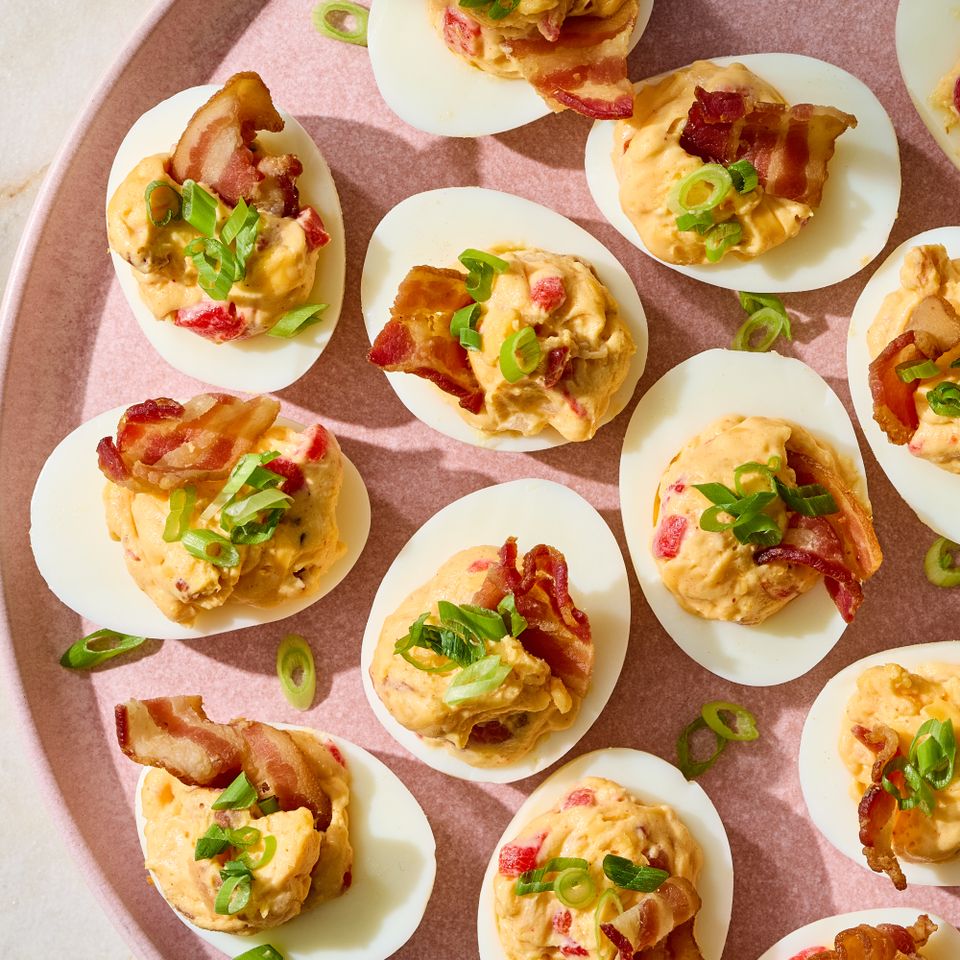
Along with deviled eggs, pimento cheese is one of my favorite go-to dishes for gatherings, so as soon as I discovered this recipe, I knew I needed to try it. Made with multiple types of cheese (extra-sharp cheddar, mild cheddar and cream cheese), plus smoky bacon and a popcorn shrimp garnish, this over-the-top take on deviled eggs is ultra-rich and rather spendy. (I may be allergic to shrimp, so I left them out.)
The cost pays off in flavor: the combo of sharp cheese, bacon, garlic, paprika and pimentos was try-not-to-eat-them-all good. Plus, the recipe calls for 24 eggs, yielding 48 halves, so it’s party perfect. The bacon crumbles and minced onion give the filling a bit more texture than the other versions I tried.
When starting this recipe, don’t forget to leave time for cooking, cooling and crumbling the bacon. Next time I make this, I won’t bother with the mild cheddar, and I’ll probably use the bacon in the filling but won’t also use it as a garnish, letting the scallions stand alone.
Maximum Mustard: J. Kenji López-Alt’s Mustardy Deviled Eggs from Wursthall
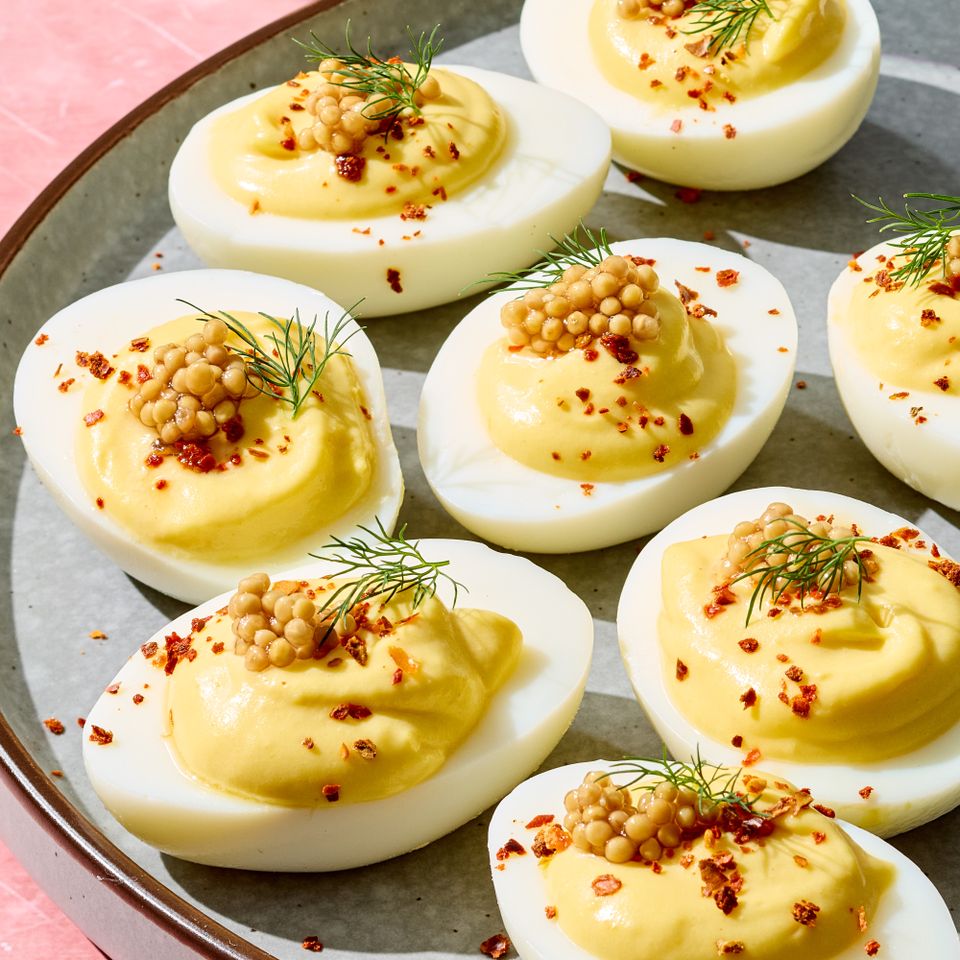
I love López-Alt’s recipe for pickled mustard seeds, which I make often and keep in the fridge to use as a garnish for sandwiches and roasts. When I discovered his deviled egg recipe topped with these seeds, I put it on my “must-try” list. These eggs are simple to make, but a few surprising filling ingredients and creative garnishes make them stand out from the pack.
One of the best things about this recipe is the methodology for cooking the eggs, which are steamed rather than boiled. I set up a single tier of my bamboo steamer over the top of a stockpot (it’s perfectly fine to use a regular flower-petal steamer or a pot with a steamer insert), and the eggs cooked like a dream. Not only did they peel perfectly, but the yolks had the most ideal, creamy texture of any cooked eggs I’ve ever made.
When it came to the finished product, I loved the touch of pickled cherry pepper liquid in the yolk mixture, as well as the combo of mayonnaise and olive oil for fat, which edged these into fun-yet-healthy territory. I topped mine with the aforementioned pickled mustard seeds, Korean chili flakes and a pinch of salt, and the pop-heat-crunch made them extra fun to eat.
Closest to Classic: Alex Guarnaschelli’s Deviled Eggs
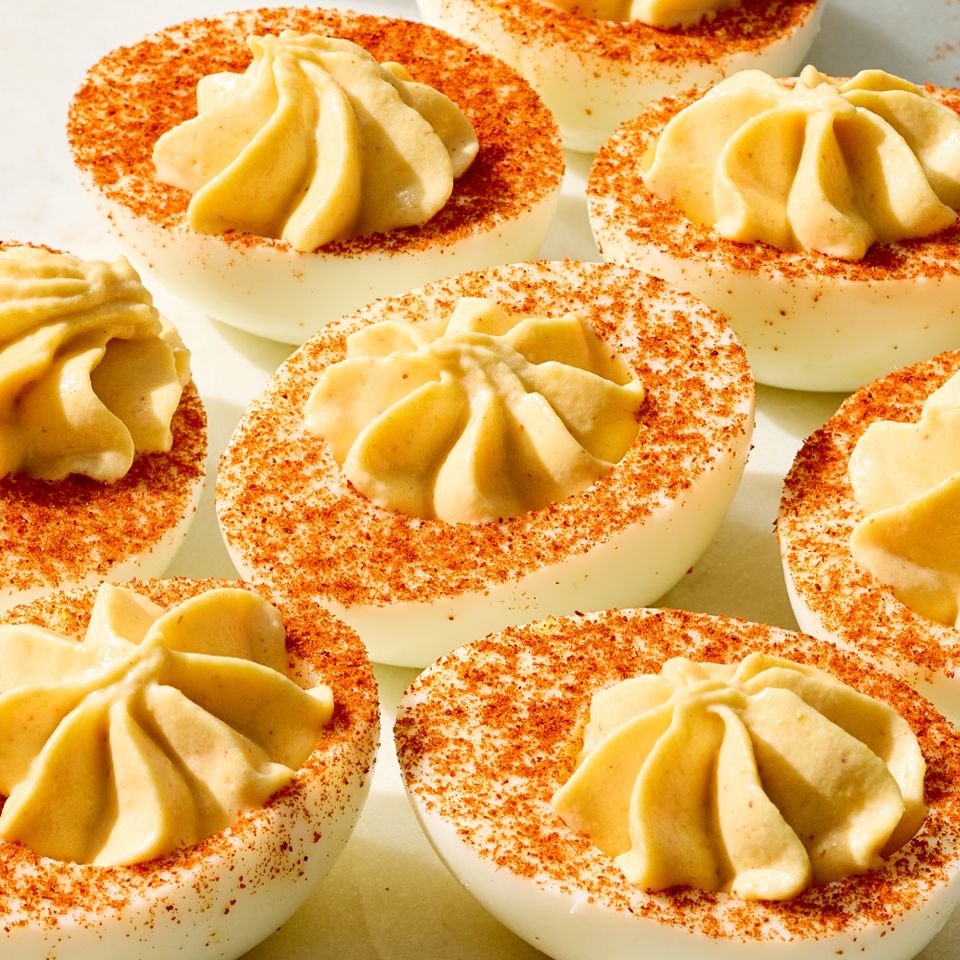
Of the eggs that were boiled rather than steamed, Guarnaschelli’s cooking method turned out the finest result. She calls for boiling the eggs briefly and letting them stand in the hot water for 10 minutes. The resulting whites were tender, and the yolks were creamy. However, I found the step of pushing the yolks through a strainer laborious (my strainer is extremely fine) and, given the good results I had without doing so, probably unnecessary.
The fun twist in this recipe is whipping up some heavy cream and folding it into the seasoned yolks to lighten them. Otherwise, the ingredient list is fairly classic, including hot sauce, Worcestershire, mustard, vinegar and lemon juice. The layering effect of combining five acidic ingredients in the filling proved a bit too much for me. If I try this recipe again, I’ll leave out the vinegar and will add the lemon juice to taste instead of simply using “the juice from 1 large lemon.” Perhaps my lemon was a little too large?
The Bottom Line
Making five substantially different deviled egg recipes was a fun exercise in pushing culinary boundaries and being playful. Because it was surprising without any complicated steps, Garten’s recipe is at the top of my make-it-again list, and I foresee it becoming a staple at holiday meals, especially in the spring.
Chang’s ramen-style-egg take is the one I find myself thinking about and wishing for. It was beautifully balanced between savoriness, sweetness and salinity, with the piquance of wasabi and Sriracha to boot. I’ll continue to reuse the marinade to get a little better bang for my buck.
A simplified version of Hill Booker’s recipe, which marries deviled eggs with pimento cheese, will make it into my rotation, too. López-Alt’s strategy for steaming eggs is my favorite takeaway from his recipe, although I enjoyed the resulting eggs, too. Next time I try Guarnaschelli’s version, I’ll play around with the myriad acidic ingredients to find a balance I prefer, but I love the folded-in whipped cream move.

Comments are closed.