
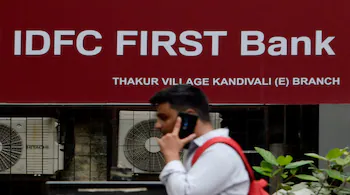

IDFC First Bank has detected a massive Rs 590-crore fraud in accounts linked to a Haryana government-associated body at its Chandigarh branch, prompting regulatory notifications and raising questions about internal controls and monitoring systems. The bank has reported the irregularities to law enforcement authorities and is working with investigators to unravel a complex web of alleged misappropriation and forgery. Officials said the discovery of the alleged fraud came during routine transaction monitoring and subsequent scrutiny of flagged anomalies. The development has sent shockwaves through the banking sector, highlighting persistent concerns over fraud risk in corporate and institutional banking segments.
The alleged irregularities were unearthed at the bank’s Sector 17 branch in Chandigarh, where accounts maintained on behalf of a Haryana government-linked entity were found to contain transactions that did not match declared activity patterns. Bank officials, upon detecting significant discrepancies, initiated deeper reviews that uncovered what appeared to be manipulated records and unauthorised fund movements. IDFC First Bank immediately escalated the matter to the Central Fraud Registry and reported it to the Economic Offences Wing (EOW) of the Punjab and Haryana Police, seeking a full investigation.
Details of the Alleged Fraud and Discovery:
According to sources familiar with the matter, the accounts in question were linked to an entity associated with the Haryana government that conducted significant transactions through the IDFC First Bank’s Chandigarh branch. While the bank did not disclose the name of the entity publicly, internal records showed that the accounts were used to process sizeable sums over a sustained period. It was during routine transaction monitoring that bank systems flagged inconsistencies, including large debits and credits that lacked authentic supporting documentation.
Bank officials say that the first indications of trouble emerged late last year, when automated systems identified transaction patterns that deviated sharply from historical behaviour for the accounts. These included high-value transfers to third parties that did not align with the stated purpose of the accounts or the official nature of the Haryana government-linked body. On analysing these anomalies, compliance teams found that several entries had been entered with forged signatures or forged authorisation documents.
Once alerted to the irregularities, senior risk and compliance personnel at IDFC First Bank ordered a comprehensive review, including audits of physical files, electronic records, and communication trails. During this process, they discovered that several individuals had allegedly colluded to bypass internal checks, approving transactions without proper oversight. It also appeared that forged signatures of authorised signatories were used to approve large fund transfers, and supporting invoices or contractual documentation were either fabricated or missing altogether.
The amount of the alleged fraud, estimated at Rs 590 crore, makes it one of the largest financial irregularities between a private sector bank and government-linked accounts in recent years. The bank’s internal control systems, which are designed to detect unusual movements, were critical in bringing the situation to light; officials say that if these systems had not been triggered, the transactions would not have been discovered for further investigation.
In response to the discovery, IDFC First Bank suspended several staff members who were overseeing the relevant account operations at the Chandigarh branch. The bank has not publicly named the employees but said that appropriate disciplinary action is underway pending the outcome of investigations. The bank also stated that it has strengthened internal monitoring and review mechanisms to prevent similar incidents in the future.
Regulatory and Law Enforcement Response:
When IDFC First Bank discovered the alleged fraud, it formally reported it to the Punjab and Haryana Police’s Economic Offences Wing (EOW), which opened an investigation under several parts of the Indian Penal Code and anti-fraud statutes. The bank also filed a complaint with the Central Bureau of Investigation (CBI) and worked with regulatory agencies such as the Reserve Bank of India (RBI) and the Central Fraud Registry (CFR).
Law enforcement officials confirmed that preliminary inquiries are underway. Senior EOW officers said that they have begun to freeze certain accounts associated with the transactions and are examining digital trails, communication records, and transaction logs to identify the parties involved. They added that the objective is to ascertain whether the irregularities were the result of intentional collusion, negligence, or systemic failures in oversight.
In a statement, a spokesperson for the Punjab and Haryana EOW said the case was being treated with “utmost seriousness” given the link to a government-associated entity and the scale of funds involved. “We are gathering evidence, analysing documentation, and interviewing individuals connected to the accounts and transactions. The matter is sensitive, and we aim to ensure that proper legal action is taken against any persons found culpable,” the spokesperson added.
The Reserve Bank of India has also taken note of the report. Sources say that the central bank may direct the bank to conduct an independent third-party audit of its compliance and internal control procedures. The RBI, which periodically issues guidance on fraud risk management and transaction monitoring, may emphasise stricter adherence to know-your-customer (KYC) norms, enhanced review of authorised signatories, and tighter checks on fund movements in government or institutional accounts.
Conclusion:
IDFC First Bank’s detection of the Rs 590-crore fraud at its Chandigarh branch marks a significant episode in the ongoing battle against financial misconduct in India’s banking sector. With law enforcement investigations under way and regulatory scrutiny imminent, the coming weeks will be crucial in determining the course of legal action and any restitution possibilities.
The bank’s top priority will be to restore trust among consumers, government partners, and investors alike. Strengthening internal controls, updating compliance frameworks, and displaying proactive cooperation with authorities will be critical measures in handling the consequences. As the inquiry continues, authorities and industry stakeholders will be closely monitoring to see how the case evolves and what lessons can be made to prevent such events in the future. The incident serves as a sharp reminder of the difficulties banks confront in protecting institutional accounts amid increasingly complex financial operations.

Comments are closed.