
If the mucus in the lungs increases, the protection decreases! ‘Mucus Paradox’ Revealed Through IIT Mumbai’s Research

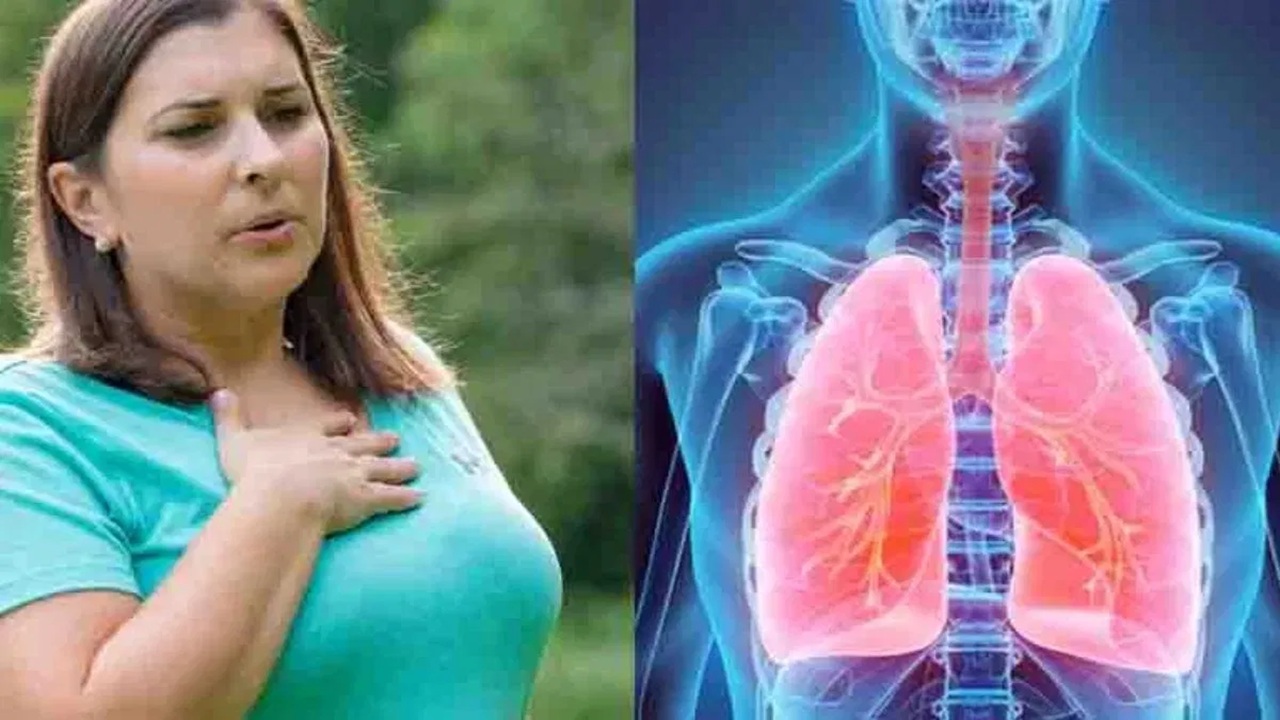
Ram Khandare, Mumbai : An important study by IIT Mumbai researchers has concluded that excessive accumulation of mucus, which protects the lungs from pollution, increases the risk of asthma and allergy attacks. Constant in Mumbai Pollution In the background, this study clarifies the etiology of diseases in the respiratory tract and there is a great possibility of getting a new direction for the future drug development and treatment methods.
Meanwhile, the airways in our lungs constantly secrete mucus as a natural defense mechanism. As soon as foreign particles, dust, grime or allergens enter, this mucus traps them. But according to a recent study by IIT Mumbai, continuous exposure to pollution increases the amount of mucus in the respiratory tract, weakening rather than strengthening the defenses.
The researchers’ study found that the excess mucus does not form a continuous lining in the airways, but instead forms narrow ridges and clots. As a result some parts remain completely exposed. These exposed areas increase the chances of accumulation of micro-pollutants and thus increase the risk of asthma, allergies and other respiratory disorders. The study was conducted by researcher Swarnaditya Hazra of IIT Mumbai and Prof. Jason R. Picardo has done and his research paper has been published in the international journal Journal of Fluid Mechanics.
Protest by locals against the Saifi Hospital management opposing the Charni Road-Girgaon bridge
Research is mainly focused on the ‘central airways’. These passages lie between the trachea and the terminal air sacs in the lungs. In this region the mucus layer behaves physiologically according to the theory of ‘Rayleigh–Plato instability’. As a result, the mucus collects in places without being homogenous and breaks down the protection.
“In general, more mucus would be thought to be more protective. But our study showed that as the amount of mucus increases, the lining becomes fragmented. This leaves parts of the airways open and microscopic pollutants can easily enter. This is the true ‘mucus paradox’.” IIT Mumbai Prof. Jason R. Picardo informed.
Towards a pulmonary system model
According to the researchers, the next goal is to create a comprehensive model of the entire lung system, and this study is a major step towards more effective treatment of respiratory diseases.
How is this research useful to anyone?
Help understand the physiological causes of asthma and allergy attacks
Health hazards for citizens of polluted cities more obvious
Guidance for the accurate design of inhaled drugs
The possibility of developing ‘designer drug particles’ to deliver drugs directly to the site of need

Comments are closed.