
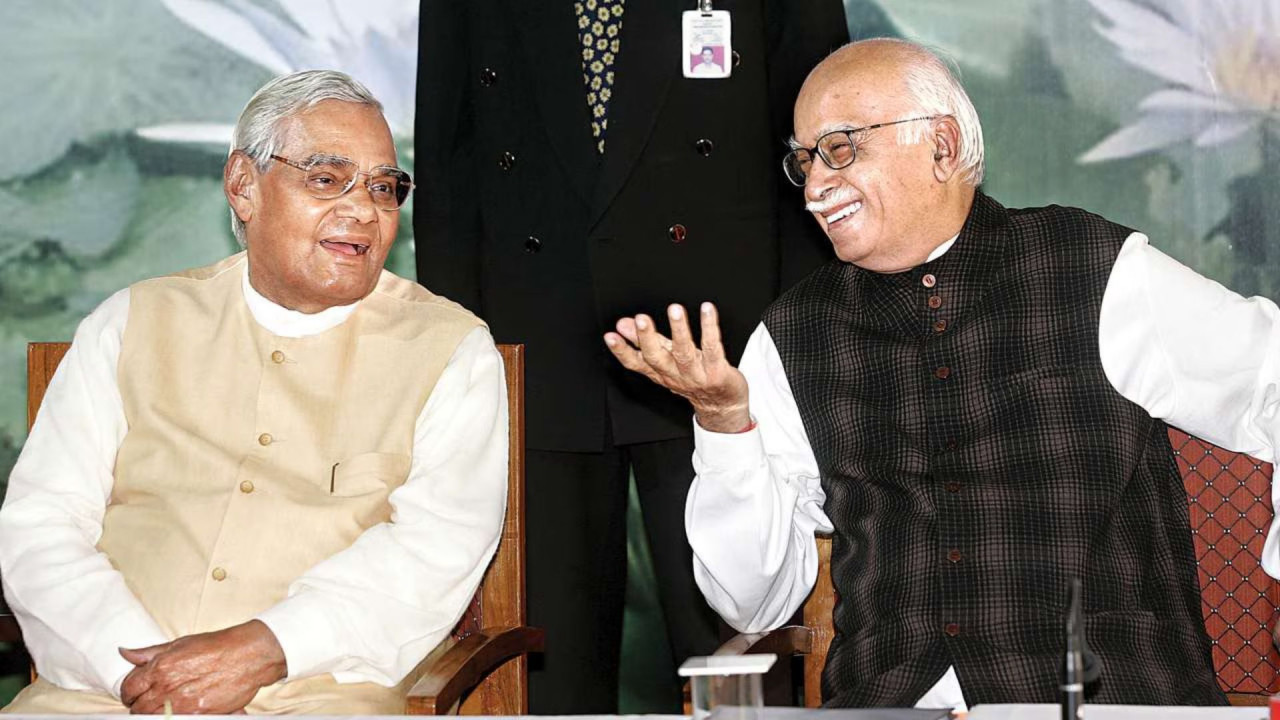
If these suggestions were accepted then Atal Bihari Vajpayee would have become the President, Advani would have got the chair of PM… Then how did the name of APJ Abdul Kalam come up?

New Delhi: An interesting political discussion had emerged before the selection of Dr. APJ Abdul Kalam as the 11th President of India. At that time, it was thought within the Bharatiya Janata Party and the National Democratic Alliance (NDA) that why not make the then Prime Minister Atal Bihari Vajpayee the presidential candidate. According to this proposal, the responsibility of the post of Prime Minister could have been handed over to Lal Krishna Advani, who was considered very strong in both the party and the organization at that time.
There was intense brainstorming within BJP
Before the 2002 Presidential elections, there was a serious discussion on this option in the top leadership of BJP. At that time, Lal Krishna Advani was in an influential position in the party and the support of Rashtriya Swayamsevak Sangh (RSS) was also said to be more for him than Vajpayee. Keeping this political equation in mind, a proposal was put forward to send Atal Bihari Vajpayee to the post of President, so that the balance of power is maintained.
Why did Atal Bihari Vajpayee reject the proposal?
However, Atal Bihari Vajpayee immediately rejected this suggestion. His thinking was clear that if a popular and working Prime Minister is made the President, it could start a wrong tradition in democracy. Vajpayee believed that the Prime Minister is the head of the government elected by the people and it would not be appropriate from the democratic point of view for such a person to move away from active politics and go to Rashtrapati Bhavan.
Revealed in Ashok Tandon’s book
Ashok Tandon, who was media advisor in the Atal Bihari Vajpayee government, has mentioned this entire incident in his book ‘Atal Smaran’. In this book published by Prabhat Prakashan, Tandon writes that Atal Bihari Vajpayee was strictly against any such proposal. He said that he is a popular Prime Minister and in such a situation his becoming the President could set a wrong example for democracy.
Atal’s thinking in coalition politics
Atal Bihari Vajpayee is considered a strong face of successful coalition politics in India. He led the NDA government from 1998 to 2004 and ran the government by taking various parties together. His same democratic thinking was visible in the presidential elections also, when he insisted on building a consensus between the government and the opposition.
Kalam’s name carried forward
Atal Bihari Vajpayee started dialogue with the Congress leadership regarding the Presidential elections. Taking the opposition into confidence, he put forward the name of Dr. APJ Abdul Kalam, who, besides being a scientist, was away from political controversies and was popular across the country. A consensus was reached between the NDA and the opposition on Vajpayee’s initiative.
Sonia Gandhi was also surprised
According to Ashok Tandon, when Sonia Gandhi, Pranab Mukherjee and Manmohan Singh met Atal Bihari Vajpayee in a meeting, they were told for the first time that Dr. Kalam’s name would be proposed for the post of President by the NDA. There was silence in the room as soon as Kalam’s name was heard. Sonia Gandhi broke this silence and said that this name is unexpected, but there is no option other than her support.
President elected unanimously
Dr. APJ Abdul Kalam was elected the 11th President of India in 2002. He got the support of the ruling coalition as well as the opposition, which is a rare example in Indian politics. He held the presidency till 2007 and created his own identity as the ‘people’s president’.

Comments are closed.