
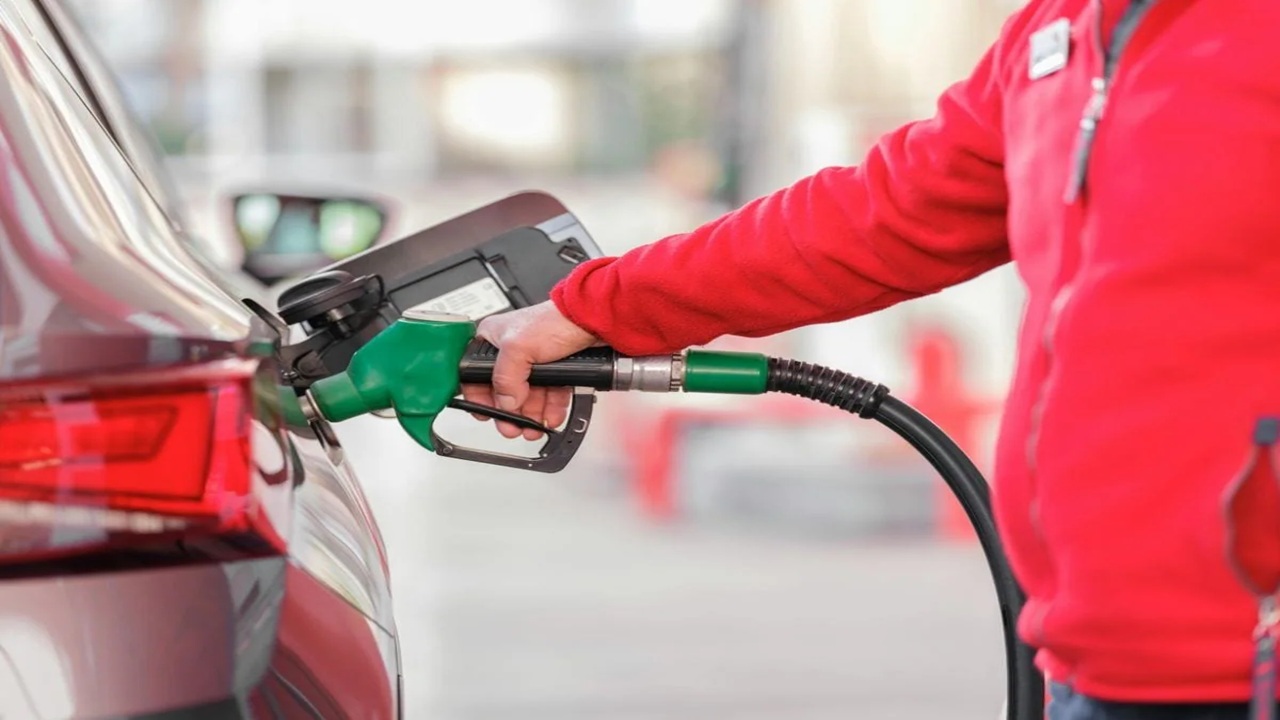
Important decision of the government regarding petrol! RON 95 petrol with Ethanol will be available across the country from April 1

From April 1, 2026, there will be a major change in the Indian automobile sector. Government of India has taken a significant step to reduce pollution. Only E20 nationwide from 1st April 2026 Petrol itself will be sold. This means 20 percent ethanol will be added to the petrol. This rule will be applicable to all States and Union Territories. The government has clarified that even petrol with a 95 RON rating must contain 20 percent ethanol. This decision has been taken to improve the environment and reduce dependence on fuel imports.
India has already achieved the target of 20% ethanol blend. India has issued an official directive to all oil marketing companies to sell only blended petrol with 20% ethanol content and a minimum value of 95 RON in all states and Union Territories. Now, Sameer Somaiah, chairman and managing director of ethanol producer Godavari Biorefineries Limited (GBL), has said that India should now aim for higher blends, reaching E50 (50% ethanol blend).
Target achieved before 2030
Somaiya welcomes the decision to make E20 petrol mandatory at all fuel stations. The President has seen this as a positive sign for India’s energy transition journey. He said it was not long ago that the government set the target for E20. The original time was 2030, but a 20% ethanol blend was achieved much earlier. Both consistent policy support and strong industry engagement have helped achieve this by 2025.
Competition with petrol and diesel! In January, this electric car is universally loved, know
The E50 should be seriously considered
About the E50 vision, he said, the E20 has now become the national benchmark. E50 (petrol blended with 50% ethanol) is certainly achievable. There are many ways to do this. He said, “First, the industry today has shown considerable capacity and flexibility to support higher blending percentages. Second, there is an urgent need to enable flex-fuel vehicles (FFVs) in India with the same opportunities as electric vehicles. If India is serious about accelerating its transition away from fossil fuels, FFVs should be considered at the same strategic level as EVs.”
The President is essentially calling for policy support and incentives/subsidies for flex-fuel vehicles. Incentives can encourage adoption and this applies to any early-stage industry. Once the market matures, the incentives are removed. you In electric vehicles This has been seen. We may see this in hybrid and flex-fuel vehicles (FFVs) in the future.
Somaiya believes that electrification alone cannot achieve defossilization. A complete transition to electric vehicles alone will not help the country achieve its net zero goal. Blended fuels will play an important role in this. Agriculture, regenerative agriculture and bio-based value chains will all play a role. Ethanol burns cleaner than regular gasoline. Ethanol-blended petrol has lower emissions than pure petrol. It was informed that if the mixture is increased, the emission will decrease.

Comments are closed.