
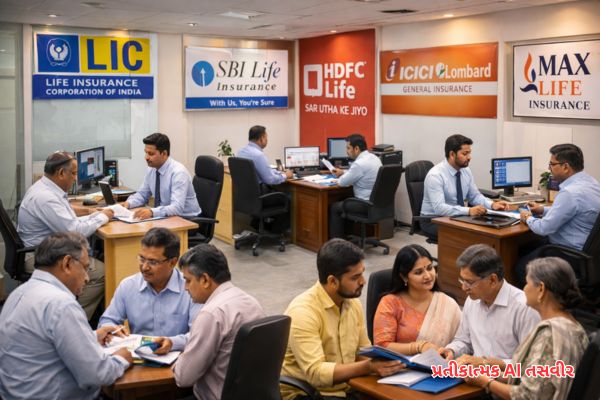

Indian Insurance Sector: Insurance Regulatory and Development Authority of India (IRDAI) a insurance industry in india It is the highest regulatory body for. Its function is to regulate the operations of insurance companies, provide guidance to them and maintain discipline in the entire industry. The main objective of IRDAI is to protect the interests of policyholders in life insurance, which is an essential tool for long-term financial security.
The main objective of IRDAI’s regulations for life insurance companies is to protect the interests of policyholders, ensure orderly growth of the industry and promote fairness and transparency. This regulatory framework ensures that life insurance companies function not just as businesses, but as reliable and stable financial partners for customers. These include issues like speedy settlement of claims, strong grievance redressal system, maintaining adequate capital and appropriate conduct for insurers, so that companies deal with customers honestly and fulfill their promises. These rules promote a culture of transparency, accountability and customer centric approach in the life insurance sector.
The key rules and guidelines laid down by IRDAI that shape the governance of companies and their dealings with policyholders are:
Main rules and guidelines of IRDAI:
Policyholder protection:-
The foundation of any insurance system is based on trust, and to maintain this trust the policyholder is protected. IRDAI It is the highest priority area. Under these rules, life insurance companies are obliged to behave fairly and ethically towards their customers. This means that companies must be completely honest in every transaction, communicate the terms and conditions of the policy in clear and simple language and maintain transparency.
Most importantly, companies are mandated to put in place clear and efficient grievance redressal procedures to resolve any issues or concerns of policyholders. Additionally, strict adherence to Anti-Money Laundering (AML) regulations is essential to maintain the integrity of the insurance industry. Companies have to adequately verify the legal sources of income of policyholders. This process is not only necessary to prevent financial crimes, but it also ensures that the insurance system is not used for illegal activities. By following AML regulations, companies help maintain trust and stability throughout the financial system.
Registration and Corporate Governance:
To start life insurance business in India, any organization has to fulfill the specific registration conditions set by IRDAI. These conditions include adequate amount of capital, practical implementation of the business plan and proven competence of the company’s management. One of the important stages of the registration process is the R-3 stage, in which the company must demonstrate its final preparation and satisfactory compliance with all regulatory requirements.
After registration, corporate governance guidelines govern the running of the company. These rules ensure accountability, transparency and fairness in the decision making process of the company. In particular, clear rules apply regarding the appointment and remuneration of the Chief Executive Officer (CEO). These rules ensure that the CEO is selected on the basis of qualifications and experience and that his remuneration is linked to the company’s performance and the interests of policyholders. A strong corporate governance structure holds the company’s board of directors accountable to policyholders, ensuring that the company is always run in the best interests of the company.
Products and Sales:
Choosing an insurance policy can be a complex decision for a customer. Therefore, IRDAI regulations place the responsibility on companies to maintain fair sales practices. Companies should guide policyholders in choosing the appropriate coverage amount based on their needs. Generally, the policyholder is advised to take a coverage of at least 10 times his annual income. This norm ensures that the family gets adequate income replacement in case of an unfortunate event.
In addition, companies policy holderThe specific needs, financial situation and risk appetite of the individual should be properly assessed so that they are sold a policy that is best suited to them. Under the new rules, many Unit-Linked Insurance Plans (ULIPs) have been provided with the facility of partial withdrawals during the policy term, which provides convenience to the policyholder for emergent needs. Additionally, customers can also be given the facility to invest the fund in equity, debt or mixed options. However, it is mandatory to clearly inform about the risks involved in these investments. These rules allow policyholders to have greater financial control and potentially higher returns on their investments.
Claim Settlement:
Settlement of claims is the true test of the credibility of an insurance company. IRDAI seeks to ensure that the claims process is fast, efficient and responsive when the policyholder or his/her nominee needs it most. The claim information must contain details such as date, place and cause of death, which serves as the basis for the claim verification process.
Additionally, it is the duty of the agents to actively assist the policyholder’s family or nominee in the claim process. The insurance agent, who has direct contact with the customer, should provide guidance in collecting documents, filling out forms and coordinating with the company. This agent support is vital for families, especially in times of grief, and ensures that legal claims are approved without unnecessary delays. Claim settlement rates and time limits are strictly monitored by IRDAI to ensure that companies adhere to promises made to customers.
Agent and Broker Rules:
insurance agents And brokers are an important link between insurance companies and customers. Therefore, it is necessary to regulate their professionalism and conduct. Both individual agents and corporate agents are officially licensed by IRDAI and have to follow prescribed rules (such as the Individual Agents Rules, 2002) that regulate their conduct and sales process.
Agents are required to pass the IC-38 exam to prove their competency and knowledge of insurance products. This certification ensures that they can provide appropriate and accurate information to customers. Additionally, agents must have effective and clear communication skills. This skill enables them to explain complex policy terms in simple language, provide satisfactory answers to customer queries and avoid mis-selling. These rules keep agents’ standards high, providing clients with reliable advice.
Grievance Redressal:
IRDAI provides a clear path if the policyholder feels that he has been treated unfairly by the insurance company or his complaint has not been properly redressed. If the company does not resolve the complaint within a month or rejects the complaint, the policyholder can contact the Insurance Ombudsman.
Insurance Ombudsman is an independent organization that provides fast, efficient and cost-free redressal of policyholders’ complaints. The main condition for contacting the Insurance Ombudsman is that the claim amount should be up to Rs 30 lakh. This system provides a robust and simple mechanism for customers to seek justice, saving them from lengthy and costly legal battles. It also maintains pressure on insurance companies to take customer complaints seriously.
IRDAI obliges life insurance companies to operate within a strong regulatory framework. These rules and guidelines play a crucial role not only in maintaining the financial stability of the insurance industry but also in keeping the interests of the policyholders paramount. From policyholder protection to high standards of corporate governance, ethical sales practices and robust grievance redressal mechanisms, IRDAI ensures that life insurance companies function not just as businesses but as a reliable and trustworthy financial partner to policyholders. This comprehensive regulatory framework is essential for consumer confidence and long-term stability of the Indian insurance sector. (respectively)

Comments are closed.