
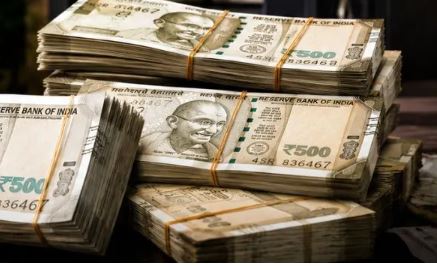
Income Tax Day: How much money can you keep at home in cash? Know the rules of Income Tax Department

Income Tax Day 2026 Special: Income Tax Day 2026 is celebrated every year in India on 24th July to commemorate the introduction of Income Tax. This day recognizes the contribution of taxpayers and highlights the important role of the Income Tax Department in strengthening the country’s economy. It also promotes tax awareness, voluntary compliance and transparent tax administration, thereby encouraging citizens to fulfill their tax responsibilities for India’s growth and development.
Income Tax Day 2026 is being celebrated on Friday, July 24, which is the 166th anniversary of the introduction of income tax in India by Sir James Wilson in 1860. This day is also known as Income Tax Day. It celebrates the evolution of India’s tax administration and honors honest taxpayers whose contributions help in the development of the country.
Income tax started in India
On 24 July 1860, Sir James Wilson, the first Finance Member of the Governor-General’s Council, introduced income tax in British India to overcome the financial crisis following the Rebellion of 1857. The first income tax was introduced as a temporary measure to generate revenue for the government. The Income Tax Act, 1886 was enacted to create a more structured framework for income tax in India. The Income Tax Act, 1922 further reorganized the tax administration and strengthened the legal framework for direct taxation.
What is Income Tax Act, 1961?
After independence, the Income Tax Act, 1961 replaced the Act of 1922 and came into force on 1 April 1962. It remains the main law governing income tax in India with regular changes. The Central Board of Direct Taxes (CBDT) oversees the administration of direct taxes under the Finance Ministry. In 2010, the Income Tax Department started celebrating Income Tax Day to commemorate 150 years of income tax in India.
How much cash is allowed to be kept at home?
Indian Income Tax Act Under this, no maximum limit has been set for keeping cash at home. Any citizen can keep any amount of cash in his house, provided that money is from legitimate income and he has documentary evidence to prove the clear source of that money. If the cash kept at home matches your declared income, bank withdrawals or business income and you have paid tax on it, then it is completely legal.
Also read: Economic crisis all over the world, yet how is India growing so fast? Big revelation in RBI report
What if you don’t disclose your source of income?
If a huge amount of cash is recovered from the house during the investigation or raid of the Income Tax Department and the taxpayer is not able to produce its legitimate source or account, then he is charged with ‘undisclosed income’ It is believed. If undeclared cash is found, the Income Tax Department can confiscate the money and impose a penalty of up to 137 percent of the total amount including tax and penalty. In case of non-disclosure of source Prevention of Money Laundering Act Investigating agencies can also take action under (PMLA).

Comments are closed.