
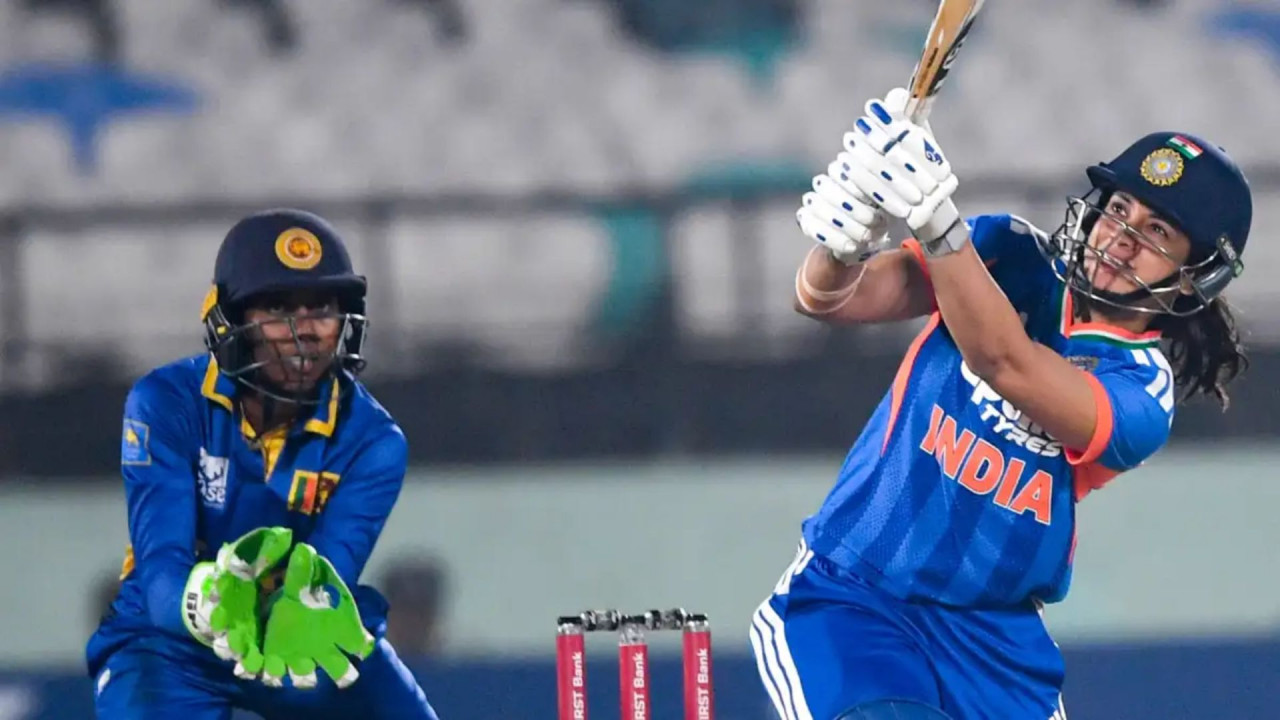
IND W vs SL W: India-Sri Lanka women’s cricket team did a special feat, this has never happened before in T20 history.

IND W vs SL W:The fourth T20 match was played between India and Sri Lanka on Sunday 28 December. During this time, a unique record was made in the history of women’s T20 international cricket. In this match played in Thiruvananthapuram, both the teams together scored 412 runs, but no batsman scored a century. This is the highest total runs without any century in Women’s T20I.
Let us tell you, India scored 221 runs after losing 2 wickets. Whereas Sri Lanka could score only 191 runs after losing 6 wickets. Both the teams together scored 412 runs. It had never happened before that so many runs were scored and no century was scored.
Exciting details of the match
In the match played yesterday, Sri Lankan captain Chamari Atapattu won the toss and chose to bowl first. Indian opener Smriti Mandhana scored 80 runs in an inning of 48 balls. Whereas Shefali Verma scored 79 runs on 46 balls.
The stormy innings of both made a partnership of 162 runs, which is the biggest partnership for any wicket in India’s Women’s T20. After this, Richa Ghosh scored unbeaten 40 runs (16 balls) and Harmanpreet Kaur remained unbeaten on 16 runs. India made its highest T20 score of 221/2.
India’s consecutive wins
Sri Lanka made a good start while chasing the target of 222 runs. Captain Chamari Atapattu scored 52 runs, but the team could only score 191/6 in 20 overs. Vaishnavi Sharma took 2 wickets. Overall, India won the match by 30 runs and took a 4-0 lead in the series. Sri Lanka also made its biggest T20 score.
Despite big score, did not score a century
In Women’s T20, usually one or the other century is scored in a big score, but this did not happen in this match. This record remains intact even after taking out extra runs. Earlier, the highest number of runs without a century had been scored in some other Indian matches, but this is the new number one. This match took place on Indian soil, which makes it more special.

Comments are closed.