
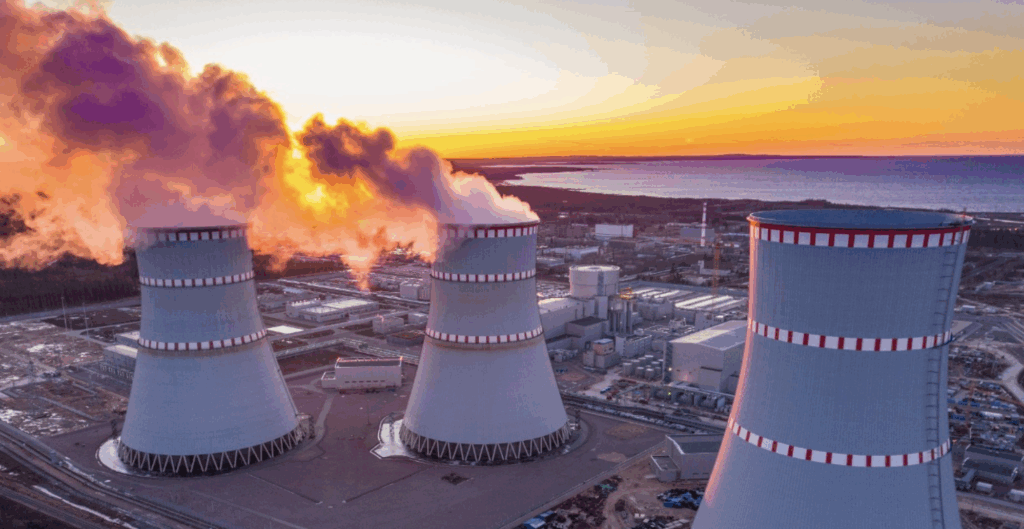

India is sowing seeds of atomic sunlight, harnessing small modular reactors (SMRs) to illuminate a cleaner energy future.
India Allocates ₹20,000 Crore for Small Modular Reactors, Targets Indigenous Operation by 2033
The Minister of State (Independent Charge) for Science and Technology, Dr Jitendra Singh, confirmed in the Lok Sabha that Rs 20,000 crore has been allocated in the Union Budget 2025–26 for the design, development, and deployment of SMRs (advanced nuclear fission reactors), with the goal of operationalising indigenously developed reactors by 2033.
It is under the Nuclear Energy Mission that the research and development for the 200 MWe (Megawatt electrical) Bharat Small Modular Reactor (BSMR-200) is being supported and the project is in an advanced stage of obtaining administrative and financial sanction.
The BSMR-200 will harness trusted pressurised water reactor technology, fuelled by slightly enriched uranium, and can gracefully shut down and remain cool without power or human intervention—a monumental stride in safety. Equipped with passive systems and engineered safeguards, it stands resilient, ready to protect against the unforeseen.
The initial sites, for both, the BSMR-200 and a 55 MWe SMR-55 is proposed as Tarapur Atomic Power Station in Maharashtra.
Additionally, a high-temperature gas-cooled reactor for hydrogen generation is planned at BARC Vizag, Andhra Pradesh.
India’s Modular Leap – Powering Industry, Cutting Carbon
SMRs are designed to help industries cut carbon emissions, by replacing retiring fossil fuel plants, providing captive power for energy-intensive factories, and serving remote off-grid areas.
They can be installed on brownfield sites, and since most parts are factory-made and transported to the site, they can start producing power much faster than traditional large plants.
The government is also encouraging the private players to participate. The Nuclear Power Corporation of India Limited (NPCIL) has issued a Request for Proposal (RFP) to Indian industries for setting up 220 MW Bharat Small Reactors (BSR) for captive power generation (creation of electricity by a company for their own use), and supporting sustainable, low-carbon operations.
Contributing to the Net Zero by 2070 goal, India has set a target of achieving 100 GWe (Gigawatt electrical) of installed nuclear energy capacity by 2047.
With these nuclear projects requiring clearance from the Ministry of Environment, Forest and Climate Change (MoEF&CC), environmental safety is prioritized and is quintessential.
Waste management facilities are integral to plant design.
India charts a luminous path with modular atomic fires, powering a cleaner, greener tomorrow while safeguarding the earth – this being the unfolding journey that we must watch closely.
Summary
India plans to advance clean energy with small modular reactors (SMRs), allocating ₹20,000 crores in the 2025–26 budget for BSMR-200 and SMR-55 development. Using safe pressurized water technology, initial sites include Tarapur and BARC Vizag. SMRs cut carbon emissions, provide rapid, off-grid power, and involve private sector participation. Supporting India’s Net Zero 2070 and 100 GWe nuclear target by 2047, projects prioritize environmental safety and waste management.

Comments are closed.