
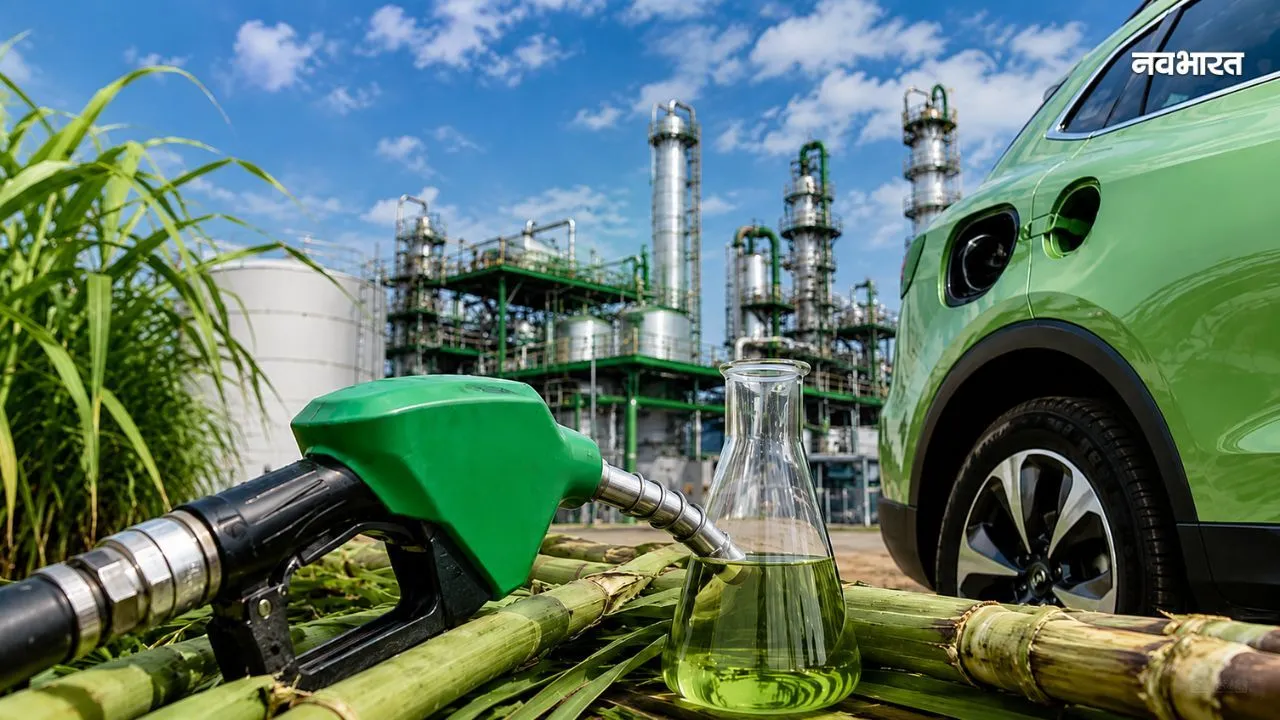
After E20, now it’s E100’s turn! Is India adopting Brazil’s ethanol model? Know how it works

India Brazil Ethanol Model News In Hindi: India is moving towards a major transformation to strengthen its energy security and reduce dependence on petroleum imports. After the success of 20% ethanol blended petrol (E20) in the country, now the central government is preparing to introduce E25, E30, E85 and even E100 fuel. To make this plan successful, India is deeply studying the model of the world’s most successful ethanol market i.e. Brazil.
Tax exemptions and major changes in rules
The government has recently taken an important policy decision to promote the use of ethanol. Under this, 22% to 30% ethanol blended petrol (E22-E30) has been completely exempted from central excise duty. After this exemption, the tax treatment of these high-blend fuels has now become at par with the existing E20 petrol, which is currently available at petrol pumps.
Additionally, the government has also proposed to amend the Central Motor Vehicles Rules (CMVR) to give official recognition to E85 and E100. This step is a clear signal of preparing the country’s vehicle and fuel ecosystem for the next phase.
Emphasis on flex fuel vehicles
There are two main aspects to this strategy of the government. The first step is to gradually increase the ethanol blend for existing petrol cars. At the same time, the second step is to bring Flex Fuel Vehicles on the roads. These are such vehicles which due to their design can easily run on any mixture of petrol and ethanol. However, it will take some time for these vehicles to arrive on a large scale in the Indian market.
What is Brazil’s ethanol model?
The direction in which India is moving, Brazil has reached there decades ago. Brazil started its ethanol program in response to the oil crisis in the 1970s. Today, at almost every petrol pump, consumers get the option to fill petrol mixed with 27% to 32% ethanol or directly use E100 i.e. pure hydrous ethanol.
The secret of ethanol’s success in Brazil is its government policies and price support. Ethanol there is often much cheaper than petrol, so consumers themselves choose it. Apart from this, it is also believed in Brazil that ethanol based fuel provides better acceleration to vehicles.
What will be the challenges for India?
A major difference between India and Brazil is that Indian consumers currently do not have the option to choose different fuel blends at petrol pumps. However, India is rapidly increasing its ethanol production capacity.
Also read:- Panama Canal Crisis: Hormuz issue resolved, now threat of El Nino looms over Panama Canal
According to data, by October 31, 2025, India’s ethanol production capacity has increased to 1,953 crore liters per year. The government believes that greater use of ethanol made from sugarcane and other crops will not only reduce pollution but also increase the income of farmers.

Comments are closed.