
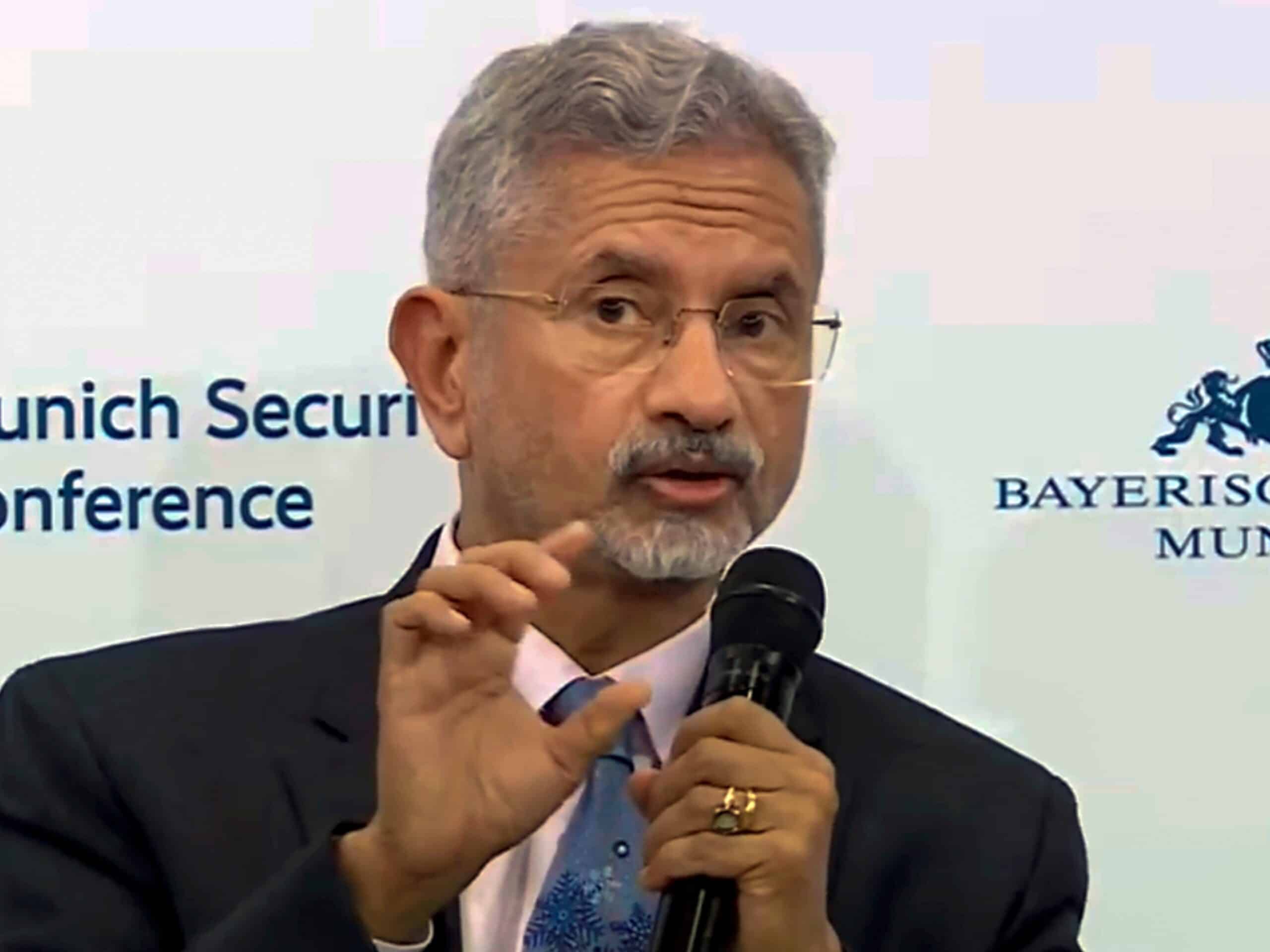

India remains firmly committed to its long-standing policy of strategic autonomy, External Affairs Minister S. Jaishankar said, amid assertions from Washington that New Delhi has agreed to reduce Russian oil imports under a trade understanding with the United States.
Speaking at the Munich Security ConferenceJaishankar underlined that India’s energy decisions are guided by availability, cost and risk assessment, and are taken in the country’s best interests.
Energy Decisions Based on Market Realities
Responding to a question on whether reducing dependence on Russian oil would affect India’s strategic autonomy, Jaishankar said the principle remains deeply embedded in India’s political and diplomatic evolution.
“We are very much wedded to strategic autonomy because it is part of our history and evolution,” he said.
He added that oil companies in India, as in Europe and other regions, operate in a complex global market. Their purchasing decisions are based on commercial and strategic considerations rather than political pressure.
Trade Deal Context and US Position
India has neither confirmed nor denied repeated claims by the administration of Donald Trump that New Delhi committed to curbing Russian oil purchases as part of a broader trade agreement.
Under the reported deal, US tariffs on Indian exports were reduced from 50% to 18%, including the removal of a 25% punitive levy imposed last year over Russian oil imports.
Jaishankar made it clear that India reserves the right to take independent decisions, even when they may not align fully with Western partners.
“If the bottom line of your question is whether I will remain independent-minded and make choices which may not agree with your thinking — yes, it can happen,” he said.
Global Recalibration and UN Reform
The minister noted that countries worldwide are recalibrating their policies amid unprecedented geopolitical shifts. He pointed to major global disruptions in recent years, including the Covid-19 pandemic, the Ukraine conflict, tensions in the Middle East and the rise of China, as factors reshaping international systems.
These changes, he said, reinforce the need for reforms in multilateral institutions, particularly the United Nations and the UN Security Council.
Strengthening India-Europe Ties
Jaishankar stressed the importance of revitalising India’s partnership with Europe at a time when the world is moving toward greater multipolarity.
His German counterpart, Johann Wadephulsaid growing global uncertainties have prompted Europe to seek stronger partnerships with countries that share common interests and values. He described India as one of Germany’s most important partners.
The two countries are cooperating on trade, defence, climate resilience, and strengthening international rules-based systems. Jaishankar also highlighted the significance of the proposed India-European Union Free Trade Agreement and the India-US trade deal in shaping a balanced global economic framework.

Comments are closed.