

India’s journey at the Commonwealth Games is one of remarkable evolution. Since its debut in 1934, the country has, over 92 years and 18 editions, developed into one of the Commonwealth’s leading sporting nations.
From winning a solitary medal in its early years, India has consistently finished among the top five nations in recent editions, amassing more than 564 medals across multiple disciplines.
However, Glasgow 2026 marks a significant transition. India won 61 medals at the Birmingham 2022 Commonwealth Games, but 30 of those came in sports that will not feature at the upcoming edition.
The absence of disciplines such as wrestling, badminton, hockey, table tennis and squash will reshape India’s medal prospects and test the country’s ability to adapt to a reduced programme.
India’s debut and beginning
India has been part of the Commonwealth Games, then known as the British Empire Games, since 1934, the second edition of the event, and has featured in every Games except 1930, 1950, 1962 and 1986.
The Indian contingent at the London 1934 Games comprised six athletes competing in track and field events and wrestling.
India returned with one medal, as wrestler Rashid Anwar became the country’s first Commonwealth Games medallist after winning bronze in the men’s 74kg freestyle event.
The rise after Independence
India won its first Commonwealth Games gold medal in 1958 when legendary sprinter Milkha Singh topped the men’s 440-yard event in Cardiff. The same edition also saw wrestler Lila Ram win gold in the 100kg freestyle category.
It also marked another milestone, with Stephanie D’Souza and Elizabeth Davenport becoming the first Indian women to compete at the Commonwealth Games.
Since then, India has steadily strengthened its position at the Games. Wrestling emerged as one of the country’s most successful disciplines during the 1970s and 1980s, while weightlifting and shooting soon became major contributors to India’s medal tally.
Raghavan Chandrasekaran’s success in weightlifting and Jaspal Rana’s dominance in shooting reflected India’s growing strength across disciplines. Rana remains India’s most successful Commonwealth Games athlete with 15 medals, while shooters have contributed a record 135 medals to India’s overall tally.
Indian badminton also witnessed steady growth, with Ami Ghia and Kanwal Singh becoming the first Indian women to win a Commonwealth Games medal in the sport. Since the early 2000s, India has consistently finished among the top five nations in the overall medal standings.
The golden years
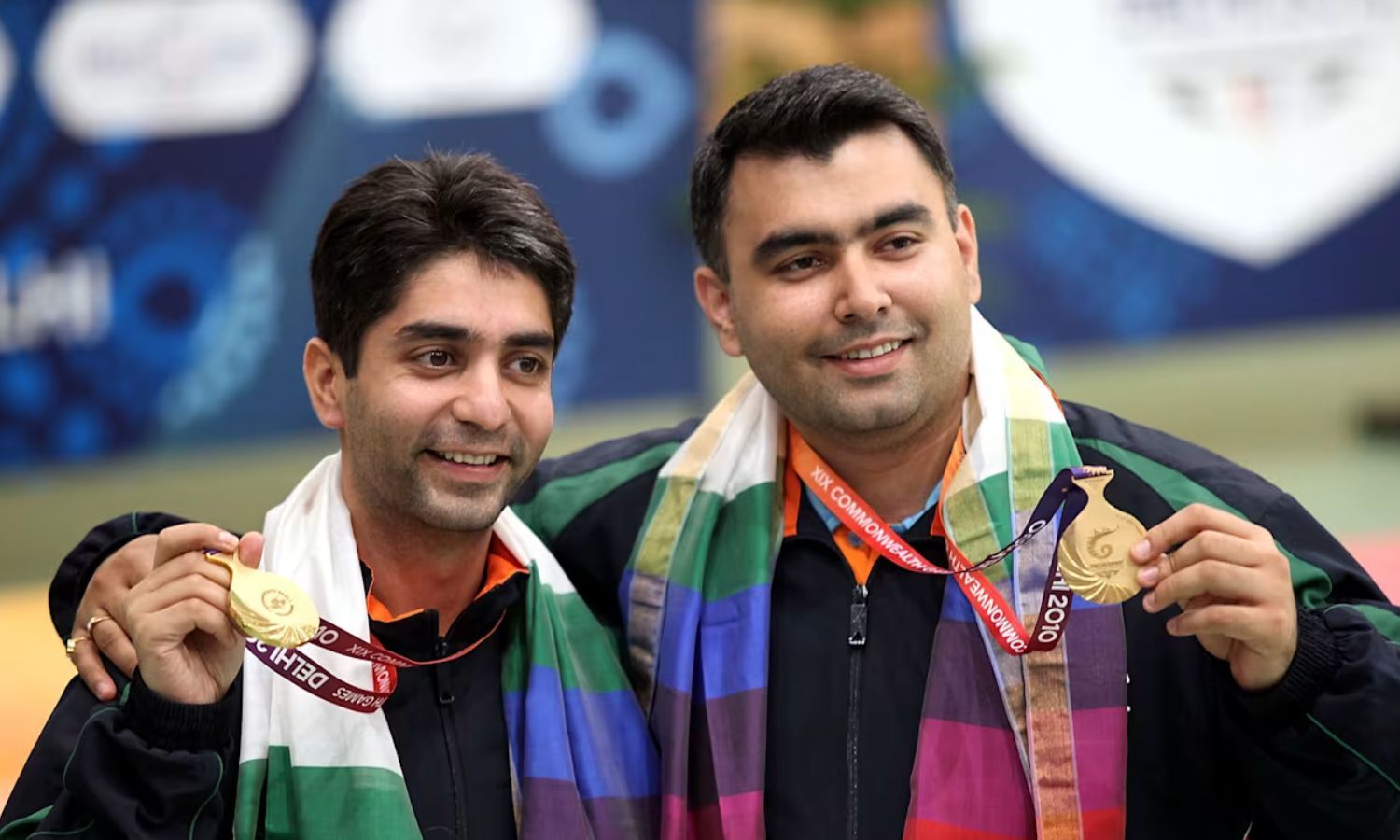
The Delhi 2010 Commonwealth Games remain one of the defining moments in Indian sporting history. Hosting the Games for the first time, India recorded its best-ever performance with 101 medals, including 38 gold, 27 silver and 36 bronze.
The achievement built on strong performances at Manchester 2002 (69 medals) and Melbourne 2006 (50 medals) and reinforced India’s emergence as a major sporting nation within the Commonwealth.
Birmingham 2022 further showcased India’s depth. The contingent finished with 61 medals, 22 gold, 16 silver and 23 bronze, with every Indian wrestler returning home with a medal.
Mirabai Chanu became India’s first gold medallist at Birmingham, Jeremy Lalrinnunga was the first Indian man to win gold, while Sudhir secured India’s maiden Commonwealth Games para sports medal with a gold.
PV Sindhu and Lakshya Sen won badminton singles gold, while Bajrang Punia, Sakshi Malik, Vinesh Phogat and Ravi Kumar Dahiya led India’s dominant wrestling campaign.
However, Glasgow 2026 presents a very different challenge. Thirty of India’s Birmingham medals came in sports that have since been dropped from the programme, including wrestling, badminton, table tennis, hockey, squash and cricket.
The upcoming Glasgow 2026
Despite losing several traditional medal-winning disciplines, athletics, boxing, weightlifting, lawn bowls and judo are expected to shoulder India’s medal hopes in Glasgow.
The reduced 10-sport programme means fewer medal opportunities, placing greater responsibility on the remaining disciplines to maintain India’s strong Commonwealth record.
Two-time Commonwealth Games champion Mirabai Chanu headlines the Indian weightlifting squad, alongside Birmingham medallists Bindyarani Devi, Harjinder Kaur and Lovepreet Singh.
Olympic champion Neeraj Chopra returns after missing Birmingham through injury, while Olympic medallist Lovlina Borgohain strengthens India’s boxing challenge.
India’s lawn bowls squad also includes members of the historic Birmingham campaign, while athletes such as Murali Sreeshankar, Priyanka Goswami and Tejaswin Shankar return as experienced Commonwealth medallists with hopes of adding to India’s tally.

Comments are closed.