
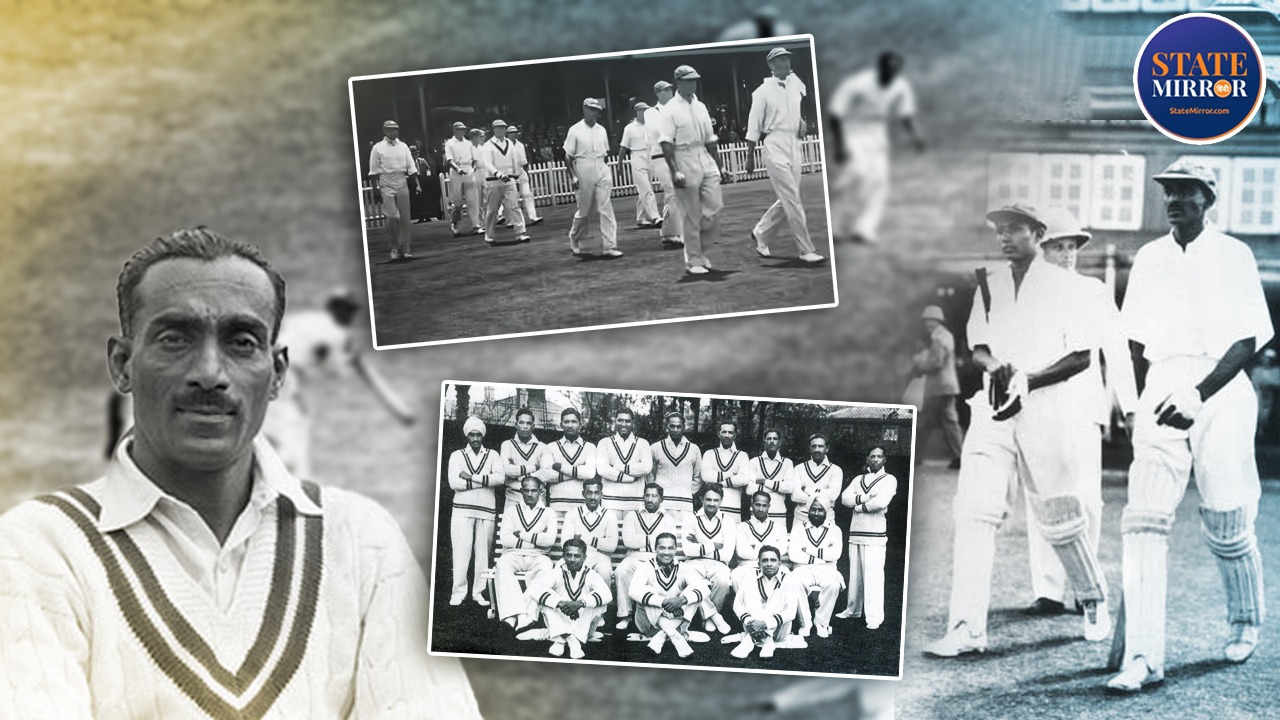

Although cricket is the gift of England but in today’s times team india Cricket is nothing without the contribution of. The Board of Control for Cricket in India (BCCI) is the richest cricket board in the world today, which means that Indian players, its grounds and facilities are famous all over the world. Indian cricket has given many great cricketers, whose names are written in golden letters in world cricket today.
From Kapil Dev, Sunil Gavaskar to MS Dhoni, Virat Kohli and Rohit Sharma, such Indian players have proved India’s glory in world cricket. Today Team India is far ahead of the country which is called the birthplace of cricket. Today we are going to talk about the debut match of Team India and the first captain.
Read this also:Sachin Tendulkar will never forget the day of 24 February 2010, for the first time a player did this feat in ODI.
1. Team India made its debut in international cricket on 25 June 1932.
2. Team India played its first match with England.
3. Team India played the first match at Lord’s ground.
4. The first captain of Team India was CK Nayudu.
5. In the first international match, Team India had to face defeat by 158 runs.
6. India became the sixth team to achieve Test status.
How was Team India’s performance?
First innings- 189
Second innings- 187
How was England’s performance?
First innings- 259
Second innings- 275
Which player scored the most runs?
Syed Wazir Ali batted well in the first international match for Team India. He scored 31 runs in the first innings and 39 runs in the second innings. That means overall he scored 70 runs for Team India in the first international match. In which no four-six was included.
Who took the most wickets?
In this match, Mohammad Nisar took the most wickets for Team India. While bowling, he took a total of 6 wickets including 5 in the first innings and 1 in the second innings.
When did you debut in ODI and T20?
1. Team India made its ODI debut in the year 1974.
2. Team India made its debut in T20 on 1 December 2006.

Comments are closed.