
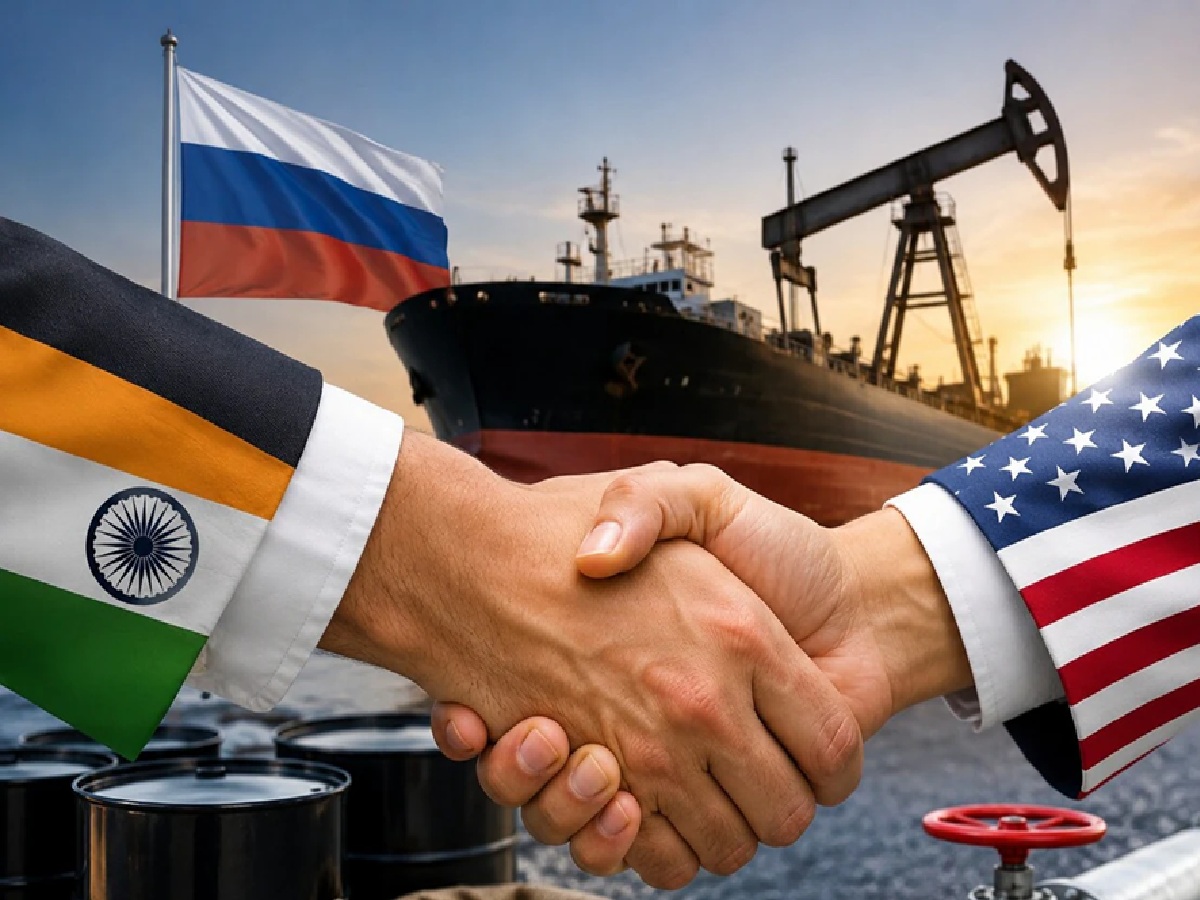
India Escapes Brutal 500% US Tariff Threat On Russian Oil Imports As Washington Eases Sanctions Bill:

In a monumental development for international energy markets, India and China have received a massive strategic reprieve from Washington. The United States Senate has officially introduced a heavily revised draft of its high-stakes Russia Sanctions Bill, significantly diluting a highly controversial economic penalty. The original legislative draft had threatened to slap an unprecedented 500 percent tariff on third-party nations importing crude oil and natural gas from Moscow. However, following intense diplomatic pressure and expert reviews, American lawmakers have slashed this maximum punitive tariff down to 100 percent for the top energy buyers, throwing a vital lifeline to India’s domestic fuel economy.
Balancing Geopolitics and Economics: Why the US Softened Its Stance on New Delhi
The overarching objective of the bipartisan bill—jointly drafted by both Republican and Democratic lawmakers—remains to systematically choke the Kremlin’s energy revenues. However, the initial proposal of a 500 percent tariff was widely condemned by global trade experts as an excessively harsh measure that could trigger a global energy crisis and rupture bilateral ties with key strategic allies like India. The new amendment drastically mitigates the potential economic shock for major global oil consumers. By keeping the maximum tariff capped at 100 percent, Washington is attempting to sustain economic pressure on Russia without completely alienating massive trading partners like New Delhi.
The Affected Circle: Maximum 100% Tariff Applied to Top Five Energy Buyers
According to the text of the newly modified legislation, the up-to-100 percent tariff threshold is designed to target the top five institutional buyers of Russian crude oil, which includes China, India, Slovakia, Hungary, and Azerbaijan. Concurrently, the bill introduces a sophisticated safety valve for natural gas imports. Countries that fall under a specific import threshold and can demonstrate documented, verifiable efforts to minimize their reliance on Russian gas will receive direct exemptions, shielding key European and Asian allies from secondary American sanctions.
Crackdown on the Shadow Fleet and Broad Executive Powers for President Trump
While the bill rationalizes its approach toward energy buyers, it severely intensifies direct enforcement against Moscow’s logistics. The bill introduces stringent sanctions against Russia’s elusive “shadow fleet”—an unflagged network of oil tankers operating outside Western financial frameworks to bypass global price caps. It also targets the Central Bank of the Russian Federation and state-owned energy megaprojects. Crucially, the legislation grants US President Donald Trump absolute executive discretion, empowering the White House to partially or completely waive these tariffs if a waiver is deemed essential to safeguard American national security interests or diplomatic partnerships.
The Indian Impact: How This Corporate Relief Shields Petrol and Diesel Prices
From the perspective of India’s macroeconomic landscape, this legislative rewrite is an incredibly significant victory. Over the last few years, discounted Russian crude oil has emerged as the structural backbone of India’s energy security, playing a vital role in keeping domestic petrol and diesel prices stable at the pumps despite volatile Middle Eastern markets. Had the original 500 percent tariff been enforced, Indian oil marketing companies (OMCs) would have faced catastrophic operational strain, forcing an immediate spike in domestic fuel prices. While a 100 percent tariff ceiling remains substantial, its real-world impact is heavily contained, and the integrated presidential waiver option leaves ample room for active bilateral diplomacy between New Delhi and Washington before the bill transitions into final statutory law.

Comments are closed.