
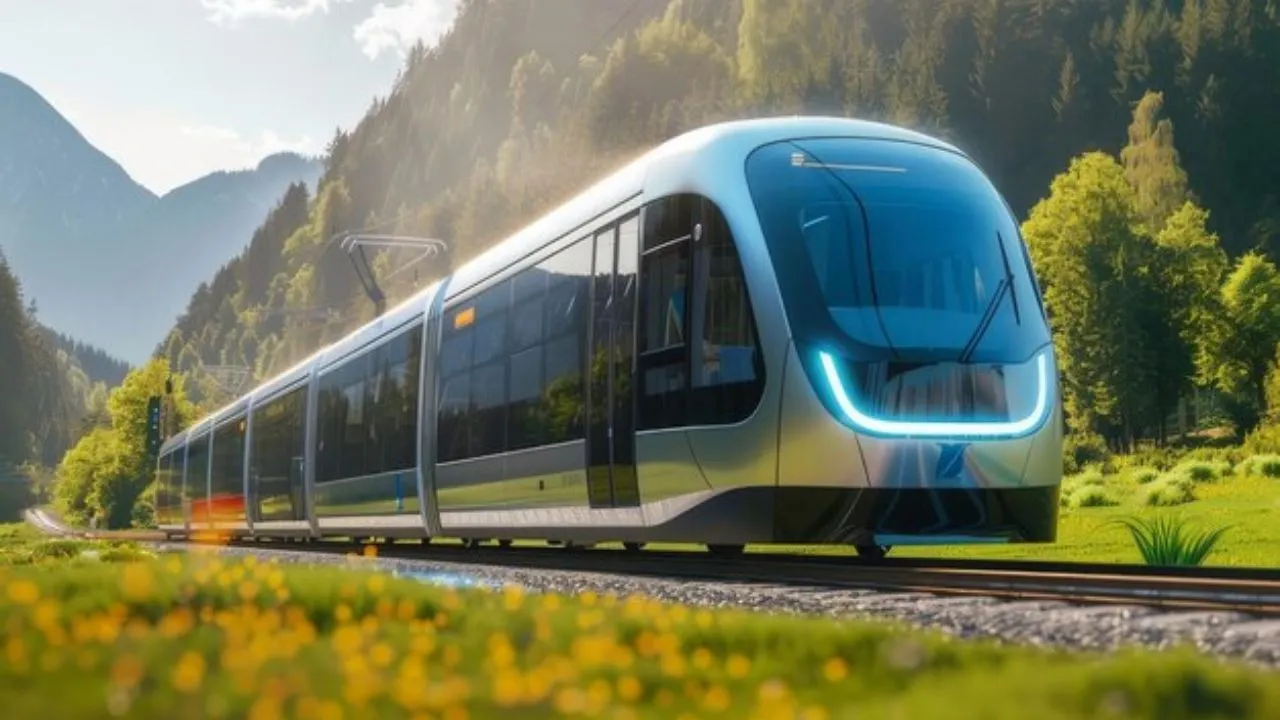
India’s first Hydrogen Train gets green signal, how much more powerful is Hydrogen than CNG?

Hydrogen Fuel: To reduce the increasing pollution in the country, the government is continuously promoting alternative fuels. While E20 ethanol blended petrol is now available across the country, hydrogen fuel is now being seen as the clean fuel of the future. India has achieved great success in this direction. Let us tell you that the country’s first hydrogen train has got the green signal which will soon start its services in Haryana. It is believed that this project can prove to be an important step towards the green transportation mission of Indian Railways.
India’s first hydrogen train will run in Haryana
It is being told that India’s first hydrogen train will travel a distance of about 89 kilometers between Jind and Sonipat in Haryana. This 10-coach train will make two round trips daily and cover a total distance of 356 kilometers per day. Hydrogen fuel cell technology has been used in this train. Electricity is generated through a chemical process between the hydrogen stored in it and the oxygen obtained from the air. Due to which the train motor runs. In this process, instead of smoke or poisonous gas, only water steam is released, hence it is considered a very clean technology from the environment point of view.
Is hydrogen more powerful than CNG and diesel?
Experts say that in terms of energy efficiency, hydrogen is considered far ahead of traditional fuels. According to available scientific data, approximately that much energy can be obtained from 1 kilogram of hydrogen. As much as is obtained from 4.5 kg diesel or 3 to 4 kg CNG. This is why hydrogen powered vehicles have better pickup, more power and the ability to cover longer distances. But the actual performance also depends on the technology and efficiency of the vehicle.
Also read: Jetour T2 with 1000Km+ range will enter India on Diwali, the car will run on both petrol and electricity.
Will hydrogen be cheaper than CNG in future?
Currently, producing, storing and transporting hydrogen is relatively expensive. But experts believe that after large-scale production and adequate refueling stations are built, its cost can be reduced significantly. Since hydrogen can also be produced from water, there is a possibility of less dependence on imported fuel in future.
If hydrogen infrastructure develops rapidly, it can not only become a better option for the environment in the coming years but can also prove to be an economical fuel for consumers in the long run.

Comments are closed.