
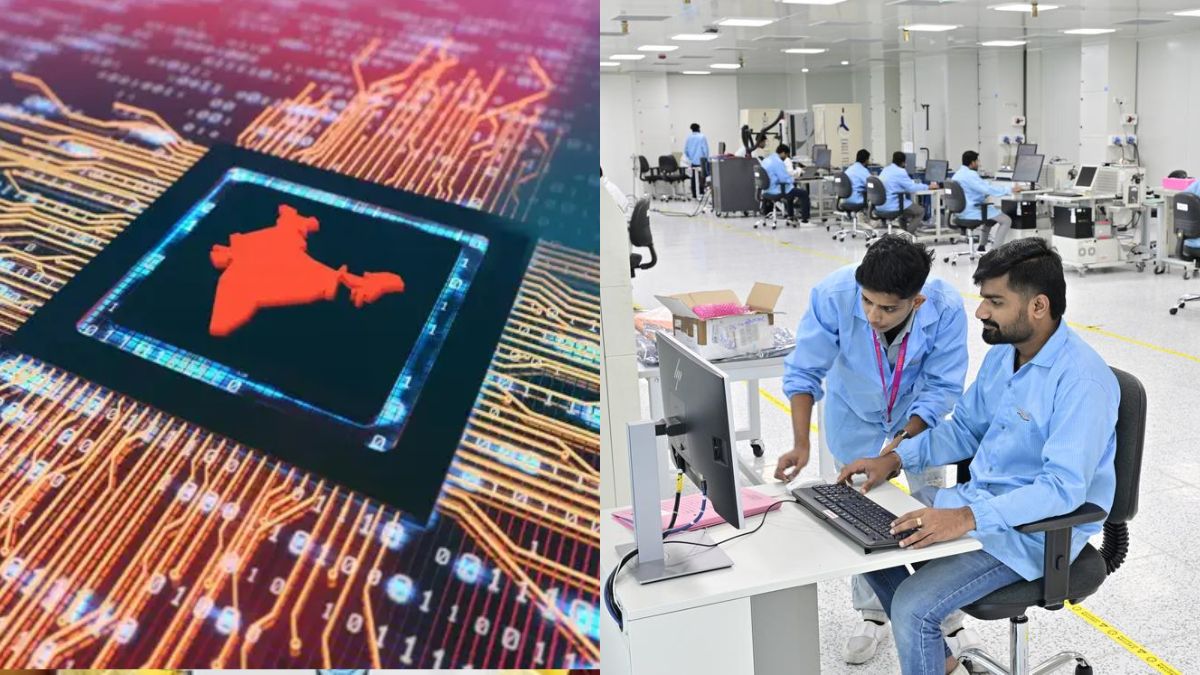
India has 3 lakh chip designers but still imports 90% of semiconductor equipment but Why?

India is home to an estimated 300,000 semiconductor design engineersaccounting for nearly one-fifth of the global chip design workforceunderscoring the country’s growing prominence in the global semiconductor design ecosystem. However, despite its strong talent base, India continues to depend heavily on imports, with around 90% of its semiconductor manufacturing equipment sourced from overseas.
The contrast highlights one of the biggest challenges facing India’s ambitions to become a global semiconductor manufacturing hub. While multinational technology companies have established major chip design and research centres across cities such as Bengaluru, Hyderabad, Noida and Pune, the country’s domestic semiconductor manufacturing ecosystem remains at an early stage.
India has made significant progress through the India Semiconductor Mission (ISM) and the Semicon India Programmewhich aim to attract investments in chip fabrication, assembly, testing, marking and packaging (ATMP), and semiconductor design. Several fabrication and packaging projects are currently under development, supported by government incentives worth billions of dollars.
However, semiconductor fabrication requires highly sophisticated equipment—including lithography, etching, deposition, metrology and testing systems—most of which are manufactured by a small group of global suppliers based in countries such as the Netherlands, Japan, the United States and South Korea. As a result, India continues to rely on imports for the vast majority of its semiconductor production machinery.
Industry experts note that while India has developed a competitive advantage in chip design and engineering services, building a domestic semiconductor equipment manufacturing ecosystem will require sustained investment, advanced research, skilled manufacturing capabilities and long-term collaboration with global technology leaders.
The government has identified semiconductor manufacturing as a strategic sector under its broader vision of strengthening technological self-reliance and reducing dependence on imports. Recent policy initiatives have focused on encouraging fabrication plants, component manufacturing and the localisation of critical parts of the semiconductor supply chain.
As new semiconductor projects begin production over the coming years, industry stakeholders expect India to gradually expand its manufacturing capabilities. However, experts believe reducing dependence on imported semiconductor equipment will remain a long-term challenge requiring continuous investment in technology, infrastructure and innovation.

Comments are closed.