
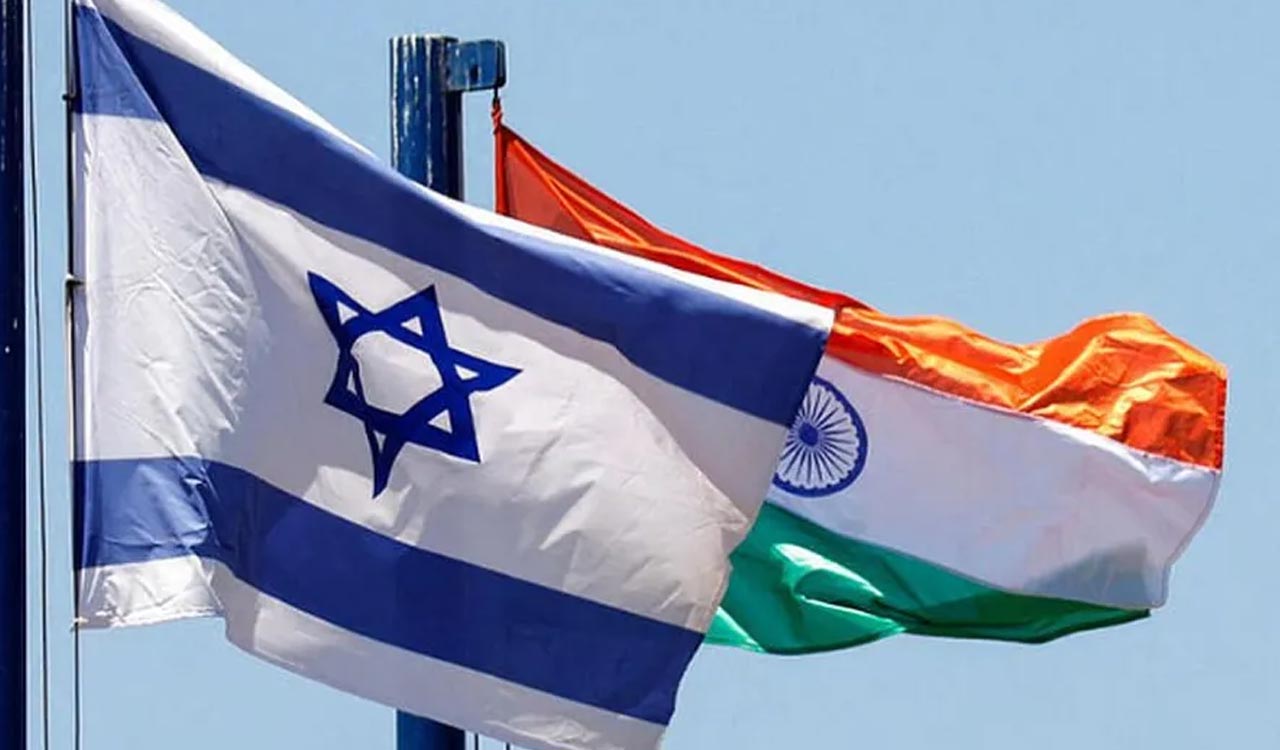

India and Israel have begun talks for a free trade agreement to boost investments and trade. The four-day negotiations follow the signing of terms of reference last year. Prime Minister Narendra Modi’s upcoming visit adds importance to the discussions
Published Date – 24 February 2026, 08:07 PM
New Delhi: India and Israel have started the first round of negotiations for a free trade agreement (FTA) here with an aim to further boost commercial ties and promote investments, an official said.
The four-day talks will end on February 26, the official said.
In November last year, the two countries signed the terms of reference (ToR) to formally start the negotiations for the pact.
In such pacts, the two sides significantly reduce or eliminate import duties on the maximum number of goods traded between them. Besides, they ease norms to promote trade in services and investments.
The ToR include market access for goods by eliminating tariff and non-tariff barriers, investment facilitation, simplification of customs procedures, increasing cooperation for innovation and technology transfer, and easing norms to promote trade in services.
The ongoing negotiations are important as Prime Minister Narendra Modi is visiting Israel on February 25-26.
India and Israel were engaged earlier also to negotiate a similar agreement. Eight rounds were held, but talks stalled later. The last round was held in October 2021. Now both sides have again started the negotiations.
During 2024-25, India’s exports to Israel dipped 52 per cent to USD 2.14 billion from USD 4.52 billion in 2023-24. Imports too fell 26.2 per cent to USD 1.48 billion last fiscal year. The bilateral trade stood at USD 3.62 billion.
India is Israel’s second-largest trading partner in Asia.
Though bilateral merchandise trade is dominated mainly by diamonds, petroleum products and chemicals, recent years have witnessed an increase in trade in areas such as electronic machinery, high-tech products, communications systems and medical equipment.
Major exports from India to Israel include pearls and precious stones, automotive diesel, chemical and mineral products, machinery and electrical equipment, plastics, textiles, apparel, base metals and transport equipment, and agricultural products.
Imports include pearls and precious stones, chemical and mineral/fertiliser products, machinery and electrical equipment, petroleum oils, defence machinery and transport equipment.
“The FTA will open the doors for greater market access, flow of capital, both in goods and services, remove obstacles in doing business, provide clarity and predictability to our economic engagement,” Commerce and Industry Minister Piyush Goyal had said in November in Tel Aviv.
In September last year, both countries inked a Bilateral Investment Agreement (BIA), under which India reduced the local remedies exhaustion period for Israeli investors to 3 years from 5 years.
During April 2000 and June 2025, India received USD 337.77 million foreign direct investment (FDI) from Israel.
Israel is a high-income, technology-driven market of under 10 million people.

Comments are closed.