
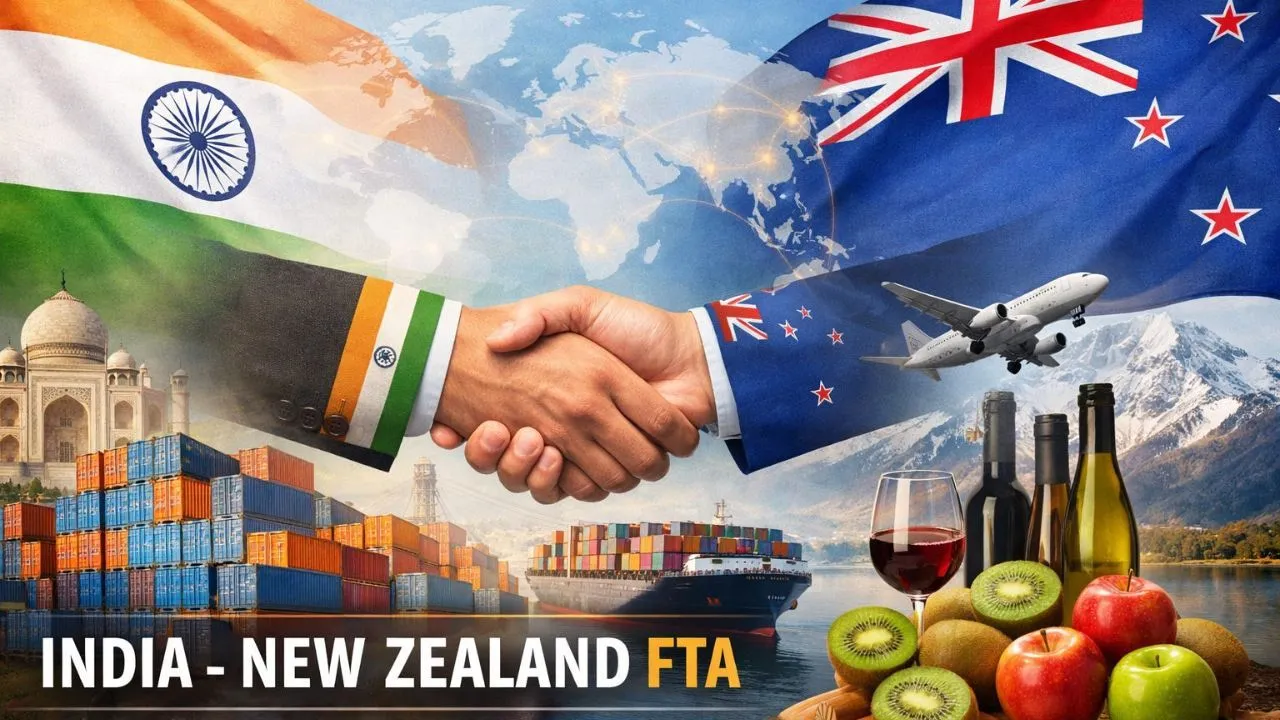
India-New Zealand FTA: Kiwi and wine will be cheaper, Modi government took a big decision on dairy and pulses for farmers

India-New Zealand FTA Deal: The recent Free Trade Agreement (FTA) between India and New Zealand has given a new direction to the economic relations between the two countries. This agreement is not only a means to increase trade figures, but it also opens new doors of possibilities for professionals, students and industries. The merchandise trade between the two countries was around $1.3 billion in the financial year 2024-25, which has now been set to reach an ambitious target of $5 billion in the next five years.
New avenues of opportunities open for professionals
The most important aspect of this agreement is the provision of ‘temporary visas’ There is provision for. Now every year 5,000 Indian professionals will be able to go to New Zealand and work. This is a golden opportunity especially for the youth associated with fields like IT, engineering, healthcare, construction, yoga and chef. This move will not only boost India’s ‘skill power’ will gain international recognition, but will also help meet New Zealand’s labor force needs.
Big relief news for Indian students
Under the agreement, the rules have been greatly simplified for Indian students. Now the visa quota system for students has been abolished, which directly means that more number of Indian students will be able to take admission in New Zealand educational institutions. Additionally, students are allowed to work a minimum of 20 hours per week while studying. This provision will help Indian students become financially independent during their studies and reduce their living expenses abroad.
The ‘give and take’ of business. balance
Free trade agreements often mean opening up markets, but India has implemented them very carefully, protecting its domestic interests. India has reduced or eliminated duties on 95 percent of New Zealand’s export products, making products like wool, timber, wine, kiwi, apples, cherries, avocados and Manuka honey cheaper in the Indian market.
However, to protect the livelihood of its farmers, India has kept sensitive agricultural sectors like dairy, sugar, onion, pulses, spices, edible oil and rubber out of the scope of this agreement or has not given any special concession on them. Tariff relief has also been given on some selected fruits like kiwi and apple under limited quota, so that local producers do not suffer any major loss.
Initiative for global expansion of AYUSH and Yoga
In another important aspect of this agreement, India has given special place to its traditional medical systems Ayush and Yoga. Under this, Indian traditional medicine and related medicines will get official recognition and access to the New Zealand market. This will not only create new business opportunities for Indian pharmaceutical and wellness companies but will also create ‘soft power’ It will also spread Indian culture.
Strategy made for long term investment
It is estimated that after this agreement, foreign investment worth about $20 billion will come to India within the next 15 years. This investment will not only improve the infrastructure but will also help in bringing the technology and quality standards at global level. The government believes that this agreement will provide a safe and reliable market for Indian exporters amid global uncertainties.
In the last few years, India has increased its ‘market diversification’ Under the (Market Diversification) policy, many agreements have also been signed with Australia, UAE, Britain and European Union. This agreement with New Zealand is an extension of that strategy. This will not only accelerate bilateral trade but also position India more firmly in the global supply chain as the world’s fifth largest economy.
Also read- DA Hike: Government employees rejoice, increase in DA after a long wait; Know how much your salary will increase based on your pay level
Both countries looking towards an inclusive future
Seen in this way, this trade agreement between India and New Zealand is a ‘win-win’ for both the countries. The situation is. While on one hand India has ensured the security of its agriculture and sensitive sectors, on the other hand it has also strengthened the foundation of the future by increasing employment and education opportunities for the youth. This agreement is not limited to dollar trade only, but it is a roadmap for trust, cooperation and shared development between the two countries. In the times to come, it will be interesting to see how this agreement takes India’s participation in the global economy to new heights.

Comments are closed.