
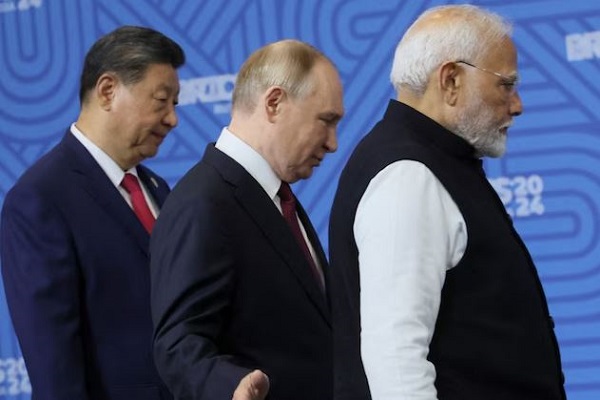

New Delhi, January 1. India on Thursday formally took over the rotational chairmanship of the BRICS grouping for the year 2026. India presented this role as a platform to promote inclusive growth and strengthen the voice of the Global South in global economic governance at a time when US President Donald Trump’s tariff moves have disrupted global trade flows.
If we look at it, New Delhi’s BRICS presidency is starting with two parallel realities. Firstly, BRICS has become a very big club. Another important aspect is that the global trading system is facing intense protectionism.
BRICS The growing nature and complexity of membership
It is noteworthy that BRICS started with Brazil, Russia, India, China and South Africa. Over the past two years the group has expanded to include Egypt, Ethiopia, Indonesia, Iran and the United Arab Emirates.
Saudi Arabia’s position remains controversial
At the same time, the situation of Saudi Arabia remains controversial. The BRICS website lists it as a member, but multiple reports say Riyadh has not yet completed the formal process.
In fact, this extended group is very large in terms of scale. According to World Bank data, BRICS comprises approximately 49% of the world’s population, 29% of global GDP and 23% of international trade.
Trump tariffs cause immediate pressure
The trade context is important as India’s relations with Washington have been strained since Trump moved to impose 50% tariffs on Indian goods, including additional duties linked to purchases of Russian oil.
India will probably avoid anti-dollar stance
Trump has repeatedly warned BRICS against introducing a common currency, threatened 100% tariffs and said in public statements that BRICS is doomed.
Against this backdrop, Prerna Gandhi, associate fellow at India’s Vivekananda International Foundation, told Nikkei Asia that India will promote transactions in the local currency while avoiding a confrontational anti-dollar stance so as to maintain strategic autonomy.
Raj Kumar Sharma, senior research fellow at NatStrat, told Nikkei Asia that India would use the chairmanship to ‘protect and strengthen multilateralism’ as protectionism is on the rise — and to push for reform of global institutions.
‘Global South’ agenda will return again, But with a new rival calendar
Raj Kumar Sharma said India is expected to focus on the Global South, as it did during its G20 presidency in 2023, giving priority to human well-being and inclusive growth, and putting issues like food and fuel scarcity, debt restructuring and climate finance on the agenda.
He also said it is a political reality that the Global South agenda may face competition from the US G20 presidency, where these priorities may not be as prominent.
Expansion and Pakistan: Where can India draw the border?
India’s presidency comes with an active membership debate. Sharma pointed out that New Delhi can push for clear norms so that BRICS does not lose its meaning due to unplanned expansion, including transparent standards and consensus-based decisions.
Pakistan, which is facing economic stress, is keen to join the BRICS-backed New Development Bank (NDB) to expand borrowing options and has already applied for BRICS membership. It adds a geopolitical edge to what is otherwise presented as a development-focused group.

Comments are closed.