
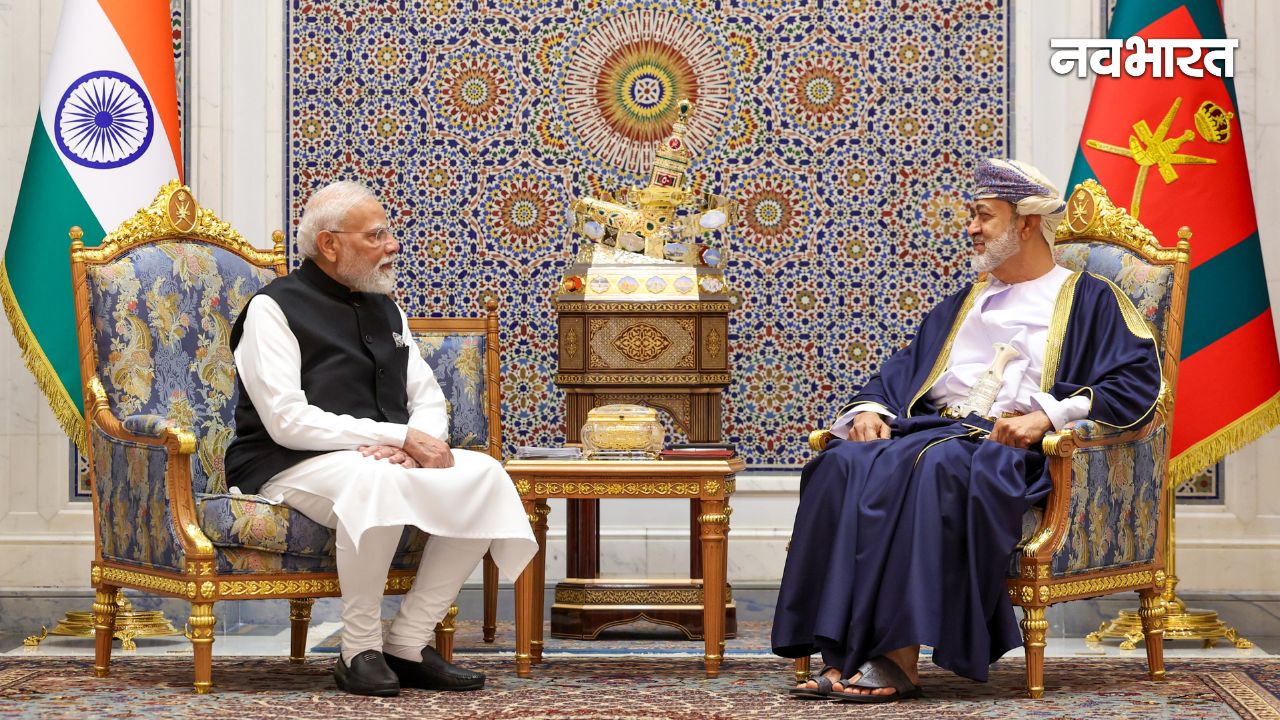
Trade agreement signed with Oman, Indian products will be sold in Arab countries without tax; What’s special in the deal

India-Oman Free Trade Deal: New economic relations have started today between India and Oman. The two countries officially signed the Comprehensive Economic Partnership Agreement on Thursday, (December 18). This agreement has not only brought good opportunities for Indian exporters, but it is also the first bilateral trade agreement signed by Oman with any country after the agreement with the US in 2006.
From a trade perspective, bilateral trade between the two countries has crossed $10 billion in the financial year 2024-25. About seven lakh Indians live in Oman, who send foreign exchange worth about $2 billion to India annually. This agreement will further strengthen these relations.
Special things related to India-Oman agreement
1. ‘Duty-Free’ entry
- Under this agreement, Oman has opened its markets for 99.38 percent of India’s exports (on value basis).
- Oman offers zero-duty on 98.08% of its tariff lines. Of these, duties on 97.96% tariff lines will be abolished with immediate effect.
- Key sectors like gems and jewellery, textiles, leather, footwear, sporting goods, engineering products, labour-intensive sectors like pharma and auto will get full duty exemption.
- Decision on traditional medicine i.e. AYUSH was also taken in FTA. For the first time, a country has committed to all means of traditional medicine, thereby
- Global opportunities will arise for India’s AYUSH and wellness sector.
- There will be a boom in the pharma sector. There will be no delay in getting marketing permission for Indian medicines approved by global bodies like USFDA, EMA and UKMHRA in Oman.
2. Services trade and professional movement
- Oman’s total import of services is about $12.52 billion, in which India’s share is currently only 5.31%. This agreement will work to fill this gap.
- Things have also become clear in the FTA on Mode 4 i.e. professional movement. For the first time, Oman has given comprehensive concessions on the movement of Indian professionals. ‘Intra-Corporate Transferees’ The quota has been increased from 20% to 50%.
- The time period for companies providing services on tender basis has been increased from 90 days to two years. It can be extended for two more years.
- Path cleared for 100% FDI for Indian companies: Indian companies in IT, business services, audio-visual, education and health services will now be able to make 100% foreign direct investment (FDI) in Oman.
3. Safety cycle for sensitive products
India has also taken some strict steps to protect domestic interests:-
- Many sectors have been excluded in the FTA from tariff reduction. No relaxation has been given on sensitive products like dairy, tea, coffee, rubber, tobacco products, bullion and scrap metal.
- India has adopted the path of tariff-rate quota (TRQ) liberalization for some products of Oman’s export interests, so that domestic industries are not affected.
Also read: Not just the name…this is the real reason for opposition to ‘VB-G RAM G’? Rebellious voices arose within NDA also
Access to Middle East and African markets will increase
Oman is an important gateway for India to the markets of the Middle East and Africa. There are more than 6,000 Indian establishments operating in Oman. After Britain, this is India’s second biggest crisis in the last 6 months. trade agreement Which is an example of India’s aggressive global trade strategy. Both countries have agreed to undertake ‘Social Security Coordination’ when Oman’s contributory social security system is implemented in the future. Have also agreed to discuss.

Comments are closed.