
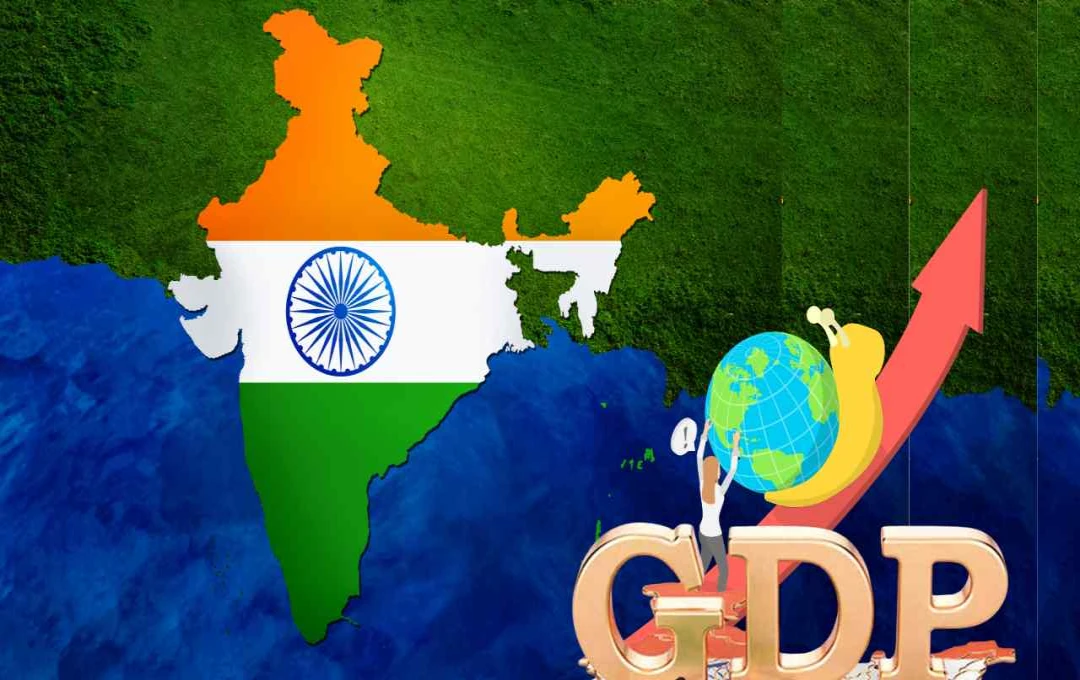

India has secured the fourth position in the global economy by the beginning of 2026. GDP reached 4.18 trillion dollars. Strong domestic demand, policy reforms and investment friendly environment are the main reasons for this.
New Delhi: There is great news for India before the beginning of the new year 2026. According to the government’s Annual Economic Review report, India has overtaken Japan to become the world’s fourth largest economy. This achievement indicates the growth and strength of the Indian economy. On the basis of Gross Domestic Product (GDP), India now ranks fourth globally with $4.18 trillion. However, its official data will be released by the International Monetary Fund (IMF) in the first half of next year.
Analysts believe that if the current growth rate continues, India could become the world’s third largest economy in the next two and a half to three years, overtaking Germany with an estimated GDP of $7.3 trillion. This achievement reflects India’s growing role in economic growth and global trade.
fast pace of economic growth
The government report states that India’s economy has been growing at a fast pace for the last several years. The country’s GDP has almost doubled in the last decade. The GDP growth rate in the second quarter of the financial year 2025-26 was 8.2 percent, which is the highest level in the last six years. This indicates that domestic economic activities are strong and there is a balanced growth in investment, production and consumption.
India’s economy has remained strong despite global trade challenges and economic instability. The GDP growth rate in the first quarter of the financial year 2024-25 stood at 7.8 percent, while in the fourth quarter it stood at 7.4 percent. This shows that India not only withstood international pressures but also sustained growth through domestic demand and investment.
Strong domestic demand and policy reforms
Strong domestic demand is a major reason behind India’s economic success. Consumer spending, industrial production and demand for services have kept the economy stable and strong. Along with this, institutional reforms and structural changes implemented by the government have also been helpful in accelerating development.
The balance in fiscal and monetary policy has also proved favorable for India’s economy. The report said price stability and a favorable investment environment have created a ‘Goldilocks’ situation where there is a balance between growth and inflation. This balance is providing long-term strength to the Indian economy.
India’s growing role on the global stage
India’s rapidly growing economy has strengthened its role on the global economic stage. International institutions and investors are looking for investment opportunities keeping in mind India’s growth rate and economic prospects. In the coming years, the Indian economy will become stronger not only domestically but also internationally.
Experts believe that due to economic reforms, strong domestic demand and investment friendly policies, India is becoming an important center for global trade and investment. This situation will help in making India the third largest economy in the coming years.
balance of stability
The government report notes that maintaining a balance between economic growth and price stability has been important for India. Despite strong growth, inflation has remained under control, creating a confident environment for both investors and consumers.
At present this balance provides a strong foundation for the stability and growth of the Indian economy. Investors, businessmen and global institutions are getting attracted to invest in India in view of this balance.

Comments are closed.