
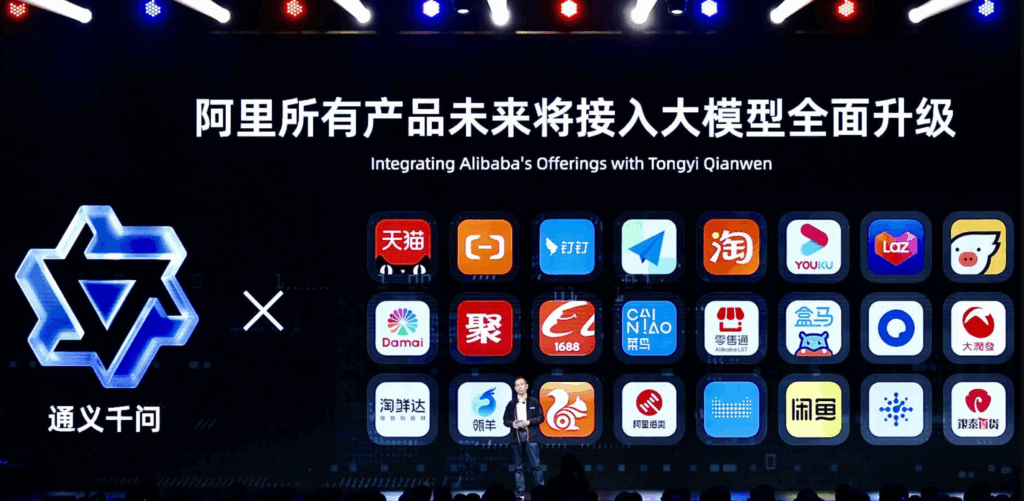

A major shift is underway in India’s artificial intelligence ecosystem. As access to some of the most advanced American AI models becomes increasingly restricted due to US national security controls, Indian companies are beginning to explore Chinese alternatives to power their AI ambitions. The development marks a significant geopolitical twist in the global AI race and could reshape how Indian businesses access cutting-edge artificial intelligence in the coming years.
Why Indian Companies Are Looking Beyond OpenAI And Anthropic
The change comes after the United States tightened controls on access to certain frontier AI models. Some of the most advanced AI systems developed by companies such as OpenAI and Anthropic have become subject to restrictions affecting users outside the US, forcing many international organisations to rethink their AI strategies.
For Indian enterprises building AI-powered products, relying exclusively on US-based models now carries an element of uncertainty. Companies fear that future restrictions could disrupt business operations, product development, and long-term AI investments. As a result, many are evaluating alternative providers that can offer greater accessibility and continuity.
China’s AI Industry Has Closed The Gap
Until recently, Chinese AI models were widely viewed as trailing their American counterparts. That perception is changing rapidly.
Several Chinese AI companies have released models that are approaching the performance of leading Western systems in coding, reasoning, cybersecurity, and agentic AI tasks. New models from firms such as Z.ai, DeepSeek, and other Chinese developers are increasingly being considered viable alternatives for enterprise deployments.
Industry analysts note that the performance gap between top Chinese and American AI systems has narrowed significantly over the past year, making the switch more attractive for organisations seeking cost-effective and accessible AI solutions.
Cost Is Becoming A Major Advantage
Chinese AI companies are not only competing on performance but also on pricing. Many Chinese models are being offered at a fraction of the cost charged by premium American providers.
For startups and enterprises operating under budget constraints, lower inference costs and flexible deployment options make Chinese models increasingly appealing. Some businesses are discovering that these alternatives can deliver acceptable performance while substantially reducing AI expenses.
What This Means For India’s AI Ambitions
The shift highlights a broader challenge facing India’s AI ecosystem. While the country remains one of the world’s fastest-growing AI markets, it still depends heavily on foreign foundational models.
Experts argue that the current situation could accelerate investments in domestic AI initiatives such as Indian-language foundation models and indigenous AI infrastructure. Projects led by Indian startups and government-backed initiatives are already attempting to reduce dependence on overseas technologies.
At the same time, businesses cannot afford to wait years for domestic alternatives to mature. Many are therefore adopting a pragmatic approach by evaluating Chinese models while continuing to monitor developments in the US AI ecosystem.
A New AI Reality Emerges
The global AI landscape is increasingly being shaped by geopolitics as much as technology. Export controls, national security concerns, and regulatory restrictions are influencing which AI tools businesses can access and where those tools originate.
For India, the latest shift represents both a challenge and an opportunity. While restrictions on US AI models may create short-term uncertainty, they could also encourage greater diversification and accelerate efforts to build indigenous AI capabilities.
As the AI race evolves, Indian companies appear increasingly willing to look east for alternatives when access to Western technology becomes uncertain. The result could be a more fragmented but also more competitive global AI ecosystem.
Summary
Indian companies are increasingly evaluating Chinese AI models as restrictions on access to advanced US systems from OpenAI and Anthropic create uncertainty. Chinese firms have significantly narrowed the performance gap while offering lower costs and greater accessibility. The shift highlights how geopolitics is reshaping the AI industry and may accelerate India’s efforts to develop its own foundational AI models and infrastructure.
Image Source

Comments are closed.