
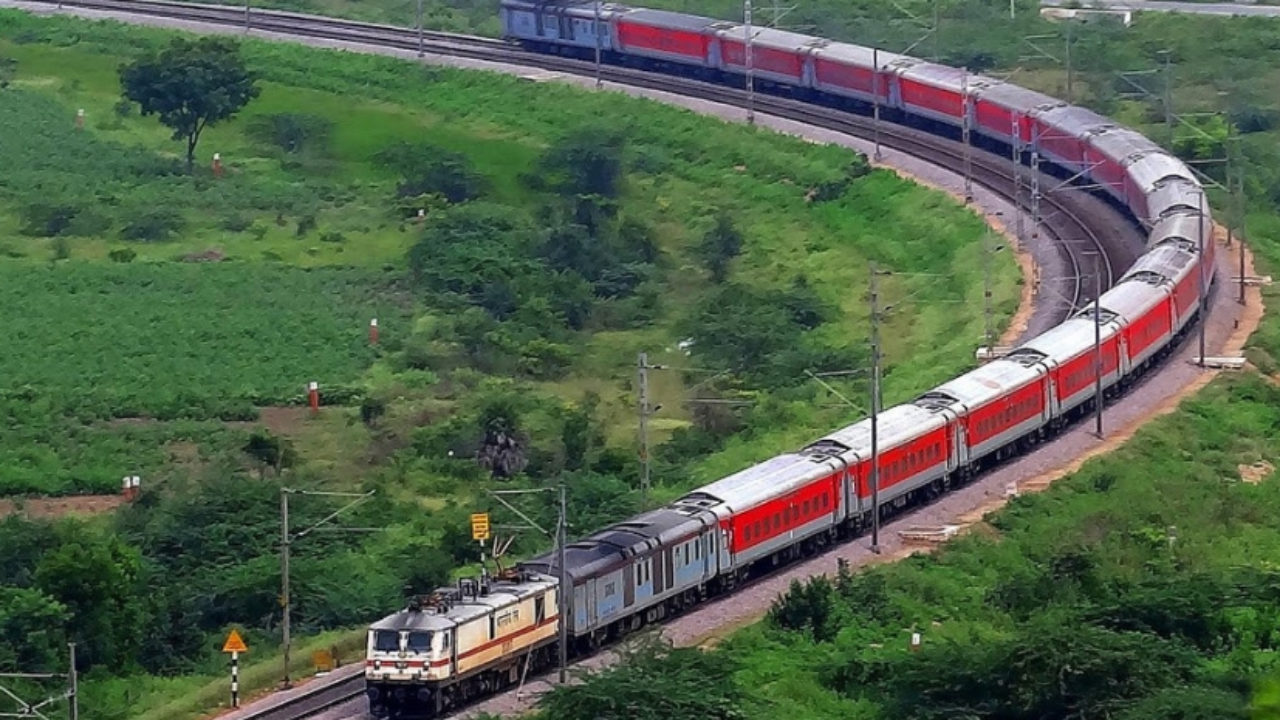

India’s high-speed rail ambitions are accelerating rapidly as Indian Railways prepares to build its next-generation indigenous bullet train capable of reaching speeds of 350 kilometres per hour.
Railway Minister Ashwini Vaishnaw announced that work on the design of the ultra-high-speed train is expected to begin within the next six months. The project marks a major technological milestone for India as the country pushes toward self-reliance in advanced rail transportation systems.
The proposed train is expected to become one of the fastest rail systems ever developed domestically in India, placing the country among a small group of nations actively pursuing next-generation bullet train technology.
India’s First Indigenous Bullet Train Already Under Development
The announcement comes at a time when India is already developing its first indigenous bullet train project with a design speed of 280 kmph.
The train, often referred to as the “B28” high-speed trainset, is being developed through collaboration involving Integral Coach Factory (ICF) and BEML. The prototype is expected to support operational speeds around 250 kmph while being capable of reaching 280 kmph under design conditions.
This first domestically-built bullet train is expected to play a key role in India’s under-construction Mumbai-Ahmedabad High-Speed Rail corridor, the country’s first true bullet train project.
Railway officials believe the indigenous approach will reduce long-term dependence on imported train technology while helping India build local expertise in high-speed rail engineering.
The Backstory: How India Reached This Stage
India’s bullet train journey began nearly a decade ago when the government signed agreements with Japan for the Mumbai-Ahmedabad High-Speed Rail project using Japanese Shinkansen technology.
Initially, India planned to rely heavily on imported Japanese trainsets. However, over time, policymakers began pushing for greater domestic manufacturing under the “Make in India” initiative.
Several challenges shaped this transition. Import costs for advanced bullet train systems remained extremely high, while adapting foreign trainsets to Indian climate and operating conditions created additional complexities.
Indian authorities gradually shifted focus toward developing homegrown capabilities. Organizations like Integral Coach Factory and BEML started exploring indigenous high-speed train designs suited specifically for Indian weather, dust conditions, temperature variations, and operational requirements.
The first indigenous high-speed train with 280 kmph capability became an important stepping stone in this strategy. Now, the proposed 350 kmph project signals India’s ambition to move beyond technology adaptation toward global-level innovation in rail transportation.
Why 350 Kmph Is A Big Deal
A bullet train capable of 350 kmph would dramatically reduce travel times across major Indian corridors and bring India closer to the world’s most advanced rail networks.
Countries like Japan, China, and France currently dominate the global high-speed rail ecosystem, with trains operating above 300 kmph on dedicated corridors. India’s move toward a 350 kmph indigenous platform reflects the government’s broader goal of transforming national transportation infrastructure.
Experts believe future high-speed corridors connecting cities like Delhi, Varanasi, Mumbai, Hyderabad, Chennai, and Mysuru could eventually support trains operating at these speeds.
Such projects could significantly improve connectivity, reduce airline dependency for short-to-medium distance travel, and boost economic integration between major urban centres.
Challenges Still Remain
Despite the ambitious vision, experts say building a fully indigenous 350 kmph train ecosystem will not be easy.
High-speed rail requires specialized tracks, advanced signalling systems, precision engineering, dedicated corridors, and extremely high safety standards. Land acquisition, infrastructure costs, environmental clearances, and financing also remain major challenges for India’s bullet train expansion plans.
In addition, operating trains at 350 kmph demands sophisticated maintenance systems and world-class engineering expertise.
Still, railway officials believe India’s growing manufacturing ecosystem and engineering capabilities can help the country gradually emerge as a serious player in the global high-speed rail sector.
For now, the announcement signals that India’s rail ambitions are no longer limited to catching up with global technology — but potentially competing with it in the future.
Comments are closed.