
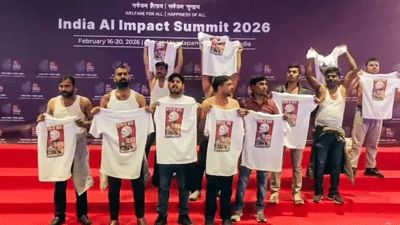
Indian Youth Congress President Uday Bhanu Chib Arrested Over Shirtless Protest at AI Impact Summit in Delhi

Delhi Police have arrested Uday Bhanu Chibthe national president of the Indian Youth Congress (IYC), in connection with a shirtless protest staged during the AI Impact Summit in the national capital last week.
The demonstration took place on February 20 at Bharat Mandapamwhere the summit was being held. According to police officials, several IYC members entered the exhibition hall and walked through the venue holding T-shirts bearing slogans critical of the central government and the proposed India–US trade deal.
Security personnel later escorted the protesters out of the venue.
Multiple Arrests in Connection With Protest
A day prior to Chib’s arrest, Delhi Police confirmed the detention of a fifth individual linked to the incident. The accused, identified as Jitendra Yadav, was apprehended in Gwalior. Authorities stated that further investigation into the matter is ongoing.
Law enforcement officials have not publicly detailed the specific charges but indicated that the arrests were made in connection with security violations during an international event attended by global dignitaries.
Youth Congress Defends Demonstration
The protest drew criticism from several quarters due to the high-profile nature of the summit. However, the IYC defended its actions, asserting that peaceful demonstrations are a democratic right.
Shesh Narayan OjhaNational General Secretary of the IYC, stated that opposing government policies should not be labeled as “anti-India.”
He emphasized that the protest aimed to raise concerns about the India–US trade deal and broader policy issues. The organization also alleged that similar demonstrations held in various states were met with police action, including detentions and crowd-control measures.
The IYC maintained that its protest was peaceful and intended to voice political dissent within democratic norms.
Ongoing Debate Over Protest and Free Expression
The incident has sparked debate around political expression, public protest, and security at international events. While authorities have cited security concerns, opposition leaders argue that dissent is a constitutional right in a democracy.

Comments are closed.