
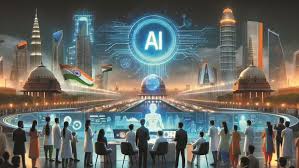
India’s blast in the race of AI, made a place in the top-5 countries, but it poses a big challenge for small towns and villages.

News India Live, Digital Desk: India has set a new record in the world of Artificial Intelligence (AI). According to the latest report of OpenAI, India has now become one of the most advanced countries in the world which are using AI on a large scale. From solving complex problems to coding, Indian users have become one of the top 5 countries in the world in using tools like ChatGPT. This report shows that India is not only adopting technology, but is also leading it globally. India’s strength in coding and data analysis. The figures of the report are shocking. The number of users of AI tools like Codex used for coding has registered a huge increase of four times in just two weeks. The performance of Indian youth is also very strong at the global level in the field of data analysis and developer tools. This is a clear indication that India’s tech ecosystem is keeping pace with the world’s most modern technologies. Delhi-NCR is at the forefront, but the scope is limited to big cities. Amidst this spectacular growth, a worrying aspect has also emerged. The use of AI in India is currently limited to only a few big cities. According to the report, the top-10 cities of the country cover about 50% of AI users, while these cities do not even account for 10% of India’s total population. Delhi-NCR tops the list, followed by cities like Bengaluru, Hyderabad and Chennai which remain the major hubs. Small towns and rural areas are still lagging behind in this race due to digital divide. Unique trend of states: AI is being used for education and health. The report also reveals interestingly that AI is being used for different needs in different parts of India: Eastern states (Assam, Odisha, Manipur, Tripura): People here are using AI the most for education and learning. Where there is shortage of resources, AI is becoming the guru of students. North and South (Jammu-Kashmir, Punjab, Kerala, Himachal): In these states, questions related to health and wellness are being asked the most. People in areas with limited access to medical facilities are resorting to AI for information. Big challenge: gap of language, cost and access. According to Oliver Jay of OpenAI, the biggest challenge facing India is to make AI ubiquitous. According to the report, the use of data analysis in big cities is 30 times more than in small cities and the use of coding is 4 times more. To bridge this gap, work will have to be done on three pillars: Availability in local languages: Making AI accessible in other Indian languages including Hindi. Affordable price: Keeping the technology accessible as per the pocket of the common man. Digital infrastructure: Internet and better connectivity in rural areas. Path of the future: Young population will become India’s weapon. India’s huge youth population and ability to learn technology quickly is the biggest strength in this race. If AI is extended to more and more languages and smaller cities, India can become a global leader in this field. The conclusion of the report is clear that the real success of AI will happen only when it is not limited to the offices of metropolitan cities but reaches every class and every village.

Comments are closed.