
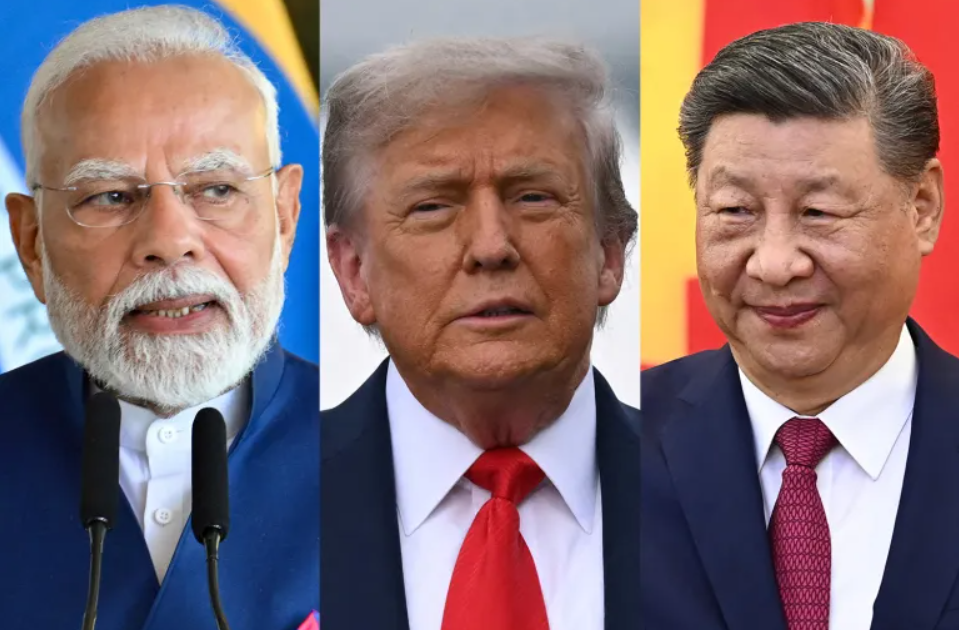

New Delhi. In 2025, India has proved that global instability, protectionist policies and geopolitical tensions cannot stop its economic growth. While many big countries of the world are struggling with trade slowdown and rising deficit, India has further strengthened its position on the strength of reforms, free trade agreements and policy stability. This is the reason why India’s growing economic strength is becoming a concern for America and a challenge for China.
Rapid increase in exports, huge reduction in trade deficit
According to official data, India’s total exports registered a significant year-on-year growth in November 2025. Exports increased to nearly $74 billion, while imports remained almost stable. This had a direct impact on the trade deficit, which reduced rapidly to a limited level. This is a sign that India is no longer just an import-based economy, but is emerging as a competitive exporter in the global market.
Services became India’s economic strength
Now India’s exports are not limited to commodities only. The share of services has almost reached half. India’s hold in IT, healthcare, pharma, consultancy and financial services is continuously strengthening. This diversification prevents India from becoming dependent on any one sector or market.
Tariff Policy and Strategy of India
The new tariff policies implemented by America have been a major challenge for India. Heavy duties were imposed on many Indian products, putting pressure on labour-intensive industries in particular. However, India faced this challenge wisely. Duty-free or low-duty agreements with Oman, Britain and other countries gave India alternative routes.
Domestic reforms boosted confidence
India’s economic strength is not only the result of external agreements, but also major domestic reforms are behind it. Reforms like GST 2.0 have simplified the tax system, thereby reducing costs for exporters and improving cash flows. The prompt refund system has especially given relief to small and medium industries.

Comments are closed.