
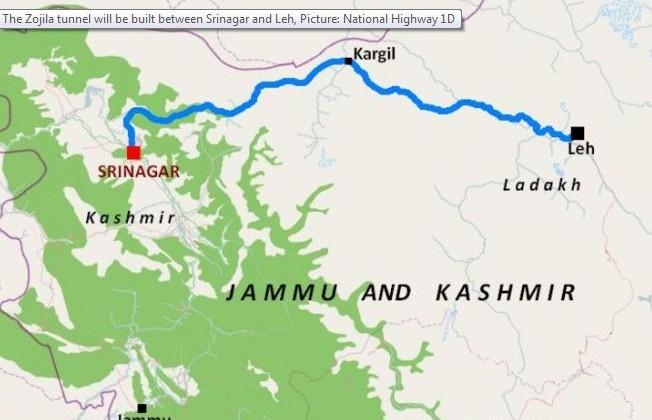
Zojila tunnel breakthrough: Nitin Gadkari to mark key milestone in India’s strategic highway project

Indian engineers are set to script a new chapter in the remarkable history of India’s infrastructure development on June 9, when Union Minister for Road Transport and Highways Nitin Gadkari will trigger the breakthrough blast at the Zojila Tunnel. The event will mark a defining milestone in one of India’s most significant infrastructure projects.
In the Himalayas, where mountain roads disappear under snow for months every winter, the construction of this tunnel represents a historic achievement in India’s infrastructure development.
Union Minister Nitin Gadkari shared a video of the tunnel project on his social media handle.
The 13.15-kilometre tunnel, located on the boundary between Jammu and Kashmir and Ladakh at an altitude of approximately 11,500 feet, is being constructed to achieve what the mountain road above it cannot—remain operational throughout the year.
For decades, the Srinagar-Leh highway has been at the mercy of heavy snowfall, cutting off Ladakh from the Kashmir Valley for extended periods every winter. The Zojila Tunnel is designed to end that isolation permanently.
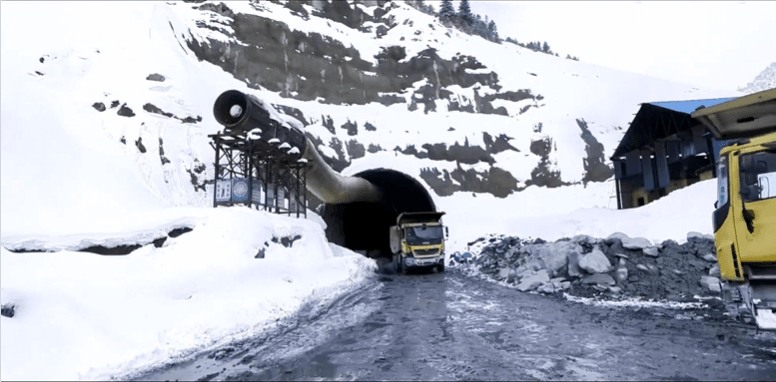
Upon completion, it will be the world’s longest single-tube, bi-directional road tunnel at such a high altitude, ensuring uninterrupted all-weather connectivity between the Kashmir Valley, Kargil, and Ladakh. Its benefits extend far beyond convenience, enabling faster movement of people and goods, strengthening defence logistics in sensitive border areas, and supporting sustained economic activity in a region where geography has long imposed severe limitations.
Work on this ambitious project began in October 2020
Construction work on the Zojila Tunnel commenced in October 2020 with ceremonial blasting. The tunnel will provide all-weather connectivity between the Srinagar Valley and Leh on National Highway-1 and promote economic as well as socio-cultural integration between Jammu and Kashmir and Ladakh.
The Zojila Pass is considered one of the most dangerous stretches in the world for vehicular travel, and the project is also of immense geostrategic significance.
The project was first conceived in 2005, and its Detailed Project Report (DPR) was prepared by the Border Roads Organisation (BRO) in 2013 under the Build-Operate-Transfer (BOT) annuity model. However, four attempts to award the project were unsuccessful.
The project was eventually handed over to the National Highways and Infrastructure Development Corporation Limited (NHIDCL) in July 2016 for implementation under the Engineering, Procurement and Construction (EPC) mode. The work was awarded to M/s Infrastructure Leasing & Financial Services (IL&FS).
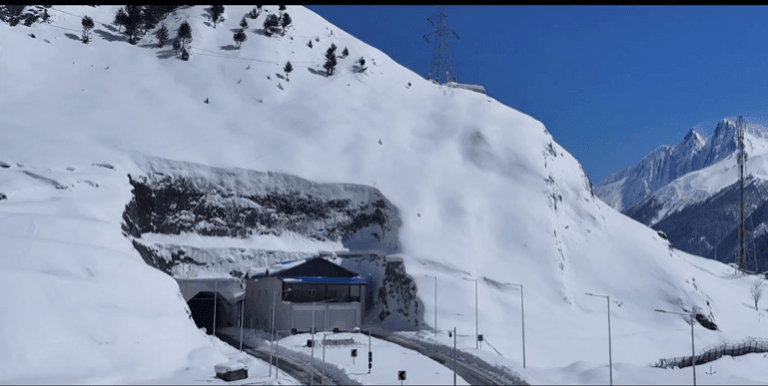
Prime Minister Narendra Modi laid the foundation stone for the project at Leh on May 19, 2018. Work progressed until July 2019, after which IL&FS ran into financial difficulties, causing the project to stall. Consequently, the contract was terminated.
In February 2020, Nitin Gadkari reviewed the project in detail. To reduce costs and expedite the long-pending project, the matter was referred to an expert committee headed by I.K. Pandey, Director General (Road Development) and Special Secretary, Ministry of Road Transport and Highways (MoRTH).
The committee recommended changes in the project’s configuration and implementation strategy to ensure completion in the shortest possible time and at the lowest feasible cost.
Following consultations with tunnel experts and other stakeholders, the committee submitted its report on May 17, 2020, which was approved by the Road Transport and Highways Minister on May 23, 2020.
Significance of the tunnel
The Zojila Tunnel will provide safe, all-weather connectivity between Srinagar, Drass, Kargil, and Leh. Such connectivity is of immense strategic importance.
The tunnel will facilitate year-round economic and socio-cultural integration of these regions, which remain cut off from the rest of the country for nearly six months every year due to heavy snowfall.
At present, a tunnel through Zojila is the only viable solution for ensuring uninterrupted connectivity throughout the year. Once completed, it will be a landmark achievement in modern India’s infrastructure history.
The tunnel will also be of immense importance to national defence, particularly in view of military deployments and strategic requirements along India’s borders in the Ladakh region.
The Zojila Tunnel project will fulfil a long-standing public demand of the people of Kargil, Drass, and Ladakh spanning nearly three decades.
The project will make travel on the Srinagar-Kargil-Leh section of NH-1 free from avalanche-related disruptions.
It will significantly enhance the safety of travellers crossing the Zojila Pass and reduce travel time from more than three hours to approximately 15 minutes.

Comments are closed.